4th of July and Long Weekends: Preparing Your Pet for Boarding
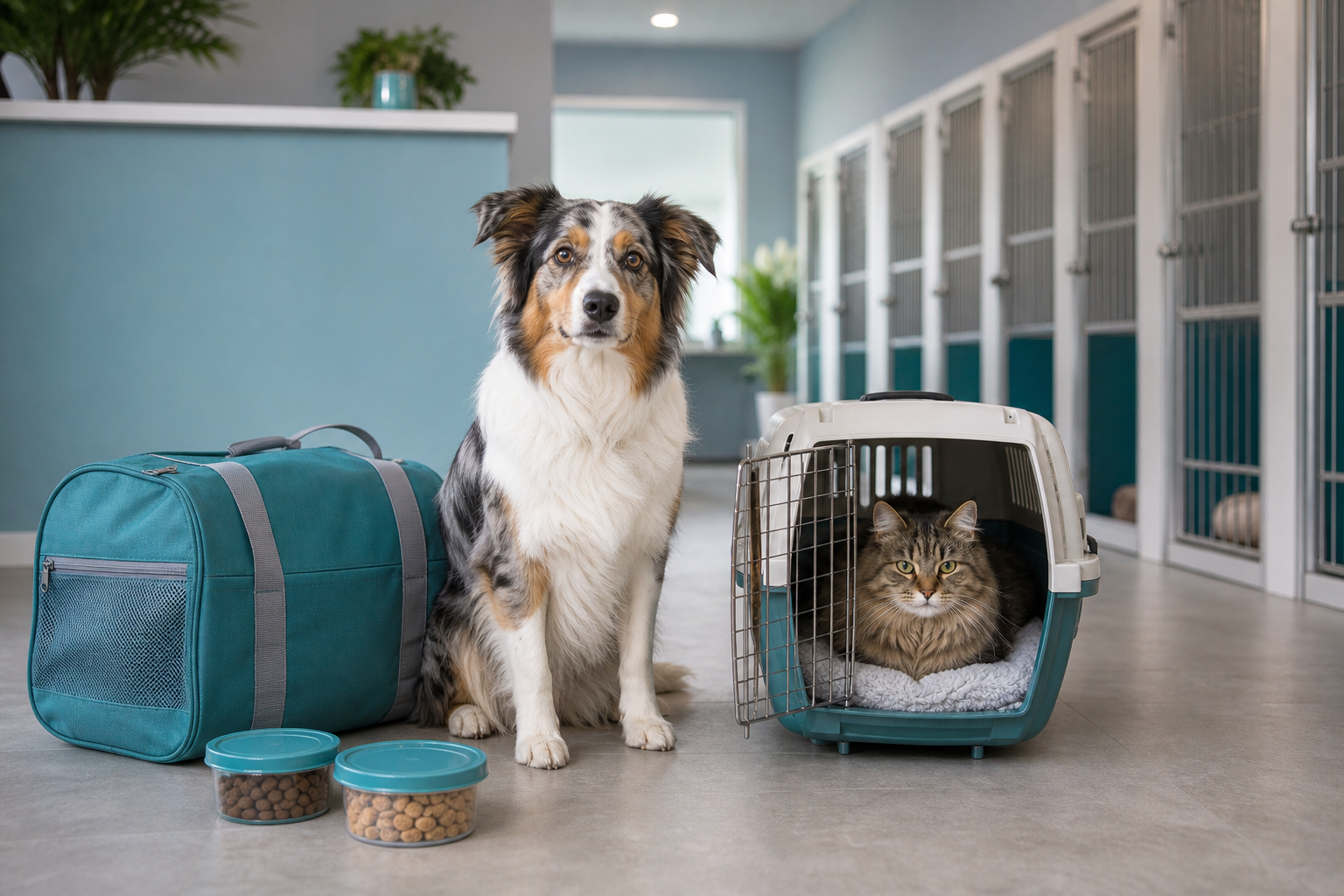
Quick answer
Holiday boarding goes wrong when owners treat the reservation as the whole plan. Before a 4th of July trip or any long weekend, confirm the facility's health requirements and holiday hours, send current records, write down the feeding and medication routine, disclose behavior and fireworks sensitivity, and choose a local person who can collect your pet if plans change.
Do this early. A vaccine listed in your pet's medical record may not match a facility's required vaccine, timing, or proof format, and a medication schedule may be more than the boarding staff can safely provide. Ask before paying a deposit rather than trying to solve those problems at drop-off.
The goal is not to pack everything your pet owns. It is to make the important decisions in advance so the boarding team never has to guess.
Start with the dates the facility actually uses
Write down four different times:
- The earliest and latest drop-off window
- The earliest and latest pickup window
- The time after which an extra night is charged
- The facility's opening hours during the holiday itself
Long weekends often come with different desk, daycare, playgroup, and veterinary hours. Confirm what happens if your flight or drive is delayed, whether someone is on-site overnight, and who can release the pet to your backup contact.
Use this countdown as a planning aid, but follow earlier deadlines from the facility or your veterinarian:
| When | What to finish |
|---|---|
| As soon as travel is likely | Reserve the space, review cancellation rules, tour the facility, and ask for the complete admission checklist. |
| Several weeks before | Send vaccine records for review, arrange any necessary veterinary appointment, and discuss whether the facility can meet medical or behavioral needs. |
| One to two weeks before | Confirm feeding, medication, group-play, fireworks, emergency, and pickup plans in writing. |
| Two to three days before | Pack labeled supplies, check your pet for illness, and send the final care sheet. |
| At drop-off | Report any change since the forms were completed and confirm the last meal and medication actually given. |
Do not wait until the holiday week to ask whether a vaccine is needed. Some vaccine plans involve more than one dose or need time for an immune response. Your veterinarian should decide what is medically appropriate, while the facility should explain its admission rule.
Choose a facility by asking what happens when things go wrong
A polished lobby and frequent photo updates are pleasant, but they do not answer the most important safety questions.
Ask the boarding facility:
- How are dogs and cats screened for illness before admission?
- Where is an animal moved if coughing, vomiting, diarrhea, lethargy, or another problem begins during the stay?
- How are sleeping areas, bowls, toys, litter equipment, and group spaces cleaned between animals?
- Are dogs grouped by size, play style, and temperament, and can you decline group play?
- Are cats housed away from barking dogs and given a place to hide?
- Who is present overnight, and how often is each animal physically checked?
- Which veterinary clinic handles routine and after-hours problems?
- What is the evacuation plan for fire, power loss, extreme weather, or another facility emergency?
- How do staff prevent escapes during busy drop-offs, pickups, and fireworks?
- What happens if the facility cannot reach you?
Government biosecurity guidance for dog boarding facilities emphasizes health screening, excluding animals showing signs of disease, separating an animal who becomes ill, cleaning shared areas, and having a backup plan when an owner cannot collect a sick dog immediately. A clear answer to these questions is more useful than a vague promise that staff will “take care of it.”
Tell the facility about previous escape attempts, guarding, bite history, dog or cat intolerance, handling sensitivity, and fear around crates, strangers, or loud sounds. Hiding a concern does not make boarding easier; it removes the information staff need to choose safe housing and handling.
Check vaccine records before the deadline
Ask for the facility's exact list in writing. Requirements vary by location and facility, and the list for dogs may differ from the list for cats. The facility may also have a cutoff for when proof must be received or how recently a boarding-related vaccine must have been given.
Send a real veterinary record or certificate that shows:
- Your pet's name and identifying details
- Vaccine names rather than only “vaccines current”
- Dates administered
- The veterinarian or clinic
- The date through which each vaccination is considered current, when shown
- The current rabies certificate where required
WSAVA vaccination guidance recommends core vaccination for dogs and cats, then individualized decisions about non-core vaccines based on lifestyle and local disease risk. It specifically treats boarding as a higher-exposure setting for some respiratory diseases. That does not mean every pet should receive every available vaccine. Ask your veterinarian to compare your pet's health and history with the facility's rule.
If the paperwork is scattered, How to Keep Track of Your Pet's Vaccination Schedule explains how to build one master record without guessing.
Make a one-page care sheet
The care sheet should be short enough to use during a busy shift. Put your pet's name and your phone number at the top, then include:
| Care item | What to write |
|---|---|
| Feeding | Exact food, amount, meal times, food allergies, and what to do if a meal is refused |
| Medication | Name, strength, dose, route, exact time, food instructions, storage, and stop date |
| Bathroom | Usual walk or litter routine and any important recent change |
| Behavior | Handling preferences, triggers, escape risk, dog or cat tolerance, and calming routine |
| Health | Diagnoses the facility needs to know, normal baseline, warning signs, and veterinarian contact |
| Emergency | Your authorization, spending or contact instructions, local backup person, and preferred clinic |
| Pickup | Authorized people, expected time, and what to do if you are delayed |
Use plain language. “One tablet at 8 a.m. with breakfast” is more actionable than “give in the morning.” Write what staff should do if your pet refuses food, cannot be handled safely, vomits after medication, or misses a dose. Use instructions from the prescribing veterinarian, not a plan invented for the trip.
If two people share care before departure, record the last meal, walk, preventive, and medication as each happens. At drop-off, state the actual times rather than the usual schedule.
Pack medication so nobody has to interpret it
Ask first whether the facility administers your pet's type of medication. Some facilities will give tablets but cannot safely provide injections, refrigerated products, eye drops, ear drops, or tightly timed treatment.
For every accepted medication:
- Keep it in the original labeled veterinary or pharmacy container.
- Make sure the label is readable and matches the written care sheet.
- Supply the measuring syringe or other administration tool if one is prescribed.
- Confirm food, refrigeration, light, and handling requirements.
- Provide enough for the booked stay and an agreed delay buffer.
- Identify expected effects and the changes that require a call.
- Give the facility the prescribing clinic's number.
- Ask how each administered dose will be recorded.
Do not send loose pills, combine products in one container, pre-split tablets without approval, or ask staff to follow a handwritten direction that conflicts with the prescription label. If the dose has changed recently, ask the veterinary clinic for an updated label or written instruction.
The FDA advises owners to know the exact route, timing, amount, food instructions, storage, side effects, and product-specific response to a missed, spat-out, or vomited dose. Do not tell boarding staff to automatically repeat or double a dose. The answer depends on the medication and should come from the prescribing veterinary team.
Keep feeding boring and measurable
Boarding is not the time to introduce a new diet, rich holiday treats, or a different supplement. Ask how the facility wants food packed, then label it with your pet's name.
Include:
- The exact product and variety
- The amount for each meal in cups, grams, cans, or pouches
- The normal meal times
- Whether water should be added
- Approved treats and food allergies
- Enough food for an agreed travel delay
If you portion meals into bags or containers, still provide the original product information or a clear photograph of the packaging in case an ingredient or feeding question arises. Ask before sending refrigerated, frozen, raw, or home-prepared food because storage and handling capacity varies.
Tell staff what a normal skipped meal looks like for your pet and when you want a call. A cat who stops eating, a pet with diabetes, or an animal on medication may need a different response from a healthy dog who ignores one breakfast in a new environment. Get an individual plan from your veterinarian.
Make a separate plan for fireworks and noise
Do not assume a boarding building is quiet on the 4th of July. Ask where pets stay during peak noise, whether windows and exterior doors are secured, what overnight staffing is present, and how an animal showing panic or repeated escape behavior is protected.
Tell staff if your pet has previously:
- Hidden, trembled, panted, drooled, paced, or stopped eating during fireworks
- Tried to break out of a room, crate, run, or yard
- Become destructive, defensive, or difficult to handle around loud noise
- Needed a veterinarian-directed behavior or medication plan
AAHA behavior guidelines describe fireworks-related noise phobia as a serious fear response and recommend protection from triggering exposure as an immediate management step. If your pet has a history of severe distress, contact your veterinarian well before the trip. Do not use the boarding stay as the first trial of an untested supplement, sedative, or anti-anxiety medication.
Ask whether the facility allows a familiar washable blanket or safe toy and whether staff use a quieter interior area or background sound. Leave irreplaceable items at home. If the facility cannot safely follow your pet's plan, veterinary-supervised boarding or an appropriate in-home caregiver may be a better option.
Prepare cats for the carrier and car
Leave the carrier out before the trip rather than producing it minutes before departure. Add familiar bedding, allow the cat to enter voluntarily, and reward calm investigation. Do not force repeated practice sessions that leave the cat frightened.
The Feline Veterinary Medical Association's transport position statement supports choosing an appropriate carrier, acclimating the cat to it, and securing the carrier in the vehicle. At pickup and drop-off, keep the carrier fully closed until you are inside a secure room and staff tell you it is safe to open it.
For the boarding stay, write down litter type, litter-box habits, hiding preference, handling limits, and whether the cat has lived with other cats. Ask whether cats are housed individually and away from direct sight, smell, and sound of unfamiliar dogs where practical.
Set up the emergency handoff
Choose a local contact who can answer the phone and physically collect your pet. Confirm that the facility is allowed to release the animal to that person, and give the contact the reservation details, facility address, veterinarian information, and a copy of the care sheet.
Decide in advance:
- Who may authorize veterinary examination and treatment
- Which clinic should be called first
- What happens when the regular clinic is closed
- How the facility should proceed if neither you nor your backup answers
- How payment or reimbursement will be handled
- Where the pet can stay if removed from the facility
Keep your microchip registration and visible ID contact information current before boarding. Use a phone number that will work while you travel, and add the backup contact if the registry permits it.
Do not board a pet who becomes ill without veterinary advice
Call the facility and your veterinarian if your pet develops coughing, sneezing, eye or nose discharge, repeated vomiting or diarrhea, marked lethargy, loss of appetite, fever, a new skin problem, or another contagious or concerning sign before drop-off. Do not hide symptoms to preserve the reservation.
Seek urgent or emergency veterinary care instead of continuing to the boarding facility for difficulty breathing, collapse, unresponsiveness, a seizure, severe bleeding or trauma, blue, grey, or very pale gums, repeated unsuccessful retching with a swollen abdomen, inability to urinate, or suspected poisoning.
An older pet, a very young pet, or an animal with diabetes, seizures, heart disease, kidney disease, recent surgery, or another significant condition may need a pre-boarding examination or a different care setting. Ask the veterinarian who knows the pet whether ordinary boarding is appropriate.
A 10-minute final check before leaving
Before you walk out the door:
- Confirm the holiday drop-off and pickup windows.
- Send the current vaccine record and make sure the facility accepted it.
- Pack labeled food, medication, and approved comfort items.
- Send the one-page care sheet to the facility and backup contact.
- Record the last meal, medication, bathroom break, and any change in health.
- Confirm the fireworks, illness, veterinary, and delayed-pickup plans.
- Update the microchip, collar tag, and travel contact numbers.
Pet Care Reminder can hold the reservation, early packing prompts, medication and preventive dates, and pickup time. Set the first reminder for the day you need to request records or call the veterinarian, not only for the day boarding begins.
The simple rule
Boarding staff should not have to guess what your pet eats, what medication is due, whether a behavior is normal, or who can approve care. Confirm the rules early, submit the right records, provide one clear care sheet, and arrange a real local backup.
For a 4th of July stay, add one more question: what will happen when the fireworks begin? If the facility's answer does not fit your pet's health or behavior needs, choose a safer care plan before the holiday weekend arrives.
Sources
- 2024 guidelines for the vaccination of dogs and cats – compiled by the Vaccination Guidelines Group (VGG) of the World Small Animal Veterinary Association (WSAVA). Formal global guidance on core and lifestyle-based vaccination, medical records, and higher-exposure considerations for boarding dogs and cats.
- Preventing Disease in Facilities that House Dogs. Maine Department of Agriculture technical guidance for health screening, isolation, backup planning, cleaning, and cross-contamination control in boarding and daycare facilities.
- Medications for Your Pet ... Questions for Your Vet. Official FDA guidance on medication labels, dose timing, administration, food and storage instructions, side effects, and missed, spat-out, or vomited doses.
- 2020 Transportation of Cats in Motor Vehicles. Feline Veterinary Medical Association position statement on appropriate carriers, carrier acclimation, low-distress transport, and secure placement in a vehicle.
- 2015 AAHA Canine and Feline Behavior Management Guidelines. Evidence-based guidance on recognizing fear and noise phobia, protecting pets from triggering exposure, humane behavior modification, and veterinarian-directed treatment planning.