
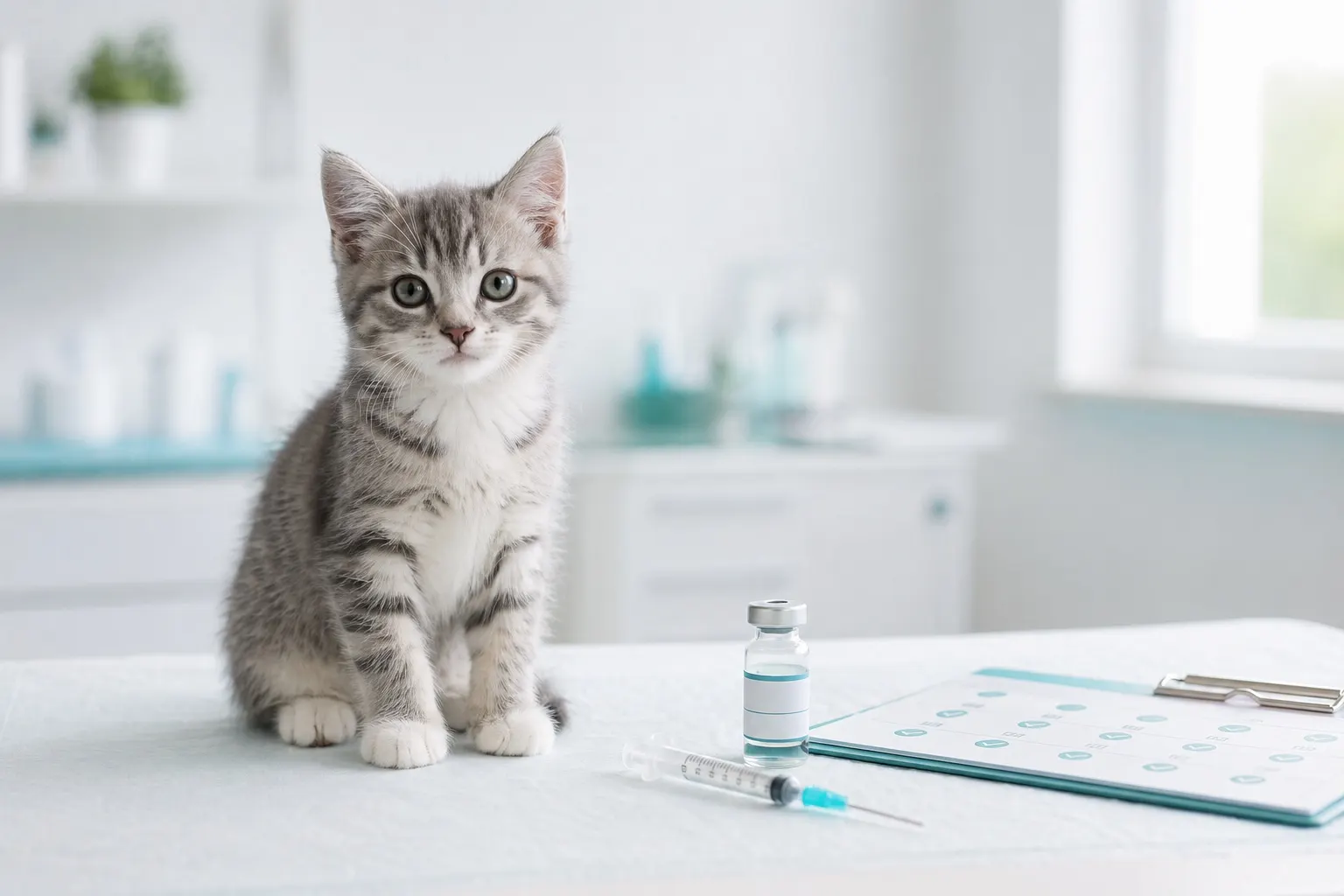
If you have ever looked at a kitten vaccination schedule and wondered why every shot needs to be given two or three times, a few weeks apart, you are not imagining it. The timing is unusually precise, and getting it wrong can leave your kitten unprotected for weeks at a time.
Here is the schedule veterinarians actually follow, based on the 2020 AAHA/AAFP Feline Vaccination Guidelines, broken down by age, with notes on what each vaccine actually does.
Why kitten shots are spaced out the way they are
Newborn kittens get a starter pack of antibodies from their mother's milk. Those antibodies fade over the first three to four months of life, but they fade at unpredictable rates. While they are still circulating, they can also block a vaccine from working, because the immune system clears the vaccine before it has a chance to teach the body anything.
That is the whole reason kittens get the same vaccines repeated every three to four weeks. Each booster is another shot at catching the kitten in the window where maternal antibodies are low enough to let the vaccine work, but the kitten is not yet exposed to the actual disease.
Maternal antibodies fade on different schedules and can still block vaccination in some kittens at 16 weeks. That is why current guidelines continue the FVRCP series every three to four weeks through 16 to 20 weeks of age, and why the final age-appropriate dose matters so much.
Core vs non-core
The AAFP splits cat vaccines into two groups.
Core vaccines are recommended for every kitten regardless of lifestyle:
- FVRCP: a combination shot covering feline viral rhinotracheitis (herpes), calicivirus, and panleukopenia, often called "feline distemper"
- Rabies: administered according to state and local law
- FeLV (feline leukemia virus): as of the 2020 AAFP update, FeLV is now considered core for every kitten under one year, even strictly indoor ones. This is a recent change many owners have not caught up on.
Non-core vaccines depend on where you live and your cat's lifestyle. These include Bordetella, Chlamydia felis, and FIV. Most pet cats do not need them.
6 to 8 weeks: first FVRCP
The first vet visit usually falls between 6 and 8 weeks, often before you bring the kitten home. This is when the first FVRCP is given.
A few things happen at this appointment:
- A general health check and weight
- Fecal test for parasites (kittens often have roundworms or coccidia)
- First deworming dose
- First FVRCP
Rabies and FeLV are not usually given yet. The kitten is too young for many rabies products, and FeLV testing is recommended before vaccination, which often waits until the next visit.
10 to 12 weeks: second FVRCP and first FeLV
At this appointment your kitten gets their second FVRCP, and many vets do an FeLV/FIV combo blood test (often called a SNAP test). Current feline retrovirus guidance recommends testing cats for FeLV before FeLV vaccination.
If the FeLV test is negative, your kitten gets their first FeLV vaccine the same day. If it is positive, that changes the conversation entirely, and your vet will walk you through it.
This is also typically the second deworming.
14 to 20 weeks: complete the initial series
Across one or more visits in this window, your kitten completes the initial series:
- Final scheduled FVRCP: the third dose or a later dose, depending on when the series began, given in the 16-to-20-week window
- Second FeLV: completes the FeLV initial series
- Rabies: timed according to the vaccine label and state or local law
Some vets split these across visits if your kitten is small or seems stressed. The schedule still needs to preserve the recommended FVRCP and FeLV intervals and follow the rabies product label and local law.
6 to 12 months: follow-up boosters
Follow-up timing is not identical for every vaccine:
- FVRCP booster: the guidelines say to consider revaccination at 6 months rather than waiting a full year, reducing the possible susceptibility window for kittens whose maternal antibodies blocked a late kitten dose
- FeLV booster: given one year after the initial two-dose series, then continued only when exposure risk remains
- Rabies booster: given as either a 1-year or 3-year vaccine, depending on the product your vet uses and your state's laws
Your vet may combine these with a wellness visit or schedule them separately because the due dates can differ.
The full schedule at a glance
| Age | Vaccine | Notes |
|---|---|---|
| 6 to 8 weeks | FVRCP (first) | Plus deworming and fecal test |
| 10 to 12 weeks | FVRCP (second) + FeLV (first) | FeLV testing recommended before first FeLV |
| 14 to 16 weeks | FVRCP (next dose) + FeLV (second) + Rabies | Continue FVRCP until a final dose at 16 to 20 weeks |
| 16 to 20 weeks | FVRCP (final scheduled kitten dose) | Timing depends on when the series began |
| Around 6 months | Consider FVRCP revaccination | Discuss the guideline's early follow-up option with your vet |
| 12 months after FeLV series | FeLV booster | Continue later boosters only while risk remains |
| Every 1 to 3 years after | FVRCP | Frequency depends on lifestyle and risk |
| Every 1 to 3 years if at risk | FeLV | Interval depends on risk and vaccine duration |
| 1 or 3 years | Rabies | Frequency set by state law and vaccine type |
Indoor-only cats: do they still need shots?
Yes for FVRCP and rabies, both of which are core for every cat. Rabies requirements follow state and local law regardless of whether your cat ever goes outside.
The vaccine that is reasonable to skip for strictly indoor adult cats is FeLV after the one-year booster. FeLV spreads through prolonged cat-to-cat contact, so a single indoor cat with no feline housemates is at very low risk. Your vet may recommend dropping it after age one, which the AAFP guidelines support.
The other reason indoor cats still need the core vaccines: panleukopenia is extraordinarily hardy. It can ride into your home on shoes, bags, or your hands after petting another cat. Indoor does not mean isolated.
What if you adopted an older kitten or missed a vaccine?
You do not automatically restart from zero. The catch-up plan depends on age, vaccine type, and reliable records:
- FVRCP: a kitten still in the initial series continues every three to four weeks through 16 to 20 weeks. For a cat older than 16 weeks with an unknown history, the guideline lists one attenuated-live dose or two inactivated doses three weeks apart.
- Rabies: a single dose protects, with a booster one year later
- FeLV: requires testing before vaccination, then two doses three to four weeks apart
If you have no records at all from a previous owner or shelter, most vets will start a fresh series rather than risk under-vaccination. The cost of an extra dose is much lower than the cost of treating panleukopenia.
Adult cats: every year or every three?
After the kitten-series follow-up, FVRCP frequency depends on risk. The AAFP says every three years is appropriate for most adult indoor cats. Outdoor cats, cats in multi-cat households, and cats that board frequently may need a shorter interval. Your vet will pick based on your cat's situation.
Rabies is set by state law and the specific vaccine used. Some states accept the 3-year vaccine; others require annual rabies regardless of product. This is worth confirming locally rather than guessing.
Keeping track without the spreadsheet
The kitten series spans several months and multiple vet visits, with FVRCP, FeLV, rabies, dewormings, and fecal tests on different dates. Then there are follow-up boosters, followed by risk-based intervals for the rest of your cat's life. Most owners forget at least one date along the way.
This is exactly the kind of long, irregular schedule the Pet Care Reminder app was built for. You enter each vaccine once with its next-due date, and the app reminds you when it's time. No spreadsheet, no calendar invite chains, no scrolling back through six months of vet emails to figure out whether the second FeLV happened.
Sources
- American Association of Feline Practitioners and American Animal Hospital Association. 2020 AAHA/AAFP Feline Vaccination Guidelines.
- American Association of Feline Practitioners. 2020 AAFP Feline Retrovirus Testing and Management Guidelines.
- Centers for Disease Control and Prevention. Information for Veterinarians.