
Plan the departure, not just the bag
When preparing for an evacuation with pets, decide who will take each animal, how they will travel, and where they will be accepted. Then practice that plan with the people and equipment involved. A packed bag does not answer those questions.
This guide is for US households with dogs and cats. Follow local emergency instructions; completing a checklist must never delay an evacuation. The FDA advises taking pets with you if at all possible. Do not build a plan around returning quickly to collect them.
Confirm the destination for your actual household
“Pet-friendly” is the start of a conversation. The FDA warns that temporary public shelters may not accept pets, so prepare alternatives such as a willing host or pet-friendly lodging. Ask your local emergency management office which options are available during the incident.
Use a short call record for each possible destination:
| Question to ask | What to write down |
|---|---|
| Can you accept our specific pets? | Species, number, size, and any restrictions discussed |
| Is space available, and do we need to register? | Contact person's answer and time checked |
| Will the pets stay with us or elsewhere? | Exact animal intake location and caregiver arrangements |
| What must we bring? | Requested records, carriers, and supplies |
| What happens if this location becomes unavailable? | Backup destination and contact number |
These questions are a planning aid, not a statement of nationwide admission rules. Keep a second destination on the same sheet. Save the address as well as the business or shelter name so another driver knows which location you mean.
Give every pet a person and a transport place
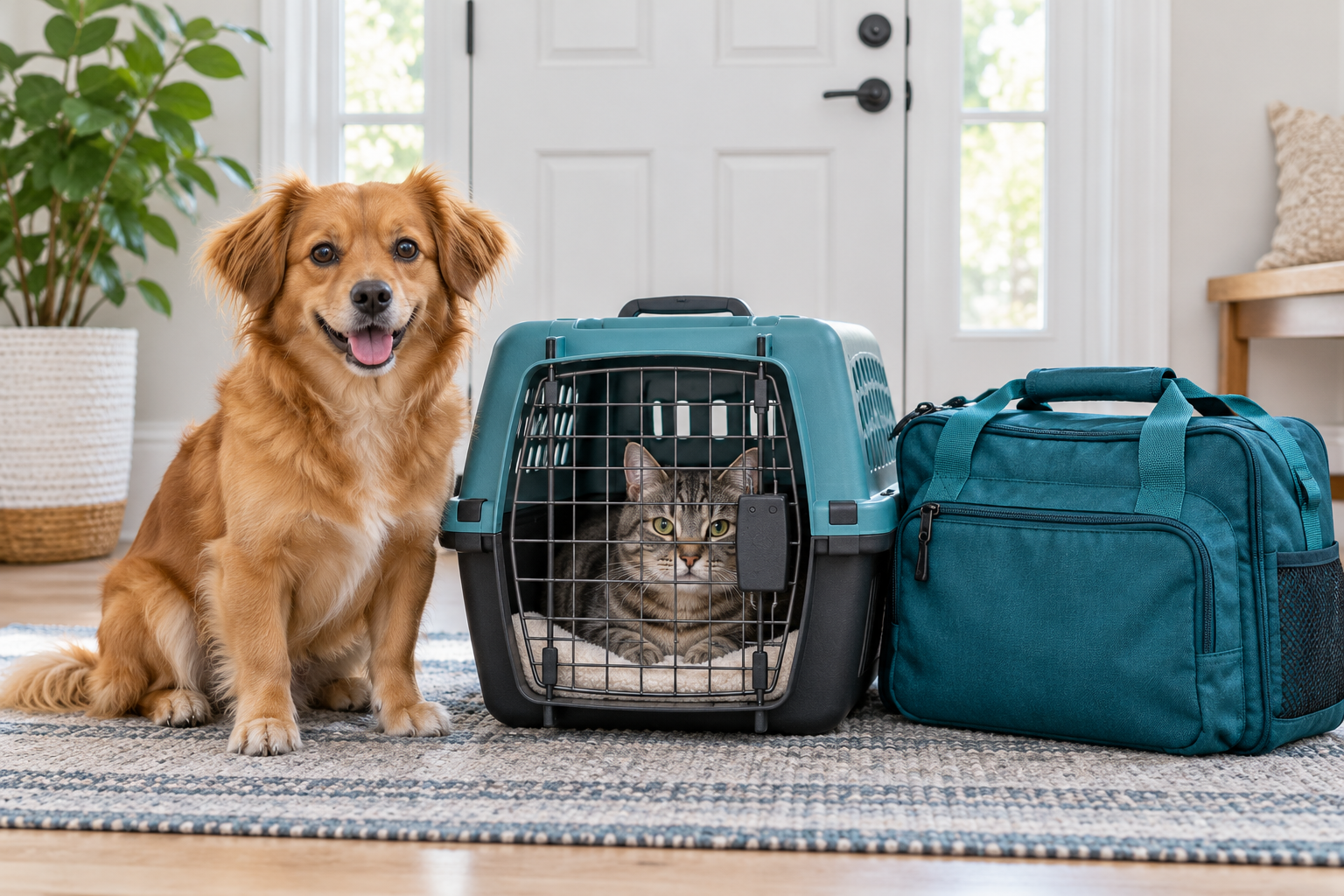
CDC guidance recommends keeping transport equipment accessible, practicing carrier use, and arranging help if you do not have a car. It also recommends a buddy who can evacuate pets when you are away.
For each pet, name a primary caregiver and a backup. “One of us will get the cats” leaves the assignment unfinished. Show the backup where carriers and pets are usually found, and test the agreed home-access arrangement before it is needed. The cat sitter handoff guide can help document hiding places and access details.
Virginia's evacuation guidance lists a portable crate or kennel for each dog or cat. During preparation, check the full vehicle setup with all carriers and human passengers accounted for. Include the person who needs help carrying or loading a pet in this practice.
Fictional practice example: A family plans to take two cats in separate carriers and a dog in the same car. Their trial reveals that the carriers occupy the space they had mentally reserved for luggage. They rearrange the packing plan and test it again. The useful discovery is a concrete fit problem, not a promise that loading will take a certain number of minutes during a real emergency.
Separate packed supplies from things still in use
The FDA recommends at least a week's supply of pet food and fresh water, along with medication, medical records, and identifying photos. Ask your veterinarian about your pet's individual medication and travel needs before an emergency.
Virginia's packing guidance also includes bowls and familiar toys or blankets. Build the kit around your household, then record which essentials cannot stay permanently packed.
| Item or task | Current location | Assigned person | Departure status |
|---|---|---|---|
| Main pet supply bag | Entry closet | Named caregiver | Packed / collected |
| Medicine still in daily use | Usual storage location | Named caregiver | Still to collect / collected |
| Current record packet | Named folder | Named caregiver | Copy checked / collected |
| Transport equipment | Exact room or cupboard | Named caregiver | Setup checked / loaded |
Replace these example entries with your own. “Packed” and “in the vehicle” are separate checkpoints. Put the list where the assigned person will see it, rather than relying on a reminder buried in a conversation.
For the contents of the paperwork packet, use the emergency vet folder guide. Keep this departure sheet short enough to scan.
Use one departure card for each pet
CDC recommends current identification and registered microchip contact details. Check those while preparing, then use this card to coordinate the actual handoff. The card is an organizational tool, not a substitute for official instructions or veterinary records.
Pet evacuation departure and arrival card
- Pet and identifying description:
- Primary caregiver and phone:
- Backup caregiver and phone:
- Carrier or travel equipment location:
- Assigned vehicle and driver:
- Destination, address, and phone:
- Acceptance last checked: person, date, time, and any conditions
- Backup destination:
- Items still to collect and who will collect them:
- Departure confirmed: pet, caregiver, vehicle, and time
- Arrival confirmed: pet, receiving caregiver, location, and time
- Next care responsibility: person and location of current instructions
- Unresolved issue and person following up:
Read back pet names at the handoff. “Both carriers loaded” is less precise than identifying the pet in each one. If a different person takes over, update the card so the next caregiver does not have to reconstruct the arrangement from several messages.
Finish the handoff at the destination
On arrival, confirm each pet with the receiving caregiver. FDA guidance recommends supervising dogs and initially keeping cats in a room or small indoor area while they acclimate. CDC advises contacting a veterinarian about signs of stress, discomfort, or illness; include a veterinary contact near your destination in the plan.
Record the next caregiver's responsibilities and the location of the current care instructions. If someone gave medication during the trip, include the actual administration time in the handoff.
Pet Care Reminder's medication reminders and dose history can help caregivers follow an existing prescription and record completed doses. Keep a written copy of the evacuation plan and essential care information available too.
Before putting the kit away after a practice run, fix one observed gap: an inaccessible carrier, an unclear assignment, an unconfirmed destination, or something that did not fit. Repeat the affected part of the plan so the correction has been tried, not merely written down.
Sources
- Be Prepared: Pet Safety in Emergencies. CDC government emergency-preparedness guidance, dated April 9, 2024, covering transport practice, backup caregivers, identification, local accommodation, and veterinary contact.
- Take Care of Your Pets Before Disaster Strikes. FDA government disaster-preparedness guidance on destinations, supplies, caregiver instructions, and settling pets after evacuation.
- When disasters approach and emergencies occur, will you know what to do with your pets?. Virginia Department of Agriculture and Consumer Services evacuation guidance; the packing and transport recommendations inform this checklist. Virginia-specific shelter arrangements are not assumed elsewhere.
