
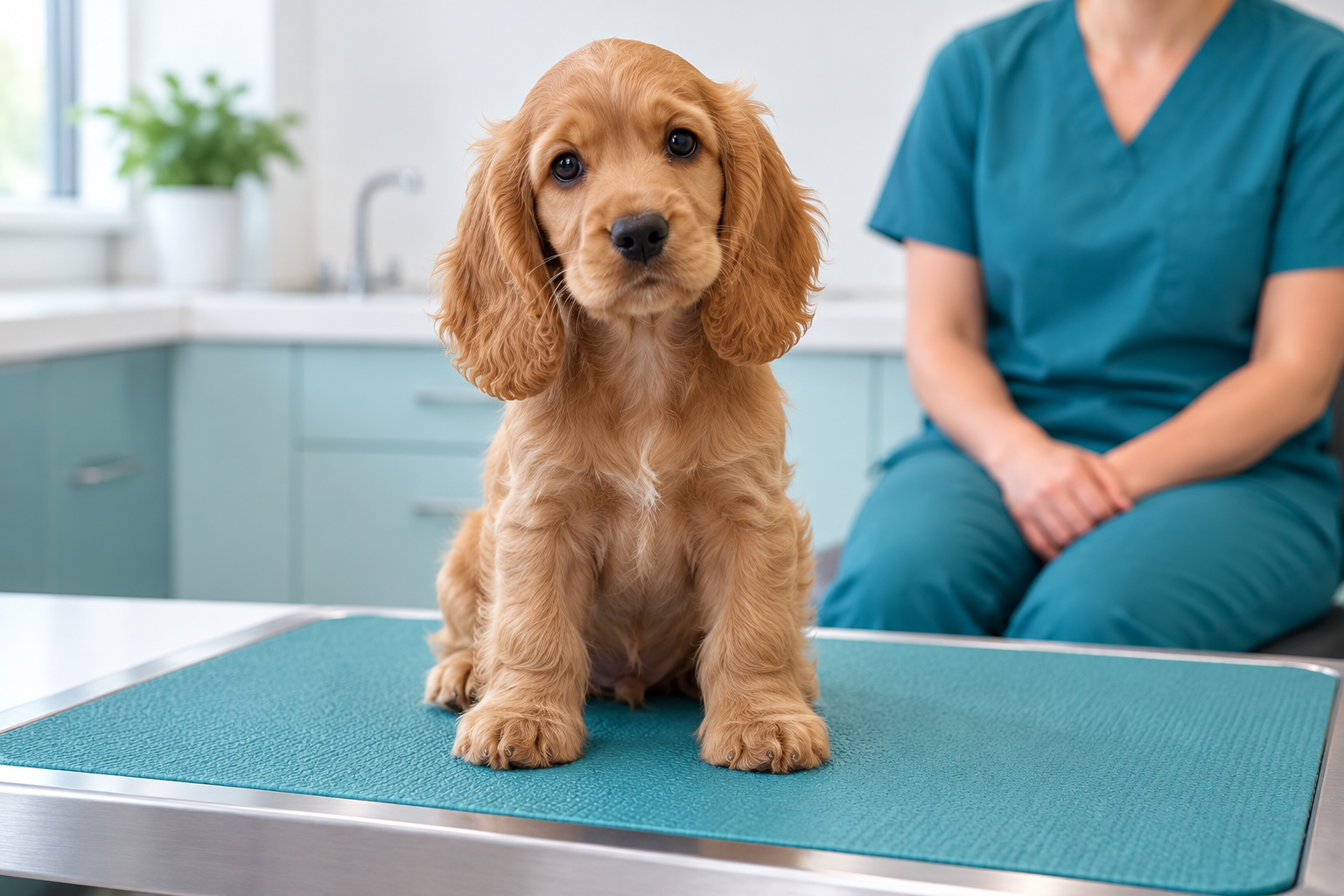
Start with an exam, then confirm each next visit
A puppy vet visit schedule usually starts with an examination soon after arrival, followed by closely spaced puppy checkups and a review of what remains due around six months. Ask your clinic when to book the first appointment. Age, documented treatment, health, and local requirements determine the actual dates.
The AAHA life-stage checklist suggests discussing puppy examinations every three to four weeks. This is a planning starting point, not a requirement for identical appointments all the way to six months. Ask what each visit is for and leave with the next action confirmed.
Use the map below to organize those conversations. Your veterinarian's written instructions take priority over the age windows.
A flexible appointment map through six months
A puppy arriving at eight weeks and one adopted at seventeen weeks will enter this map differently. Neither needs appointments invented to fill empty rows.
| Planning point | What to settle before leaving |
|---|---|
| First examination after arrival | Which earlier records the clinic accepts, what remains unverified, and the first confirmed follow-up |
| Each early puppy checkup, often three to four weeks apart | What was completed today, what is still pending, and which next dates depend on today's care |
| Around sixteen weeks and afterward | Whether the initial vaccine plan is complete for this puppy, rather than assuming a visit number proves completion |
| Four to six months | Which growth, behavior, dental, or other concerns need review, and whether they fit an existing appointment |
| Approaching six months | Which follow-ups remain open and whether to book a visit or vaccine discussion at or after twenty-six weeks |
These are conversation checkpoints. A sample drop-off, a results call, a vaccine appointment, and a full examination may be separate services. Confirm the appointment type so the clinic can reserve enough time.
Make the first visit establish a usable baseline
Bring the original records, including dates and product names, rather than only a message saying “shots done.” Include any medication or parasite-prevention instructions you received. Mark an estimated birth date as estimated.
AAHA's puppy guidance includes a physical examination, weight and nutrition assessment, identification, behavior, and oral development. Ask the veterinarian to record findings that should be compared at later visits. Raise feeding, handling, or socialization concerns early; they belong in puppy care discussions too.
Keep three short lists on your phone or paper:
- Known: records actually received and care you can verify.
- Missing: documents someone still needs to send.
- Questions: the issues you want the clinic to resolve.
A missing document becomes an assigned task: who will request it, from whom, and by when. It should not quietly become a completed treatment in your calendar.
For transport and a fuller packing list, use the guide to preparing for a vet visit and choosing what to bring.
Keep vaccine timing separate from appointment counting
“Third visit” does not necessarily mean “last puppy vaccine.” WSAVA's 2024 guideline recommends repeating the core distemper, adenovirus, and parvovirus vaccines every two to four weeks, with the final puppy-series dose at sixteen weeks or older; higher-risk situations can require a later finish. Age and spacing matter because maternal antibodies can interfere with early vaccination.
Ask the clinic to name each vaccine still due and its next date. The separate puppy vaccination timeline explains the vaccine names; your own record should show what was actually administered.
For US readers, rabies timing depends on the product and state or local law. CDC guidance does not establish one appointment age for every puppy nationwide. Have the clinic confirm the applicable deadline and provide the vaccination record.
If you miss a visit, call with the last verified treatment dates. Ask which appointments need moving instead of shifting every future event by the same number of days.
Give parasite checks their own follow-up dates
CAPC recommends fecal examinations at least four times during the first year. That does not mean four tests must fit into the first six months, or that a deworming entry is itself a test result. Ask the veterinarian how the testing plan fits your puppy's history and exposure.
For every requested sample, record:
- What to collect and the clinic's collection and storage instructions
- When and where to deliver it
- When results should be available
- Who will contact whom if results have not arrived
- Whether treatment or another test creates a new follow-up date
Also ask the clinic to confirm the current parasite product, its instructions, and whether a new weight check is needed before the next supply. Use its year-round prevention plan; do not infer a dose from an older puppy's package or a predicted future weight.
A useful calendar entry says “call for stool result if not received,” rather than marking the whole parasite check finished when the sample leaves your hand.
Use the four-to-six-month review to close gaps
Ask whether the next examination should revisit body condition and feeding, developing teeth or retained baby teeth, and behavior concerns. Discuss the individual spay or neuter plan with your veterinarian; this calendar does not set a surgery deadline.
There is also a vaccine question worth raising before the early visits end. For core viral protection, WSAVA recommends antibody testing at least four weeks after the final puppy dose, from twenty weeks of age onward, or an additional vaccination at or shortly after twenty-six weeks. Ask how your clinic applies that guidance to your puppy. Do not add a dose yourself or assume antibody testing replaces rabies requirements.
Before leaving, sort every open item into one of three groups: booked, waiting for a decision or result, or completed with a record. Give each unfinished item an owner and a date to check it. A recommendation to discuss something later needs a reminder even when no procedure is booked.
Copy a visit-to-visit worksheet
Start a fresh copy after each appointment. Keep the previous version so another caregiver can see when the plan changed.
Puppy appointment and follow-up record
- Puppy's name and birth date: confirmed or estimated
- Visit date and age in weeks:
- Clinic and reason for this visit:
- Weight recorded by clinic, with units:
- Care completed today: exact names and dates from the visit summary
- Records still missing: document, person requesting it, follow-up date
- Results pending: test, expected response date, who will call
- Home-care instructions: copy the clinic's written plan
- Next appointment: purpose, date, time, confirmed or still to book
- Separate sample, refill, or weight-check task:
- Question to revisit around six months:
- Changes that require an earlier call: clinic's instructions
- Person attending and person updating the record:
Illustrative example: Pepper arrives at eleven weeks with a vaccine card and a note that says “dewormed,” but no product or date. At the first visit, her owner gives the clinic both documents. The veterinarian confirms the next appointment; the owner separately assigns a request for the missing treatment details. When a requested sample is delivered, its status changes to “result pending,” not “all follow-up complete.”
This fictional example shows how to manage unfinished tasks. It does not prescribe Pepper's vaccines, tests, or treatment.
Once the clinic confirms the dates, Pet Care Reminder's vet visit reminders can hold the appointment and an earlier booking reminder, with notes and records for the next visit.
Call sooner when your puppy's condition changes
A routine appointment is not a reason to wait through a new problem. Call the clinic promptly about vomiting, diarrhea, poor appetite, unusual tiredness, pain, or another concerning change, and ask whether the appointment should be brought forward. Describe when it began and what your puppy is doing now.
Seek emergency veterinary help immediately for breathing difficulty, collapse, an active seizure, severe bleeding, or suspected poisoning. RECOVER's first-aid guideline treats these as situations requiring urgent professional care. Do not delay departure to finish the worksheet or induce vomiting unless the veterinarian or animal poison-control professional handling the case directs it.
Sources
- Life Stage Checklists. Formal chapter of the 2019 AAHA Canine Life Stage Guidelines covering puppy examinations and developmental review; vaccine timing here uses the newer WSAVA guideline below.
- 2024 guidelines for the vaccination of dogs and cats – compiled by the Vaccination Guidelines Group (VGG) of the World Small Animal Veterinary Association (WSAVA). Formal global guideline supporting puppy core-vaccine intervals, age at the final puppy dose, and the later antibody-testing or revaccination discussion.
- General Guidelines for Dogs and Cats. CAPC clinical guidance, updated April 24, 2025, on first-year fecal testing and veterinary-guided parasite prevention.
- Information for Veterinarians. US CDC technical guidance, dated July 16, 2025, explaining product, state, and local requirements for rabies vaccination.
- RECOVER Guidelines: First Aid for Dogs and Cats. Clinical Guidelines. Formal 2026 guideline supporting urgent veterinary care for breathing emergencies, collapse, seizures, severe bleeding, and suspected toxin ingestion.