
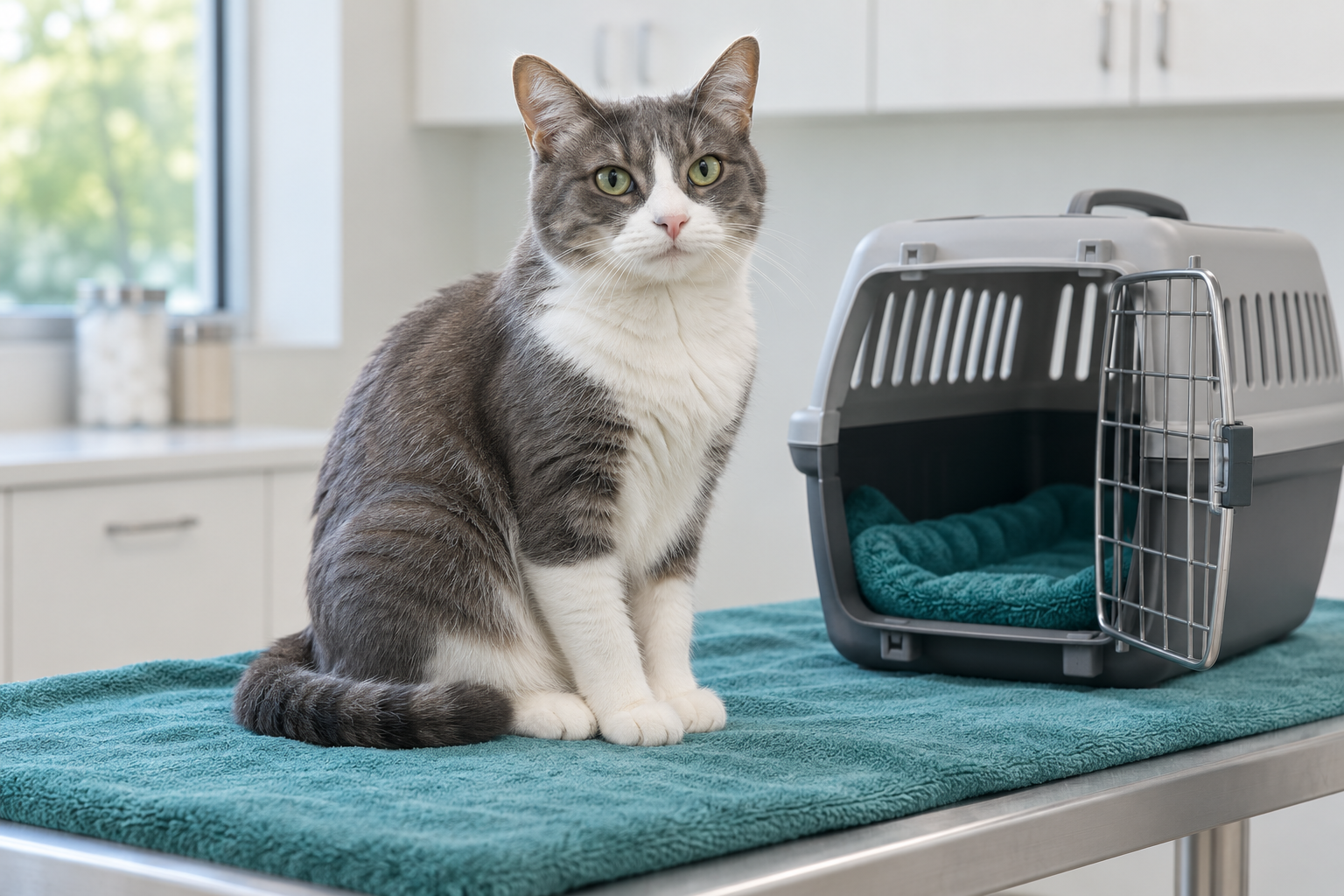
Yes, indoor cats need regular veterinary exams
An indoor cat needs veterinary checkups even when they seem well and no shots are due. The 2021 AAHA/AAFP Feline Life Stage Guidelines recommend examinations at least annually for all cats and at least every six months for seniors. Your veterinarian may recommend shorter intervals for individual needs. Kittens need their own early-life appointment plan.
If you cannot find the last examination date, ask the clinic to check the record and recommend when to book. A vaccine reminder alone does not answer that question.
What the visit covers beyond shots
A wellness visit can review weight and muscle condition, diet, oral health, behavior, and preventive care. Screening decisions depend on age, history, and findings; there is no single testing package for every indoor cat.
Ask for three separate answers before leaving:
- Examination: When should my cat next be examined?
- Vaccination: Which vaccines are due, and on what dates?
- Other follow-up: Is a test, dental assessment, or monitoring visit recommended, and when?
Write “clinic to confirm” beside an unresolved date. Avoid filling the gap with the date of a different task.
Fictional example: Maya's adult cat, Pip, has a vaccine certificate showing a future booster date. Maya assumes that is also the next checkup date. When she calls, the clinic confirms that Pip's examination is due sooner. She records two dates, with their different purposes, and books the exam. This example illustrates recordkeeping, not a vaccine schedule for other cats.
Turn “indoor only” into useful information
The feline vaccination guideline calls for an individual risk assessment. Indoor living does not eliminate all infectious exposure: other cats and contaminated items brought into the home can matter. Report actual contact and planned changes rather than trying to calculate a risk score yourself.
Use these questions to make the booking conversation more specific:
| Reason you have been putting off the visit | Detail to give the clinic | Question to ask |
|---|---|---|
| “My cat never goes outside” | Any porch, enclosure, harness walks, escapes, or stays away from home; say “none known” when accurate | Does this description change any part of the prevention plan? |
| “Nothing has changed” | Whether another cat has joined or visited, and any planned boarding or travel | Should we review the plan before that event? |
| “The shots are still current” | The certificate and last confirmed examination date | Is the examination due separately? |
| “The carrier makes visits too difficult” | What happens when the carrier appears, during loading, and on the journey | Can we make a preparation and arrival plan before appointment day? |
For vaccines, ask the veterinarian to review the record, your cat's age and health, and realistic exposure. In the US, ask the clinic to confirm applicable state and local rabies requirements as well as the vaccine's label. Do not assume indoor status creates an exemption or that every vaccine is annual.
Parasite prevention belongs in the conversation too. Bring the current product name and instructions. If your specific concern is whether an indoor home can have fleas, read the indoor-cat flea prevention review.
Address the barrier when you book
Tell the team what made the last visit difficult. “She hid when I brought out the carrier” and “she vomited during the drive” describe different problems that need an individual plan.
The 2022 feline-interaction guideline supports reward-based carrier training and veterinary planning for travel and handling difficulties. Leave an appropriate carrier accessible with familiar bedding, reward voluntary exploration, and ask the clinic how to progress. Do not turn practice into repeated forced loading.
If medication might help, ask the veterinarian to prescribe and explain it for this cat. Do not improvise with another pet's prescription. Confirm any preparation instructions with the clinic, including whether food or usual medicines need special handling for the planned visit.
If cost or transport is the obstacle, say so when booking. Request an estimate and ask the team to explain priorities and available options. Record what was agreed rather than silently postponing everything.
For a complete packing and records checklist, use the vet visit preparation guide.
Copy an indoor-cat appointment request
This is a communication aid, not a home health test. Complete the fields you know; uncertainty is useful information too.
Indoor cat appointment request
- Cat's name and age:
- Last confirmed examination and clinic:
- What I need help deciding: exam due date, prevention review, or another concern
- Current observations or changes, with dates:
- Outdoor access or stays elsewhere: none known, or details
- Other cats at home, recent arrivals, or visitors:
- Upcoming boarding, travel, or household changes:
- Vaccine record location and listed due dates:
- Current medicines and parasite products:
- Carrier, handling, travel, cost, or transport difficulty:
- Clinic's recommended appointment type and timing:
- Preparation instructions and person responsible:
- After the visit: next exam date; separate vaccine and follow-up dates
Keep the request short enough to read over the phone. For example, “I need to confirm whether an exam is due; the vaccine certificate says next year, and travel was difficult last time.” Let the team ask follow-up questions.
Once the clinic confirms the plan, Pet Care Reminder's vet visit reminders can hold a booking reminder, the appointment, and visit notes. Label each reminder by purpose so a future vaccine date does not obscure an earlier exam.
New symptoms change the booking conversation
Report new appetite, drinking, litter-box, movement, or behavior changes promptly rather than saving them for a routine appointment. Indoor status does not rule out illness. Describe what changed and ask how soon your cat should be seen.
Difficulty breathing or repeated straining with little or no urine needs immediate veterinary attention. Contact an open emergency veterinary hospital; do not wait to finish the worksheet. The RECOVER first-aid guideline identifies respiratory distress as an emergency, and the feline cystitis review describes urinary obstruction as an emergency. These signs do not establish a diagnosis at home.
Sources
- 2021 AAHA/AAFP Feline Life Stage Guidelines. Formal clinical guideline on examination frequency, wellness assessment, and individualized screening.
- 2020 AAHA/AAFP Feline Vaccination Guidelines. Formal clinical guideline on indoor exposure, individual vaccine decisions, and following rabies label and local requirements.
- 2022 AAFP/ISFM Cat Friendly Veterinary Interaction Guidelines: Approach and Handling Techniques. Formal clinical guideline on carrier training, preparation, and individual handling plans.
- RECOVER Guidelines: First Aid for Dogs and Cats. Clinical Guidelines. Formal 2026 clinical guideline supporting emergency care for breathing difficulty.
- Prevalence, Risk Factors, Pathophysiology, Potential Biomarkers and Management of Feline Idiopathic Cystitis: An Update Review. Peer-reviewed 2022 review identifying urinary obstruction as an emergency and explaining diagnostic uncertainty.
