
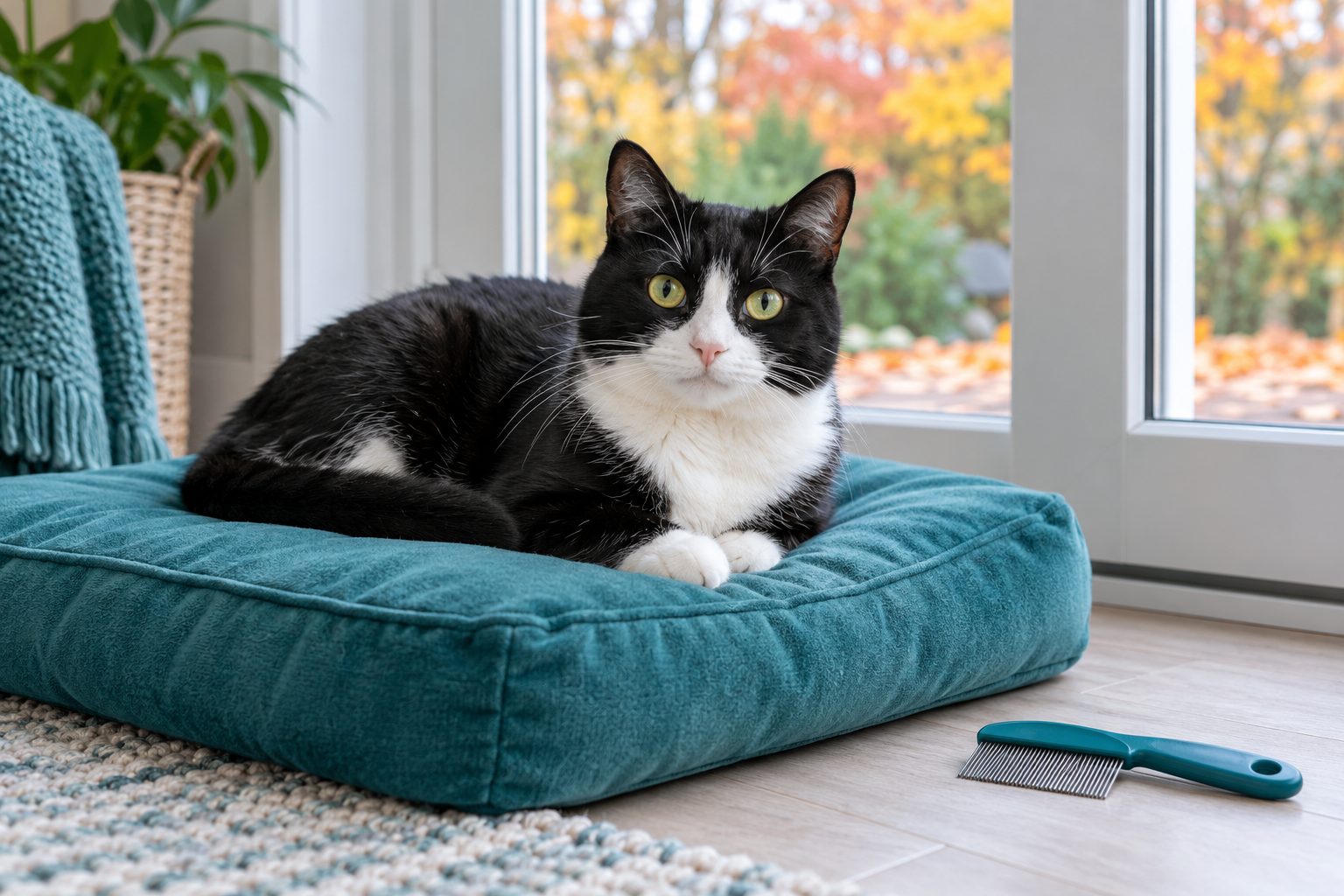
Yes, indoor cats can get fleas in fall
Staying indoors does not make a cat flea-proof, and colder outdoor weather does not establish that your home is flea-free. Before canceling fall prevention, review your cat's surroundings and confirm the plan with your veterinarian.
For US households, the CDC recommends year-round flea treatment and choosing suitable products with a veterinarian. It notes that fleas favor warmer, humid conditions but can survive throughout the year with an animal host. That is a reason to keep a confirmed prevention plan going, not to pick an arbitrary date after the first frost to stop it.
Use the walkthrough below to make “my cat never goes outside” into a more complete description of your home. It is a planning aid, not a test for infestation or a prescription.
Separate new exposure from fleas already in the home
There are two different questions: Could fleas enter the cat's surroundings? Could an earlier infestation still be present?
The Companion Animal Parasite Council describes exposure from infested surroundings or other animals. Eggs fall off animals; immature stages develop in carpets, bedding, and other sheltered places. Adults can wait inside cocoons before emerging.
Protected environments can allow cold-weather survival. That means an outdoor frost cannot confirm that an indoor problem has ended. You do not need to trace a flea's exact route before asking for help.
Walk through your indoor cat's actual surroundings
Do this once before changing the seasonal routine, and revisit it when the household changes. Write down facts and questions, without assigning a homemade risk score.
| Part of the home or routine | What to check | Useful detail for the clinic |
|---|---|---|
| Resident and visiting pets | List animals that live in the home or spend time there, including visiting dogs | Names, visit dates, and whether their flea-control plan is known |
| Your cat's occasional access | Include a patio, porch, yard escape, or stay at another home when describing “indoor only” | Where the cat went and when; write “none known” if that is accurate |
| The home's flea history | Check whether fleas were previously found and whether the follow-up plan was completed | Approximate dates, affected rooms, and any unresolved advice |
| Animal entry points | Note evidence of rodents or other animals entering the home | Location and what you actually saw; ask the building manager or a pest professional about access problems |
| Favorite resting places | List the bed, rug, sofa cushion, or space beneath furniture your cat uses | Which areas are easy to clean and which need a practical access plan |
An entry such as “my sister's dog visits on Sundays; prevention status unknown” is useful. “The dog gave my cat fleas” is a conclusion you may not be able to support. Likewise, an old infestation belongs in the history even if you cannot tell whether it explains a new sighting.
This walkthrough is not a reason to treat every visitor or spray every room. Its purpose is to give the veterinarian a specific household picture.
Put home cleaning beside the prevention plan
The CDC recommends frequent vacuuming of rugs, carpets, and upholstered cushions, cleaning pet bedding with soap and water, and emptying the vacuum outside. Its guidance also includes limiting contact with stray or wild animals and closing rodent entry points.
Turn those actions into a short list based on the places your cat actually uses. For example, name the window-seat cover and the rug beneath the couch instead of writing only “clean the house.” Follow fabric-care instructions and assign the jobs to someone who can complete them.
Cleaning supports flea control; an established infestation also needs an appropriate animal-treatment plan. If you find fleas, use the guide to coordinating care when one pet has fleas to prepare for that broader discussion.
Confirm the winter plan before changing a dose
Have the actual package or prescription instructions available. The US EPA says to use flea pesticides only for the labeled species, age, and size or weight, and to follow health-related restrictions. Never substitute a dog product for a cat product. Keep the packaging in case a problem occurs.
Ask the clinic to resolve the decision you are considering: “Should this cat continue this product through winter, given this household and medical history?” If your vet previously gave a seasonal plan, ask whether it still fits the facts you have just collected.
Indoor cat fall prevention review
- Cat and review date:
- Home location: city and state
- Current product and where the instructions are kept:
- Last confirmed treatment and next instructed date:
- Household changes: visiting animals, new pets, occasional outdoor access
- Earlier flea problem: dates and any unfinished follow-up
- Current observations: what was seen, where, and when
- Question for the clinic: continue the current plan, review suitability, or clarify an uncertain instruction?
- Clinic's answer and date:
- Next action and person responsible:
If the last treatment date is uncertain or a dose is already late, start with the missed cat flea treatment guide. A seasonal review does not settle a product-specific catch-up question.
Illustrative example: Juniper lives indoors, and her owner plans to cancel the November reminder because the weather has turned cold. While completing the review, the owner records a visiting dog and an unfinished follow-up from a summer flea problem. The clinic now has two concrete details to consider. The worksheet does not declare Juniper infested or tell the owner to give another dose.
Once the clinic confirms the plan, Pet Care Reminder's flea and worming reminders can help keep each product on its own schedule. Log treatment when it is actually given, and set the next reminder from the confirmed instructions.
Know when the review needs a veterinary call
Contact your veterinarian if you find fleas, notice persistent itching, or suspect a heavy infestation, especially in a kitten. Fleas and flea dirt can help identify the problem; a household checklist cannot diagnose a skin condition. Do not postpone the call while trying to complete every field.
If your cat becomes unwell after a flea product, contact a veterinarian right away and have the package available.
Possible exposure to a concentrated permethrin dog spot-on needs immediate emergency veterinary advice. This includes accidental application or contact with a newly treated dog. Prevent further contact, take the packaging, and do not wait for symptoms. The UK's Veterinary Medicines Directorate warns that these exposures can be fatal to cats; this is toxicity guidance, not a statement about US product approvals.
Sources
- Fleas. Formal Companion Animal Parasite Council guideline; feline section marked updated September 19, 2017. Supports indoor development, transmission, cold-weather persistence, and clinical assessment.
- Preventing Fleas. US CDC technical prevention guidance, June 4, 2024, covering year-round control, cleaning, and animal entry points.
- Controlling Fleas and Ticks on Your Pet. US EPA technical pesticide-use guidance, updated June 10, 2026, covering label restrictions, packaging, and adverse reactions.
- Permethrin: don’t put your cat at risk. UK Veterinary Medicines Directorate safety guidance, November 13, 2014. Its linked document supports urgent care for cat exposure to concentrated dog spot-ons.