
Quick answer
Your puppy's first week needs a safe setup and a repeatable routine, not a house full of new products.
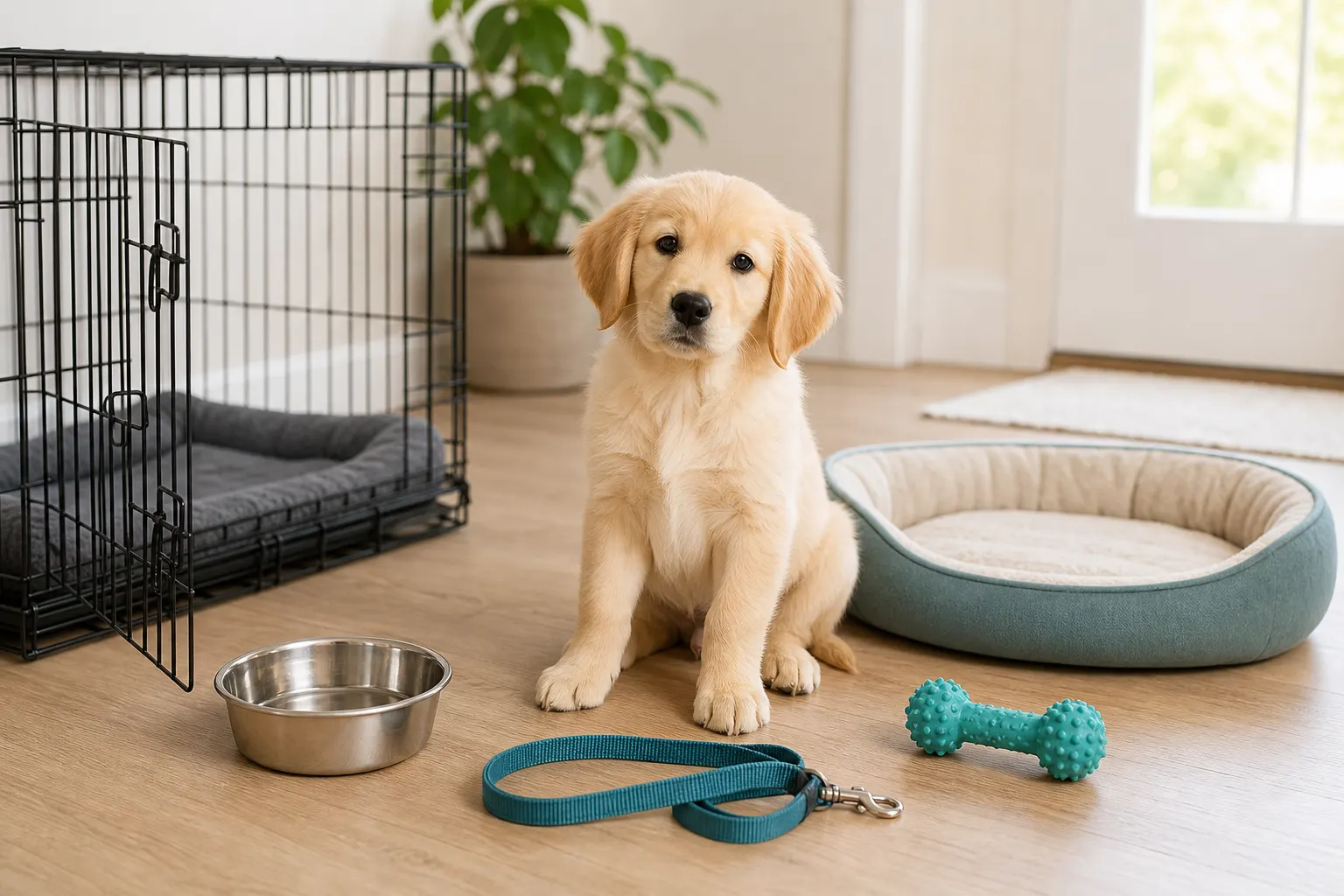
Have these essentials ready:
- A secure way to bring the puppy home
- A quiet sleep area with a crate or pen
- The food the puppy is already eating
- Food and water bowls
- A fitted harness or collar, leash, and identification
- Puppy-safe chew toys and simple barriers
- Veterinary, vaccine, deworming, and microchip records
- Your regular and emergency veterinary clinic details
- A plan for meals, toilet trips, rest, and supervision
- A short list of questions for the first vet visit
Spend money first on safety, feeding, rest, and secure handling. You can learn your puppy's preferences before buying extra beds, toys, treats, grooming tools, or training equipment.
The first-week essentials checklist
Use this list to separate immediate needs from purchases that can wait.
| Get ready now | What it solves |
|---|---|
| Secure travel crate, carrier, or appropriate vehicle restraint | A safer journey home and to the clinic |
| Correctly fitted harness or collar and a standard leash | Secure toilet trips and short training sessions |
| Identification tag and microchip details | A way to reunite you if the puppy gets lost |
| Crate or puppy pen with washable bedding | A calm place for sleep and supervised confinement |
| Food and water bowls | Consistent meals and constant access to fresh water |
| The puppy's current food and a measuring scoop | Fewer abrupt changes during an already stressful week |
| Two or three size-appropriate chew toys | A safer outlet for normal chewing |
| Baby gates or closed doors | A smaller area that is easier to supervise |
| Enzymatic cleaner, waste bags, and spare towels | Faster accident cleanup without punishment |
| Records folder and clinic contact details | Clear next steps for health care |
Check the fit and condition of every item. A collar, harness, toy, or crate that suited another dog may be the wrong size for a young puppy. Remove damaged toys and anything the puppy can break into swallowable pieces.
What can usually wait
You do not need a large treat collection, several beds, a complicated grooming kit, a long retractable leash, supplements, or multiple types of food on day one.
Do not buy medication, flea and tick products, worming products, or calming products based only on age estimates or general online advice. Product choice and dosing can depend on the puppy's exact age, weight, health, location, and previous treatment. Confirm the plan with a veterinarian.
Puppy-proof one small area first
Trying to make the entire home puppy-safe at once is difficult. Start with one quiet area near the household where the puppy can sleep, eat, play, and settle while supervised.
Set up:
- A dry, comfortable bed away from draughts and direct heat
- An open crate or pen that is large enough for the puppy to rest comfortably
- A water bowl that is difficult to tip
- A gate or closed door between the puppy and stairs or unsafe rooms
- A direct, uncluttered route to the toilet area
- One or two safe toys
- A place for the leash, waste bags, and cleaning supplies that the puppy cannot reach
Then inspect the space from puppy height. Secure or remove:
- Electrical cords, chargers, batteries, and small electronics
- Medicines, supplements, nicotine products, and cannabis products
- Cleaning products, pesticides, fertilizers, and rodent bait
- String, socks, children's toys, hair ties, coins, and other small objects
- Open rubbish bins and loose food bags
- Chocolate, grapes, raisins, onions, xylitol products, and other unsafe foods
- Plants the puppy can chew unless you have verified they are safe
- Unprotected balconies, open windows, pools, and gaps in fencing
FDA safety guidance notes that both edible and non-edible household items can poison, obstruct, or suffocate pets. If your puppy may have swallowed something unsafe, do not wait for symptoms or try a home remedy. Call a veterinarian or animal poison service immediately.
Agree on household rules before the puppy arrives. Children should sit calmly for early greetings, never disturb the puppy while sleeping or eating, and always have adult supervision. Other pets need managed introductions and separate resources rather than being expected to share immediately.
The first 24 hours
Keep arrival day quiet and predictable.
- Take the puppy directly to the planned toilet area.
- Bring the puppy into the prepared room rather than giving a tour of the whole home.
- Show where water, bedding, and the safe confinement area are located.
- Offer the familiar food at the usual time and in the usual amount.
- Alternate brief interaction with long opportunities to rest.
- Take another toilet trip after waking, eating, drinking, or active play.
- Record what the puppy ate, drank, passed, and any medicine or treatment already given.
Avoid a welcome party, a busy shopping trip, a dog park, or a full day of training. A puppy who hides, hesitates, or falls asleep is not failing to bond. Give them time and an easy way to move away from interaction.
The government Code of Practice for the Welfare of Dogs emphasizes a safe environment, fresh water, suitable food, frequent toilet opportunities for young dogs, undisturbed rest, and gradual positive introductions. Those basics are enough for the first day.
Keep the food familiar
Before collection, ask the breeder, shelter, or previous caregiver for:
- The exact food name and formula
- Whether it is dry, wet, fresh, or mixed
- The amount offered at each meal
- Usual meal times
- How much the puppy normally eats
- Any recent food change, vomiting, diarrhea, or poor appetite
- Foods or treats that have caused a problem
Bring enough of the current food to avoid an accidental sudden switch. Growing puppies need food appropriate to their life stage, but the best choice and amount vary with size, health, body condition, activity, and the product itself.
If you want to change food, ask the veterinary team how to do it. The government welfare code recommends making diet changes gradually over several days because sudden changes can contribute to digestive problems.
Keep fresh, clean water available. Do not add milk, supplements, home remedies, or human food because someone says puppies "always need" them. If the puppy will not eat, repeatedly vomits, develops diarrhea, or seems weak, contact a veterinarian rather than assuming the move or food transition is the only cause.
Build a sleep and confinement routine
Puppies need substantial rest, and an overtired puppy can become harder to settle. Make the crate or pen a calm place, not a punishment.
Start simply:
- Leave the door open while the puppy investigates.
- Place familiar bedding inside if it is clean and safe.
- Toss in a piece of the puppy's normal food or a safe toy.
- Let the puppy choose to enter and leave during early practice.
- Sit nearby for a short calm period.
- Build closed-door time in small steps while the puppy is comfortable.
AVSAB's puppy socialization position statement supports crates and puppy pens as safe places for rest and confinement when introduced positively. It also recommends time for puppies to nap or play independently with suitable toys.
Do not expect a new puppy to cope immediately with a full workday alone. Arrange supervision and build alone time gradually. If confinement produces escalating panic, frantic escape attempts, injury, or persistent distress, stop increasing the duration and ask your veterinarian or a qualified reward-based professional for help.
Start toilet training with timing, not punishment
A puppy cannot follow a schedule they have not been shown. Take them to the same suitable toilet area:
- Immediately after waking
- Soon after meals and larger drinks
- After active play
- Before settling for a nap
- Before your bedtime
- Whenever you notice circling, sniffing, wandering away, or restlessness
Stay calm and reward the puppy after they finish in the correct place. Supervise closely indoors or use the prepared pen when you cannot watch.
If an accident happens, clean it without scolding, rubbing the puppy's nose in it, or frightening them. The useful question is whether the last toilet opportunity came too late or whether supervision failed.
Urine or stool changes can also be health information. Contact the veterinary clinic if the puppy strains, cannot pass urine or stool, has blood present, develops repeated diarrhea, or seems unwell.
Arrange the first veterinary visit
Contact the clinic during the first week, or earlier if the adoption agreement, breeder, shelter, or puppy's health requires it. Tell the clinic the puppy's age, source, known health history, vaccine record, deworming record, current food, and any symptoms. Ask when they want to examine the puppy.
Bring or send:
- Vaccine certificates with product names and dates
- Deworming and parasite-treatment details
- Previous examination, test, and medication records
- Microchip number and registry information
- The current food label or a clear photo
- A list of questions
- A stool sample only if the clinic requests one and explains how to collect it
The 2019 AAHA Canine Life Stage Guidelines organize puppy care across safety, behavior, nutrition, parasite control, vaccination, dental health, reproduction, breed-related risks, and baseline health information. The first appointment is where those general areas become an individual plan.
Ask the veterinarian to write down:
- What has already been completed
- What is due next and on which date
- Which vaccines are core and which depend on lifestyle or local risk
- Which parasite prevention is appropriate
- What the puppy should eat and how much
- Which places or activities are safe before the vaccine series is complete
- When to return for a booster, test, refill, or recheck
Do not repeat a vaccine, dewormer, or preventive because a record looks incomplete. Let the clinic verify the history and decide the catch-up plan. For the broader schedule, see Your New Puppy's First Year: What to Schedule and When and the Complete Puppy Vaccination Schedule.
How to Prepare for Your Pet's Vet Visit can help you organize the records and questions.
Begin socialization without overwhelming the puppy
Socialization is not a race to meet as many people and dogs as possible. It means giving the puppy safe, positive experiences while watching their response.
During the first week, that might include:
- Hearing normal household sounds at a comfortable volume
- Walking across two or three safe surfaces
- Brief gentle handling of paws, ears, and mouth
- Meeting one calm person at a time
- Seeing traffic, bicycles, umbrellas, or other dogs from a safe distance
- Settling on a mat while ordinary life happens nearby
Pair new experiences with food, play, or distance, depending on what the puppy enjoys. Stop if you see repeated avoidance, freezing, hiding, frantic movement, or refusal of normally valued food.
AVSAB identifies the first three months as the most important puppy socialization period and supports safe socialization before the vaccine series is complete. It also advises avoiding unsanitized, heavily used dog areas where vaccination and disease status are unknown. Ask your veterinarian about local infection risk and appropriate puppy classes rather than choosing between complete isolation and uncontrolled exposure.
A simple plan for days two through seven
Days 2 and 3: confirm the facts
- Check the puppy's records against the information you were given.
- Confirm the first veterinary appointment.
- Verify the microchip transfer process and identification details.
- Write down the current food, meal amount, and care instructions.
- Save regular and emergency clinic contact details.
- Decide who handles each meal, toilet trip, and overnight check.
Days 4 and 5: practice the routine
- Repeat the same meal and toilet sequence.
- Add very short positive crate or pen sessions.
- Practice the puppy's name, coming a few steps, and calm handling.
- Introduce one manageable new sound, surface, person, or location at a time.
- Note appetite, stool, urination, energy, sleep, and behavior.
Days 6 and 7: close the gaps
- Replace any unsafe or badly fitted equipment.
- Review what the veterinarian confirmed.
- Add exact vaccine, prevention, medication, and recheck dates.
- Plan supervision for the following week.
- Choose one next training goal instead of adding several at once.
Use Pet Care Reminder after the veterinary team confirms the dates. Add the next appointment, an earlier booking reminder, recurring treatments, and any medication schedule. Mark each task when it actually happens so another household member does not repeat it.
For less urgent first-month jobs such as record transfer, microchip follow-through, and longer-term routines, see 5 Things Every New Dog Owner Forgets in the First Month.
When to call a veterinarian
Call promptly if your puppy:
- Repeatedly vomits or has diarrhea
- Refuses food or water
- Becomes unusually weak, quiet, painful, or difficult to wake
- Coughs repeatedly or has nasal discharge with reduced energy
- Strains or cannot pass urine or stool
- Has a swollen or painful abdomen
- Develops a worsening symptom or a sudden change that concerns you
Young puppies can become unwell quickly. Tell the clinic the puppy's age, size, vaccine history, how long the problem has lasted, and whether eating, drinking, urination, or stool has changed.
Seek emergency veterinary care immediately for difficulty breathing, collapse, unresponsiveness, a seizure, severe trauma, uncontrolled bleeding, blue, grey, or very pale gums, a swollen abdomen with repeated unsuccessful retching, or suspected poisoning.
Do not give human medication and do not induce vomiting unless a veterinarian or animal poison service specifically directs you.
The simple rule
The best first week is small, safe, and repeatable.
Prepare one puppy-safe area, keep food familiar, make rest easy, offer frequent toilet trips, arrange the veterinary plan, and introduce the world gradually. Once those foundations are working, you can add more rooms, products, outings, and training goals without turning the puppy's arrival into a scramble.
Sources
- 2019 AAHA Canine Life Stage Guidelines. Peer-reviewed clinical guidelines covering individualized puppy health, safety, nutrition, behavior, parasite control, vaccination, and preventive-care planning.
- Code of practice for the welfare of dogs. UK government guidance on a safe environment, suitable diet, fresh water, rest, toilet access, positive training, and protection from injury and disease.
- AVSAB Position Statement On Puppy Socialization. Formal veterinary behavior guidance on early safe socialization, reward-based learning, rest, independent play, and positive crate or pen use.
- Potentially Dangerous Items for Your Pet. Official FDA safety guidance on household foods, medicines, chemicals, plants, foreign objects, and urgent action after possible exposure.