
Quick answer
A new kitten needs a small, predictable setup more than a large collection of products.
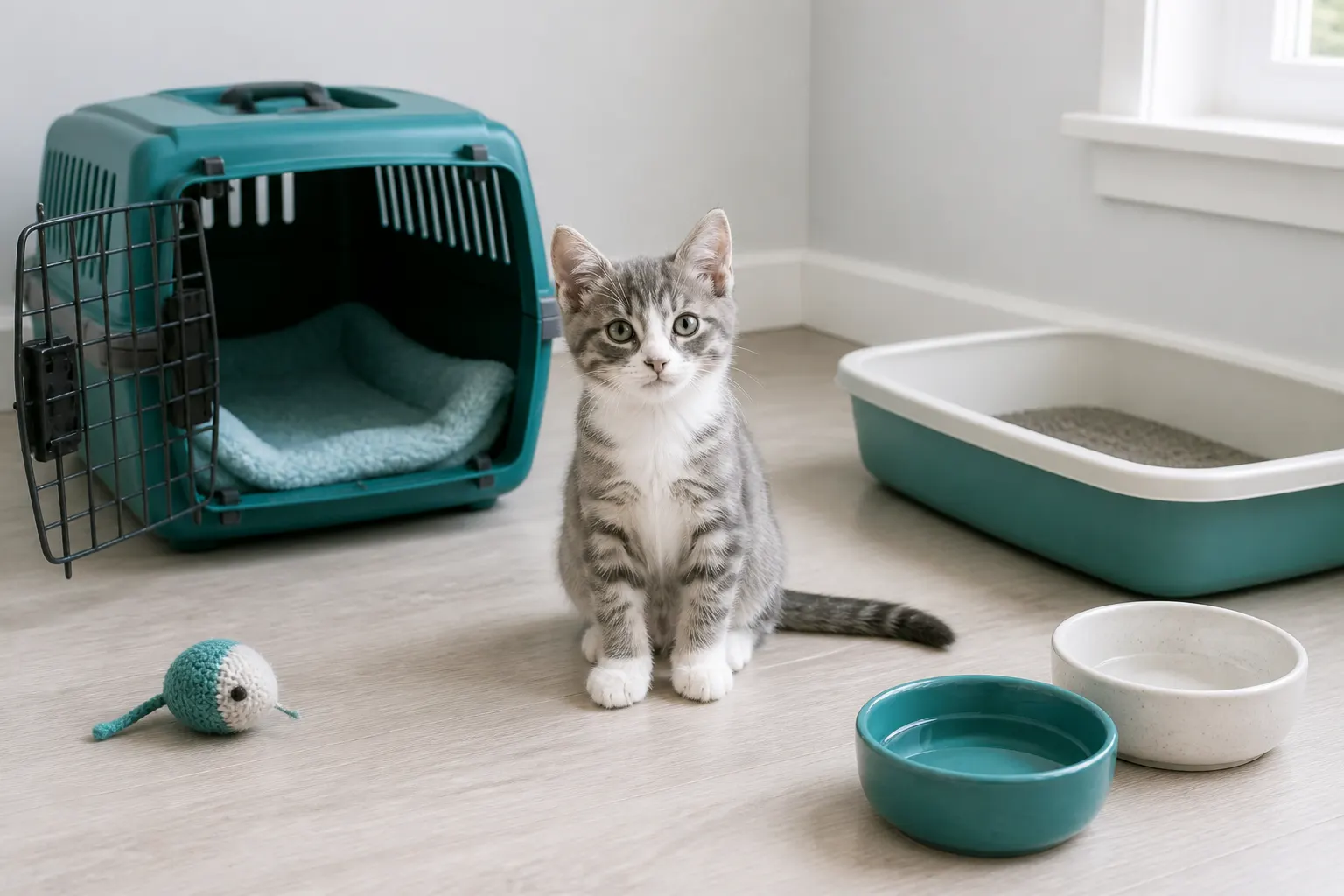
Have these essentials ready for the first week:
- A secure, well-ventilated cat carrier
- A quiet starter room with a bed and hiding place
- The kitten food they already eat
- Separate food and water bowls
- A low-sided litter tray, familiar litter, and a scoop
- A stable scratching surface and a few safe toys
- Veterinary, vaccine, parasite-treatment, and microchip records
- Regular and emergency veterinary clinic contact details
- A plan for slow introductions to people and other pets
- One place to record meals, litter-box use, treatments, and appointments
Spend first on secure transport, food, toileting, rest, and safety. Beds, toys, bowls, and scratching surfaces can be simple. You can buy extras after you learn what your kitten actually uses.
The first-week kitten checklist
| Get ready now | What to check |
|---|---|
| Secure carrier | Door fastens properly, ventilation is clear, and the kitten cannot squeeze through a gap |
| Starter room | Quiet, warm, escape-proof, and free from reachable hazards |
| Bed and hiding place | Washable bedding plus a box, covered bed, or open carrier where the kitten can retreat |
| Kitten food | Exact product, usual amount, and normal meal times from the previous caregiver |
| Food and water bowls | Easy to clean and placed away from the litter tray |
| Litter tray and scoop | Low entry, enough room to turn around, and the same litter type used before arrival when possible |
| Scratcher and toys | Stable scratching surface and toys without loose, swallowable, or easily detached pieces |
| Records folder | Vaccine dates, parasite treatments, tests, medications, microchip details, and adoption information |
| Clinic details | Regular veterinarian, nearest emergency clinic, route, and phone numbers |
What can wait
You do not need a tall cat tree, automatic feeder, water fountain, several litter types, a large toy collection, supplements, grooming gadgets, or a wardrobe of collars on day one.
Do not buy flea, tick, worming, calming, or other medication based only on a guessed age or weight. Products made for dogs can be dangerous to cats, and a dose that suited another cat may be wrong for this kitten. Ask a veterinarian to confirm the product, amount, timing, and next due date.
Set up one safe starter room
Giving a kitten access to the whole home immediately can make hiding, missed meals, litter accidents, and unsafe exploration harder to manage. Begin with one quiet room and expand the kitten's territory gradually.
Place in the room:
- A bed or folded washable blanket
- A covered hiding place, cardboard box on its side, or open carrier
- Food in a calm location
- Fresh water separated from food when space allows
- A litter tray as far from food and water as the room permits
- A stable horizontal or vertical scratching surface
- Two or three safe toys
- A low perch or secure elevated resting option the kitten can reach easily
Feline environmental guidelines treat hiding and separation of key resources as basic needs. A kitten should be able to rest out of view without being dragged out, while food, water, toileting, scratching, and play remain easy to reach.
Inspect the room from floor level. Secure or remove:
- Electrical cords, chargers, batteries, and small electronics
- Thread, ribbon, yarn, hair ties, rubber bands, dental floss, and sewing supplies
- Medicines, supplements, nicotine products, cannabis products, and topical creams
- Cleaning products, pesticides, rodent bait, and dog parasite treatments
- Lilies and any plant or flower you have not verified as cat-safe
- Recliners, sofa-bed mechanisms, rocking chairs, open fireplaces, and hot surfaces
- Open windows, insecure screens, balcony access, and gaps behind appliances
- Plastic bags, food wrappers, foam, small toys, and objects that could be swallowed
- Washing machines, tumble dryers, cupboards, and bins that may be entered unnoticed
Check the kitten's location before closing an appliance, moving a reclining chair, or opening an outside door. Everyone in the household should use the same room rules.
Keep arrival quiet and let the kitten choose the pace
Carry the kitten into the closed starter room before opening the carrier. Put the carrier on the floor, secure the room door, open the carrier, and sit nearby. Let the kitten come out when ready.
For the first several hours:
- Keep voices and movement calm.
- Point out the litter tray, food, and water without pushing the kitten into them.
- Leave the carrier available as a hiding place.
- Offer familiar food at the normal time.
- Allow long periods of uninterrupted sleep.
- Keep visitors and resident animals out of the room.
- Record whether the kitten eats, drinks, urinates, and passes stool.
A kitten who stays in the carrier or hides is not being difficult. Hiding is a normal coping option in a new environment. Sit quietly, avoid staring or reaching into the hiding place, and allow curiosity to build.
Contact the veterinary clinic if the kitten does not eat, seems weak, repeatedly vomits, has diarrhea, or shows another concerning change. Do not assume every symptom is caused by stress from the move.
Keep food familiar for now
Ask the shelter, breeder, fosterer, or previous caregiver for:
- The exact food name and life-stage formula
- Whether it is wet, dry, or a combination
- The usual amount per meal
- Normal meal times
- What the kitten typically finishes
- Any recent food change, vomiting, diarrhea, or appetite problem
- Any food reaction or veterinary diet instruction
Use the familiar food during the transition when possible. Growing kittens need a complete diet appropriate for growth, but the correct amount depends on age, weight, body condition, health, and the product. Ask the veterinary team to check the feeding plan rather than estimating from an adult cat's portion.
If a change is appropriate, make it gradually over the period your veterinarian recommends. Do not add cow's milk, supplements, raw food, or home remedies because the kitten seems small or unsettled. A kitten who refuses food or cannot keep food down needs veterinary advice, not a more complicated menu.
Fresh water should remain available. Use easy-to-clean bowls and refresh them regularly. Place water where the kitten can drink without being cornered by a person or another pet.
Make the litter tray easy to use
Start with the litter the kitten already knows. The 2021 feline life-stage guideline suggests the previous litter or unscented clumping sand litter as useful starting options, while recognizing that kittens can have individual preferences.
Choose a tray that:
- Has a low enough entrance for easy access
- Gives the kitten room to turn and dig
- Stays stable under small paws
- Is in a quiet, visible location
- Is not beside food, water, a noisy appliance, or a busy doorway
Scoop waste promptly so you can also notice what is normal. Record whether urine and stool are present, but do not repeatedly disturb the kitten while they use the tray.
If an accident happens, clean it calmly. Do not shout, spray water, carry the kitten by force, or rub their nose in the area. Check whether the tray was hard to reach, dirty, frightening, or filled with an unfamiliar substrate.
Call a veterinarian promptly if the kitten repeatedly enters the tray without producing urine, cries or strains while urinating, has blood present, develops persistent diarrhea, or stops using the tray while acting unwell. Inability to pass urine is an emergency.
Arrange the first veterinary visit
Contact a veterinary clinic during the first week, or sooner if the adoption agreement, previous caregiver, health history, or a symptom requires it. Tell the clinic the kitten's estimated age, source, known treatments, vaccine history, current food, and any changes you have noticed. Ask when they want to examine the kitten.
Bring or send:
- Vaccine certificates with product names and dates
- Deworming, flea, tick, and other parasite-treatment records
- Feline leukemia virus and feline immunodeficiency virus test results, if any
- Previous examination, medication, surgery, and laboratory records
- Microchip number and registry information
- The current food label or a clear photo
- A short list of observations and questions
- A stool sample only if the clinic requests one and explains how to collect it
Ask the veterinarian to clarify:
- What has already been completed and what remains uncertain
- Which vaccine is due next and the exact date
- Which parasite prevention fits this kitten's age, weight, lifestyle, and location
- Whether testing or follow-up testing is recommended
- What and how much to feed
- When to discuss spaying or neutering
- How to complete or verify the microchip registration
- What signs should trigger a call before the next planned visit
Do not repeat a vaccine, dewormer, or preventive because a record is difficult to interpret. Let the clinic review the actual history and build the plan.
For the longer vaccination sequence, see the Complete Kitten Vaccination Schedule. How to Prepare for Your Pet's Vet Visit can help you turn the records and observations into a concise appointment summary.
Start carrier training on day one
The carrier should not appear only before a stressful journey. Leave it open in the starter room with familiar bedding inside. When the kitten is relaxed, occasionally place a piece of normal food or a small toy near the entrance, then farther inside.
Keep sessions voluntary:
- Let the kitten approach and leave freely.
- Reward calm investigation.
- Briefly touch the door without closing it.
- Close and reopen it for a moment only when the kitten remains comfortable.
- Build duration in small steps before practising a short lift or quiet car session.
Do not chase the kitten around the room or tip them out of the carrier after a journey. A carrier that remains a familiar hiding place can make future travel and veterinary visits easier.
Use play and handling to build trust
Kittens learn quickly which interactions feel safe.
During the first week:
- Use a toy rather than hands or feet for chasing and pouncing.
- Keep interactive play short and let the kitten catch the toy sometimes.
- Put string, ribbon, and wand toys away after supervised play.
- Briefly touch paws, ears, and the outside of the mouth only while the kitten is comfortable.
- Stop when the kitten turns away, freezes, flattens their ears, lashes the tail, hides, or tries to escape.
- Reward calm choices with food, play, or space, depending on what the kitten values.
Do not pin the kitten down to prove that grooming or nail handling must be tolerated. Gentle, repeated practice is more useful than completing a full procedure during the first session.
Introduce children and other pets slowly
Keep resident animals separate from the starter room at first. Each cat needs their own food, water, litter, resting, hiding, and scratching resources. Do not make a new kitten compete at a doorway or share a tray immediately.
Begin with information rather than contact:
- Confirm the kitten's health plan with the veterinary clinic.
- Exchange bedding scents without forcing either animal to approach.
- Feed resident pets and the kitten on their own side of a closed door if everyone remains relaxed.
- Use a secure barrier for the first visual introduction.
- Keep dogs leashed and calm, with the kitten free to retreat or climb to safety.
- End the session before staring, stalking, chasing, swatting, or panic escalates.
Children should sit quietly, let the kitten approach, and use toys rather than hands. An adult should supervise every interaction. Sleeping, eating, hiding, and litter-box use are not times for handling.
A simple plan for days two through seven
Days 2 and 3: confirm the basics
- Check the records against what the previous caregiver told you.
- Contact the veterinary clinic and save the appointment details.
- Verify the microchip number and transfer process.
- Keep meals and litter setup familiar.
- Note appetite, urine, stool, energy, and any symptoms.
- Decide which person handles each meal, tray check, and treatment.
Days 4 and 5: build predictable routines
- Repeat the same meal sequence.
- Add short play sessions followed by quiet rest.
- Practise voluntary carrier entry.
- Introduce one person or controlled household experience at a time.
- Start a calm daily check of eyes, nose, coat, paws, and movement without restraining the kitten.
Days 6 and 7: close the gaps
- Replace unsafe or badly sized equipment.
- Add confirmed vaccine, parasite-treatment, medication, and recheck dates.
- Review whether the kitten consistently eats and uses the tray.
- Plan the next stage of introductions to rooms, people, and pets.
- Write down the veterinary clinic's specific call and emergency instructions.
Pet Care Reminder can hold the appointment, an earlier booking reminder, recurring treatments, and any medication schedule after the veterinary team confirms the dates. Mark tasks when they actually happen so another household member does not repeat them.
For a calmer daily rhythm, see How to Build a Morning Care Routine for Cats That Actually Sticks.
When to call a veterinarian
Call promptly if your kitten:
- Refuses food or water, especially if very young or small
- Repeatedly vomits or develops diarrhea
- Becomes unusually quiet, weak, cold, painful, or difficult to wake
- Has eye or nasal discharge together with reduced appetite or energy
- Coughs repeatedly or breathes differently
- Strains to urinate or passes little or no urine
- Has blood in urine, stool, or vomit
- Develops a swollen or painful abdomen
- May have swallowed thread, ribbon, a needle, a hair tie, medication, or another object
- Is worsening or simply seems seriously different from the kitten you brought home
Seek emergency veterinary care immediately for difficulty breathing or open-mouth breathing, collapse, unresponsiveness, a seizure, choking, severe trauma, uncontrolled bleeding, very pale or blue gums, inability to pass urine, or suspected poisoning.
Possible lily exposure, human medication exposure, or contact with a dog flea or tick product needs an immediate call even if the kitten still appears normal. Do not wait for symptoms, give human medicine, induce vomiting, or pull visible string from the mouth or rectum unless a veterinarian specifically directs you.
What to Keep in a Cat First Aid Kit can help you prepare emergency contacts and transport supplies before they are needed.
The simple rule
Make the first week small, safe, and observable.
Give the kitten one secure room, familiar food and litter, a choice of hiding place, gentle play, and enough quiet to settle. Confirm the veterinary plan and write down what the kitten actually eats, passes, and receives.
Once those foundations are reliable, you can expand the space and the routine without guessing what changed or what is due next.
Sources
- 2021 AAHA/AAFP Feline Life Stage Guidelines. Peer-reviewed clinical guidelines covering kitten examinations, nutrition, litter setup, vaccination, parasite control, socialization, handling, carrier acclimation, and individualized preventive care.
- AAFP and ISFM Feline Environmental Needs Guidelines. Formal guidelines on safe hiding places, separated resources, scratching, play, choice, and respectful human and animal interactions.
- Code of practice for the welfare of cats. UK government guidance on a safe environment, suitable food and water, toileting, rest, behavior, companionship, and protection from pain, injury, and disease.
- Potentially Dangerous Items for Your Pet. Official FDA safety guidance on medicines, chemicals, parasite products, foods, plants, foreign objects, and urgent action after a possible exposure.
- Pet First Aid. Official AVMA guidance on poisoning, breathing emergencies, seizures, choking, severe bleeding, safe transport, and seeking prompt veterinary care.