
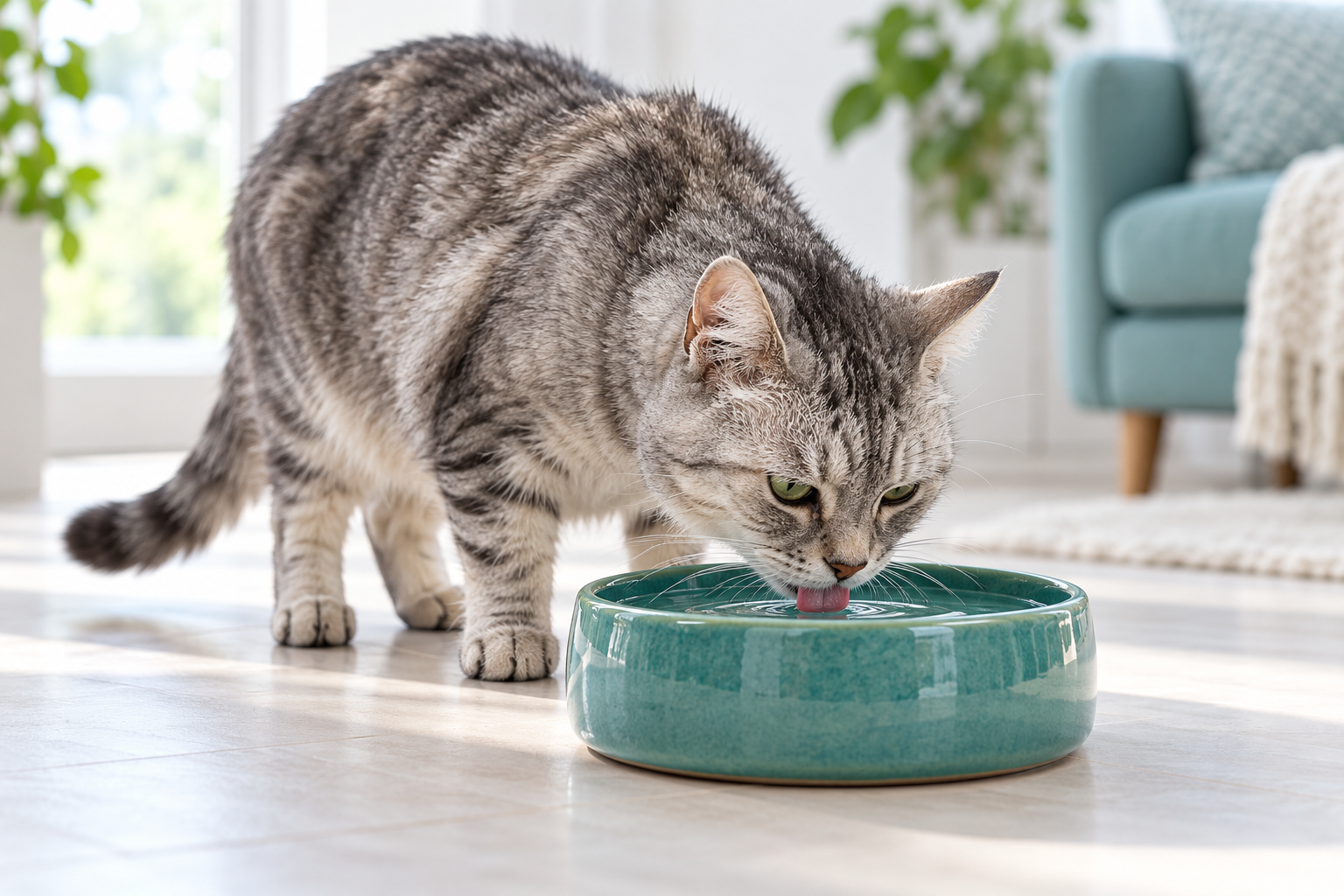
Compare meals, drinking, and litter-box output together
If your senior cat is drinking more water, contact your veterinarian promptly and describe what changed. While arranging care, record three things together: what your cat actually eats, where you see them drink, and what happens in the litter box. Keep fresh water available; do not wait for a complete log before calling.
A cat who is drinking more may also be eating less wet food, producing larger urine clumps, or losing weight despite eating eagerly. Those details help the clinic decide what to investigate. A bowl total alone cannot tell you the cause.
This guide helps you collect useful observations. It cannot diagnose your cat or set a treatment plan.
Check for urgent signs before starting a record
Repeated straining with little or no urine needs emergency veterinary care immediately. It can be mistaken for constipation. If you cannot tell whether a straining cat is passing urine, call an emergency clinic now rather than waiting for the next litter-box check. Do not press the abdomen or try to empty the bladder.
The 2025 iCatCare urinary guidelines identify urethral obstruction as potentially life-threatening. More trips to the box do not necessarily mean more urine is being produced.
Difficulty breathing, collapse, or being difficult to wake also requires immediate emergency help. RECOVER's first-aid guidelines support urgent veterinary assessment for these signs. Leave the observation sheet unfinished if necessary.
For increased thirst accompanied by repeated vomiting, refusing food, or marked lethargy, call for urgent veterinary advice now. Tell the clinic about any known kidney disease, diabetes, or current medication at the start of the call.
Put food moisture beside the drinking observation
“Drinking more” describes water you see your cat swallow from a bowl, fountain, or another source. It does not include water already present in food.
A 2026 study in healthy adult cats found that cats drank more on a dry diet, but took in more total water on a wet diet. This helps explain why a change in meals belongs in a drinking history. The study does not establish a safe intake target for an ill senior cat or prove that a food change explains new thirst.
For each observation period, note:
| Meals | Drinking | Litter box |
|---|---|---|
| Food name and wet, dry, or mixed format | Bowl, fountain, faucet, or other source | Box location and time checked |
| Portion offered and amount you saw this cat eat | What looks different from the usual pattern | Larger deposits, smaller deposits, or repeated attempts |
| Recent food change and its date | Measured amount only if reliably attributable | Whether you saw this cat use the box |
| Water added to food, if part of the existing routine | Spills, cleaning, refills, or another animal's access | Discomfort, visible blood, or an accident outside the box |
Record leftovers as leftovers, not as food eaten. If your cat normally eats wet food but now leaves most of it, tell the clinic even if the water bowl is busier. Do not switch diets to test an explanation or try to suppress drinking.
If the clinic requests a measured drinking log, ask which interval and units it wants. Label bowl water separately from water added to meals. A shared fountain's falling level is a household observation unless you can verify individual use.
Make litter-box comparisons repeatable
The iCatCare guideline includes urine-deposit size in the history a caregiver can provide. At home, use it as a comparison, not a conversion into milliliters or a diagnosis.
Choose a repeatable check, such as the usual morning scoop. Note the time since the previous cleaning, litter type, and any recent change in the setup. If practical, take a photo from the same position before scooping. Record when clumps overlap or break apart rather than counting them as separate urinations.
Keep three questions separate:
- Amount: Do the deposits look larger or smaller than this cat's usual pattern?
- Attempts: Did you actually see repeated visits, straining, or apparent discomfort?
- Identity: Which cat did you see use the box, if any?
For a cat who toilets outdoors or uses nonclumping litter, say that volume is unknown. Do not invent a number from how long the cat stayed outside or how often you saw them enter the box.
Also note access problems. The AAHA/AAFP life-stage guideline highlights mobility and litter-box access in senior cats. Hesitating at a high entrance or avoiding stairs is useful information for the vet; ask whether a nearby, lower-entry box would help. An access problem does not explain away a new drinking change.
Separate what you saw from what the household suggests
In a multi-cat home, use one of three labels for each entry:
- Seen for this cat: You watched this cat drink, eat, or urinate.
- Household only: A shared bowl emptied or a deposit appeared, but you did not see who was responsible.
- Unknown: You could not observe or measure that part of the routine.
A familiar favorite bowl or box does not prove identity. Ask other caregivers to use the same labels. If individual monitoring is needed, let the clinic help you plan it without restricting water or making an abrupt, stressful change to the household.
Illustrative example: Olive, a 13-year-old cat, shares a fountain and two litter boxes. Her owner sees her drink on three occasions after breakfast, which is unusual for her. Olive also leaves half her usual wet-food portion. Larger clumps appear in one box, but nobody saw which cat used it.
A useful call says: “Olive is visiting the fountain more and ate less wet food today. There are larger clumps in a shared box, but I cannot attribute them to her.” It does not say that Olive drank the entire missing fountain volume or produced every clump. This fictional example shows how to report uncertainty, not how to diagnose a cause.
Add the changes that help the vet interpret thirst
Increased drinking and urination can accompany kidney disease, diabetes, or hyperthyroidism in older cats, as the AAHA/AAFP guideline explains. These are possibilities for the veterinarian to investigate, not conclusions to draw from a log.
The AAFP senior-care guideline describes weight loss with an increased appetite among possible signs of hyperthyroidism. So “still eating well” should not hide a weight change in your report. Note any recent clinic weight, changes in appetite, vomiting, activity, or nighttime vocalizing without forcing a home weighing session.
Include exact medication names and the dates of recent prescription changes. Ask the prescriber about the next dose if you are concerned; do not adjust it to see whether drinking changes. The guide to tracking a senior cat's medication changes can help reconstruct that timeline.
Use the monthly senior cat checklist for broader routine reviews. A new thirst change deserves its own call and dated record.
Copy a focused observation sheet
Use one sheet per cat. Add only what you know; empty measurements should remain unknown.
Senior cat drinking and litter-box record
- Cat's name, age, and known conditions:
- First change noticed: date, time, and what was different
- Observation period: start and end time
- Meals: food name, wet/dry format, portion offered, amount actually eaten
- Recent diet change or water added to meals:
- Drinking: source, observed change, measured amount and units only if reliable
- Drinking evidence: seen for this cat / household only / unknown
- Litter: box, last cleaning time, deposit changes, attempts, discomfort
- Litter evidence: seen for this cat / household only / unknown
- Other changes: appetite, weight record, vomiting, energy, behavior
- Medication list and recent change dates:
- Clinic contacted: time, person spoken with, instructions
- Next action: appointment or update date, caregiver responsible
Ask what the examination and follow-up need to resolve
Your veterinarian may recommend blood tests, urinalysis, a thyroid test, and a blood-pressure check. The AAFP senior-care guideline emphasizes interpreting results together and comparing trends. One earlier normal blood result does not settle a new, continuing change.
Bring previous results and the short record. Ask:
- Which observations should I continue, and for how long?
- Do you want a urine sample from home, or will you collect it? What preparation is needed?
- When should results arrive, and who should call if they do not?
- If drinking remains different, when should I update you even if initial results are reassuring?
- Which changes mean I should seek care sooner?
Follow the clinic's collection and preparation instructions. Do not withhold water to obtain a more concentrated sample.
Once a date is confirmed, Pet Care Reminder's vet visit reminders can help you remember the appointment and keep visit notes together. Assign one caregiver to the follow-up so an unfinished result or recheck does not disappear between household members.
Sources
- 2021 AAFP Feline Senior Care Guidelines. Formal clinical guideline supporting feline history-taking, thyroid-related signs, combined diagnostic assessment, and follow-up of persistent changes.
- Senior Cats. Elimination chapter of the 2021 AAHA/AAFP Feline Life Stage Guidelines, published February 18, 2021, covering medical causes and mobility-related access problems in senior cats.
- 2025 iCatCare consensus guidelines on the diagnosis and management of lower urinary tract diseases in cats. Formal consensus guideline supporting litter-box history, recognition of possible urinary obstruction, and veterinary-directed sample collection.
- Water intake and consumption behavior of colony and privately-owned healthy domestic cats fed 100% dry, 50% dry and 50% wet, and 100% wet diets: a comparison of research and home environments. Peer-reviewed study published July 2, 2026, supporting the distinction between drinking water and total water intake in healthy adult cats.
- RECOVER Guidelines: First Aid for Dogs and Cats. Clinical Guidelines. Formal guideline published August 25, 2026, supporting emergency assessment for breathing difficulty, collapse, and poor responsiveness.