
Quick answer
Once a month, compare your senior cat with their own recent normal. Review:
- Appetite, eating comfort, and vomiting
- Drinking, urine, stool, and litter-box behavior
- Weight, body shape, and muscle condition
- Walking, jumping, stairs, and access to favorite places
- Grooming, coat, skin, claws, and any known lumps
- Teeth, gums, eyes, ears, and breathing
- Sleep, play, social behavior, vocalizing, and comfort
- Medications, refills, preventives, tests, and appointments
Save one short note and, when useful, a photo or video. Call your veterinarian about a new or worsening change rather than waiting for the next monthly check.
This is an observation routine, not a home examination or a way to diagnose illness. Its purpose is to make gradual changes easier to see and easier to describe to the veterinary team.
Daily clues matter more than one inspection
Cats do not save health changes for checklist day. Their most useful clues often appear during ordinary routines: approaching a meal, stepping into the litter box, jumping onto a chair, grooming, or choosing where to sleep.
Keep watching those routines every day. Use the monthly check to gather the clues into one comparison:
- What is different from last month?
- Is the change occasional, consistent, or getting worse?
- Does it affect more than one area, such as appetite and energy?
- Have you changed food, litter, furniture, medication, or household routines?
- Does the clinic need a call, photo, video, weight, or litter-box record?
The goal is not to inspect every whisker or measure every sip. It is to notice a meaningful trend before it disappears into the idea that a cat is simply getting older.
Build the baseline with your veterinarian
The 2021 feline senior-care guideline defines senior cats as generally over 10 years old, while recognizing that an individual cat may need a senior approach earlier. Ask your veterinarian which life stage and monitoring plan fit your cat.
Senior feline guidelines recommend veterinary examinations at least every six months. Very elderly cats, cats taking long-term medication, and cats with more than one condition may need assessment every three to six months or on another schedule chosen by the clinic.
At the next visit, ask the veterinary team to help you establish:
- A current weight and safe way to check it at home, if appropriate
- Body and muscle condition findings
- The cat's normal gait, jumping ability, and any painful areas
- Dental, eye, ear, heart, lung, thyroid, and kidney findings that need follow-up
- The exact medication, supplement, and preventive list
- Which blood, urine, blood-pressure, or other tests are due next
- Which changes require a routine appointment, a prompt call, or emergency care
Do not use a normal-looking monthly check as a reason to skip planned examinations or tests. A cat can appear well at home while a veterinary examination or trend in laboratory results reveals a problem.
The 20-minute monthly senior cat checklist
Choose a quiet time when your cat is awake and behaving normally. Do not wake, chase, corner, stretch, or restrain them to finish the checklist.
| Area | What to compare with last month |
|---|---|
| Meals | Amount eaten, enthusiasm, chewing, food dropped, swallowing, nausea, or vomiting |
| Water and litter | Bowl refill pattern, urine amount or frequency, stool, straining, accidents, or reluctance to enter the box |
| Weight and shape | Scale trend, ribs and waist, spine or hip prominence, and muscle over the back and legs |
| Movement | Walking, rising, stairs, jumping up and down, hesitation, slipping, or changed resting places |
| Grooming and surface check | Coat texture, mats, dandruff, overgrooming, skin, claws, paws, and known lumps |
| Face and breathing | Mouth comfort, odor, drooling, eye or ear changes, breathing pattern, and effort |
| Behavior and comfort | Sleep, play, interaction, hiding, vocalizing, confusion, irritability, and normal routines |
| Care schedule | Medications given, doses changed, refills remaining, tests, dental care, and appointments |
Stop if your cat becomes tense, tries to leave, flattens their ears, lashes the tail, growls, or appears painful. Write down what you could observe without forcing contact.
1. Compare food, water, and litter-box patterns
Start with what you already see during daily care.
For food, compare:
- Whether your cat comes to meals as usual
- How much of the measured portion is actually eaten
- Whether chewing takes longer or food falls from the mouth
- Whether the cat approaches food but turns away
- Vomiting, regurgitation, or repeated hairball-like episodes
- A new preference for only soft food or food presented in one position
For water and elimination, note:
- Whether bowls need refilling more or less often
- Larger or smaller urine clumps, when clumping litter makes that visible
- More or fewer trips to the litter box
- Stool frequency, consistency, and ease of passing it
- Urine or stool outside the box
- Hesitation at a high box entrance or difficulty holding a toileting posture
Do not limit water because urination has increased, and do not start a supplement, laxative, urinary product, or special diet without veterinary guidance. Call the clinic about a clear change in appetite, thirst, urination, stool, vomiting, or litter-box use.
Repeated attempts to urinate with little or no urine, crying in the box, collapse, or marked weakness require emergency veterinary care. Do not wait for the monthly record to become complete.
2. Track weight and muscle without guessing
Weight loss can be hard to see under fur, and a cat may lose muscle while their overall shape still looks rounded. The WSAVA nutrition guidelines distinguish body condition, which reflects fat stores, from muscle condition, which can change with aging or disease.
Ask the veterinary team to show you what they are assessing. If home weighing is safe and useful, use the same scale, surface, and method each time. A stable pet scale is ideal. Another option is weighing a secure carrier with and without the cat, but only if entering the carrier is calm and the scale can support it safely.
Alongside the number, take a monthly photo from above and from the side in similar lighting. Look for a change in:
- The outline of the waist and abdomen
- Prominence of the spine, shoulder blades, or hips
- Muscle along the back and thighs
- Fit of a familiar harness, when your cat already wears one comfortably
Contact the clinic about an unplanned gain or loss, a persistent trend, or a visible muscle change. Do not sharply reduce food, add high-calorie extras, or switch to a "senior" diet based on a single home measurement. The right response depends on the cat's health, current food, body and muscle condition, and veterinary findings.
3. Record an ordinary movement sequence
Watch your cat do something they choose every day. A useful sequence might be:
- Rising from a usual bed
- Walking across the room
- Stepping into the litter box
- Going up to a favored chair or window perch
- Jumping or stepping down again
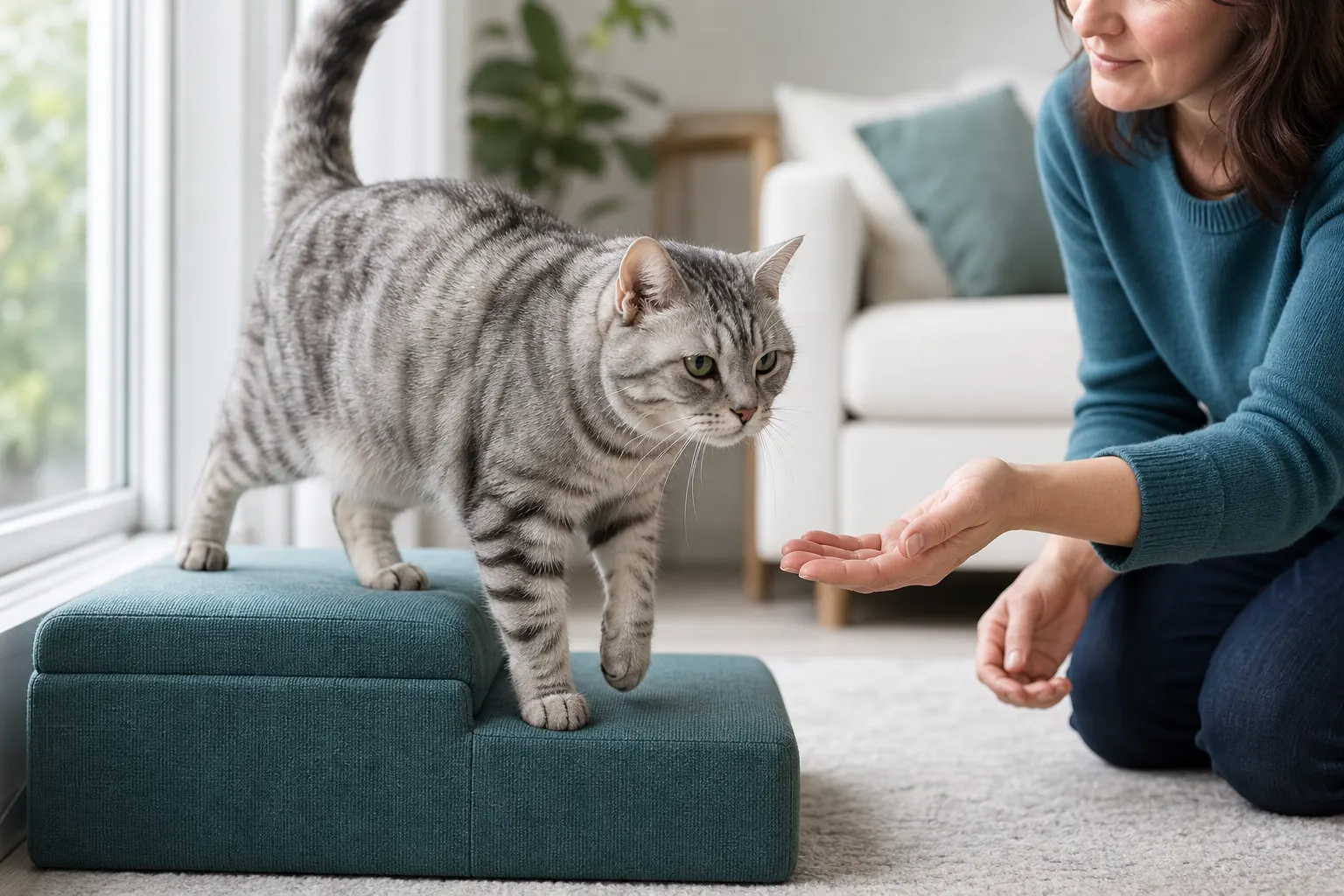
Do not lure a cat into a high or difficult jump for the test. Film the normal route from the side when you notice hesitation, a changed landing, repeated attempts, or a new need for an intermediate surface.
Cat-specific mobility changes can be subtle. Look for:
- Sleeping in lower or easier-to-reach places
- Pausing before jumping or pulling up with the front legs
- Taking stairs one step at a time
- Stiffness after rest or a crouched posture
- Less scratching, play, climbing, or grooming
- Slipping, weakness, poor balance, or a changed tail position
- Avoiding a litter box with a high entrance
A peer-reviewed study of cats with musculoskeletal pain found that owner-observed changes clustered around mobility, activity, grooming, and temperament. That makes a short video and a description of the cat's usual route more useful than saying only that the cat is "slowing down."
Contact your veterinarian about a new movement change. A low-entry litter box, non-slip surface, stable step, warm bed, or easier access to food and water may help, but ask the clinic to address possible pain or disease rather than treating the home modification as the diagnosis.
4. Check grooming, coat, skin, claws, and lumps gently
Observe first. A senior cat who no longer grooms the lower back, hindquarters, or claws may be uncomfortable or unable to reach the area.
If your cat enjoys touch, use a light stroke rather than a firm full-body examination. Compare:
- Coat shine, grease, dandruff, mats, or thinning
- Repeated licking, chewing, scratching, or one neglected area
- Claws that catch, curve, split, or are no longer shed normally
- Paw swelling, broken claws, or sensitivity
- Skin redness, sores, discharge, or odor
- The location and appearance of any previously documented lump
Photograph a skin or lump change beside a ruler only if you can do so without pressing or upsetting the cat. Do not squeeze, puncture, drain, cut, or apply a human skin product.
Book veterinary advice for a new lump, a changing known lump, a sore that does not heal, sudden coat decline, repeated overgrooming, painful touch, or claws growing toward the pad. A groomer can help with coat care, but grooming does not replace a medical assessment of why the change appeared.
5. Notice mouth, eye, ear, and breathing changes
Watch your cat eat, yawn, look around the room, and respond to normal household sounds. Do not pry the mouth open or put a swab into the ear.
Call the clinic about:
- New mouth odor, drooling, pawing at the mouth, food dropping, or chewing on one side
- Red or bleeding gums, a damaged tooth, or sudden resistance to face handling
- A cloudy eye, discharge, squinting, unequal pupils, or apparent vision change
- New ear discharge, odor, head shaking, loss of balance, or reduced response to sound
- Coughing, wheezing, or a change in resting breathing pattern
Cats can keep eating despite painful dental disease. A glance at the visible teeth also cannot show every tooth surface or root. Keep the oral examination and dental plan recommended by the veterinarian. For a home-care routine that respects comfort, see How Often Should You Brush a Cat's Teeth?.
Open-mouth breathing, obvious effort to breathe, blue or very pale gums, collapse, or sudden severe weakness is an emergency.
6. Take a behavior and comfort snapshot
Write one sentence about what your cat still chooses and enjoys. Then note any change in:
- Greeting people or seeking contact
- Play, scratching, climbing, and looking out the window
- Time spent hiding or alone
- Sleep location and day-night pattern
- Night vocalizing, pacing, staring, or seeming lost
- Tolerance of other pets, touch, noise, or handling
- Use of familiar routes and resources
- Number of comfortable days compared with difficult days
Behavior change is information, not disobedience. Pain, sensory loss, high blood pressure, thyroid disease, kidney disease, cognitive change, anxiety, and other problems can produce overlapping signs. A home checklist cannot separate them.
Do not punish accidents, vocalizing, hiding, or irritability. Record when and where the behavior happens, note any physical signs, and ask the veterinarian what assessment is appropriate.
7. Close the care-schedule gaps
Finish by comparing the written treatment plan with what is actually happening at home.
Check:
- Medication name, strength, amount, route, and current timing
- Whether every dose was given, refused, vomited, or possibly repeated
- How many doses remain before the refill runs out
- Any monitoring due after a medication start or dose change
- Parasite prevention and vaccination dates chosen for this cat
- The next examination, blood-pressure check, laboratory test, dental visit, or recheck
- Which clinic to call after hours and how to transport your cat
Never double a missed dose, stop a prescription, or change the timing without medication-specific advice. If instructions are unclear or two people share care, contact the clinic and use one shared record.
Pet Care Reminder can hold the monthly review, medication and refill reminders, and veterinary appointments after the clinic confirms the schedule. Mark each task when it is actually completed so the record shows what happened, not only what was planned.
How to Prepare for Your Pet's Vet Visit can help you turn the monthly notes, photos, videos, and questions into a concise appointment summary.
Keep the record short enough to repeat
A useful entry can fit in one table:
| Date | Area | What changed | Evidence | Action |
|---|---|---|---|---|
| Aug 17 | Movement | Used the low step for the window perch every time this week | 20-second side video | Sent to clinic; appointment moved earlier |
| Aug 17 | Weight | Down from the previous monthly reading using the same scale | Weight and side photo saved | Called clinic for advice |
Record specific observations rather than conclusions. "Left food at three breakfasts" is more useful than "seems old." "Needed two attempts to reach the chair" is more useful than "has arthritis."
When to contact a veterinarian
Call promptly about a new, persistent, or worsening change in:
- Appetite, drinking, weight, vomiting, or diarrhea
- Urination, stool, or litter-box behavior
- Walking, jumping, balance, comfort, or grooming
- Mouth, eyes, ears, skin, coat, or a lump
- Breathing, coughing, sleep, interaction, or behavior
- Response after a medication or dose change
Seek emergency veterinary care for difficulty breathing or open-mouth breathing, collapse, unresponsiveness, a seizure, uncontrolled bleeding, major trauma, sudden inability to use a limb, little or no urine despite repeated attempts, or suspected poisoning. Follow your clinic's emergency instructions when a known condition has its own warning signs.
Do not give human pain medicine, use leftover medication, induce vomiting, force food or water, or wait for the next checklist date when your cat is unwell.
The simple rule
Once a month, compare the same ordinary parts of your senior cat's life: meals, water, litter-box use, weight, movement, grooming, senses, behavior, and care dates.
Keep the check calm, brief, and consistent. Save objective details, contact the veterinarian about changes, and continue the examinations and tests chosen for your cat. The checklist succeeds when it helps the veterinary team see a trend sooner, not when every box is completed at home.
Sources
- 2021 AAFP Feline Senior Care Guidelines. Peer-reviewed clinical guidelines on senior-cat examinations, diagnostics, owner observations, pain, mobility, behavior, environmental changes, comorbidities, and quality of life.
- 2023 AAHA Senior Care Guidelines for Dogs and Cats. Formal evidence-guided recommendations on evaluating healthy and unwell senior pets, nutrition, dentistry, pain, behavior, diagnostic monitoring, and individualized follow-up.
- Nutrition Guidelines. WSAVA guidance and clinical tools distinguishing body condition from muscle condition and supporting consistent nutritional assessment.
- A study of owner observed behavioural and lifestyle changes in cats with musculoskeletal disease before and after analgesic therapy. Peer-reviewed study showing the value of owner-observed changes in feline mobility, activity, grooming, and temperament when identifying chronic musculoskeletal pain.