
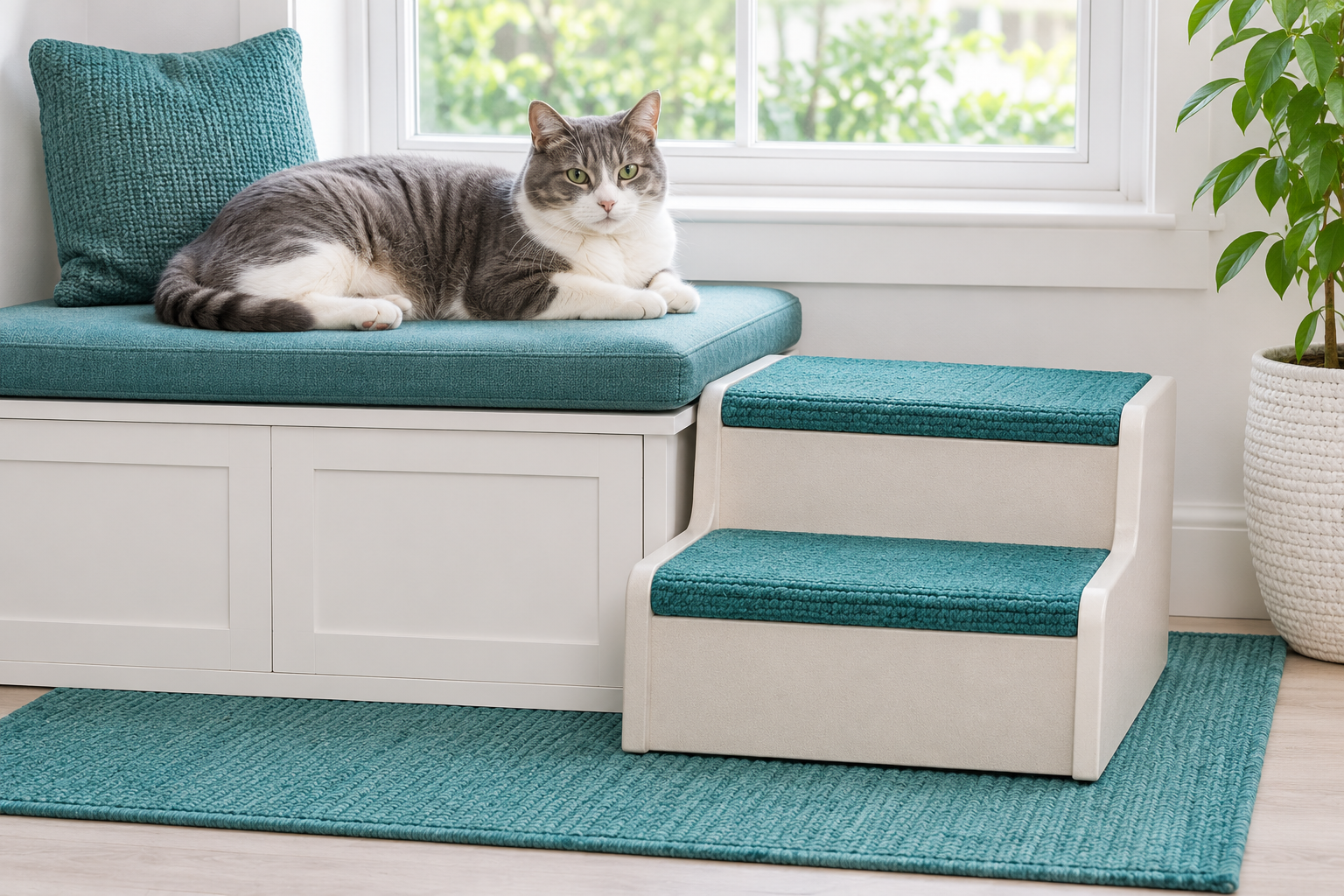
Build the day around comfortable access
Cat arthritis care at home starts with easy access to everyday resources, the treatment your veterinarian prescribed, and a short record of what your cat can comfortably do. Organize care around the litter box, meals, resting places, grooming, and voluntary activity.
This guide is for a cat already diagnosed with osteoarthritis. New difficulty moving still needs veterinary assessment. A home routine supports care; it cannot establish why your cat is uncomfortable.
AAHA's pain-management guideline combines veterinary assessment with owner observations and repeated review. Ask your clinic to put the treatment, activity limits, monitoring instructions, and next review date in writing. Keep that plan beside the daily record.
Check the route, the entrance, and the destination
The 2024 ISFM/AAFP guideline recommends adapting the home for cats with chronic joint pain. A resource can be nearby yet difficult to use.
| Resource | Access check | Adaptation to discuss with your veterinary team |
|---|---|---|
| Litter box | Can your cat enter, turn, and leave comfortably? | A roomy tray with a low entrance, in an accessible location |
| Favorite bed or perch | Is reaching it or getting down difficult? | Stable steps or a ramp suited to your cat, with secure footing |
| Food and water | Is the approach slippery or the eating position awkward? | Non-slip footing; ask whether a different bowl height would help |
| Scratching area | Can your cat use the available orientation? | Offer horizontal as well as vertical scratching surfaces |
| Resting place | Can your cat settle without navigating obstacles? | Comfortable bedding in an easily reached place |
Keep food, water, and toileting areas separate. In a multi-cat home, watch whether another pet blocks the route. The feline environmental-needs guideline supports separated resources and safe resting choices, including accessible elevated places for cats with limited mobility.
Write down one specific access problem before buying equipment. For example: “The tray is low, but the only route crosses a slippery hallway.” Ask the clinic to help choose an adaptation if the route remains difficult. Do not make your cat demonstrate a failed jump.
Give morning, daytime, and evening different jobs
Use these as household cues, not prescribed treatment times.
Morning: check access and complete scheduled care
Confirm that yesterday's arrangement is still usable: a door has not shut, a step has not shifted, and the litter entrance is clear. Follow the written feeding and treatment instructions. Record what happened rather than ticking off everything planned.
Keep a separate line for an unresolved question. “Did not see her use the tray” should remain an observation gap, not become “used normally.”
Daytime: offer interaction your cat can choose
Older cats still need opportunities to play, but the environmental-needs guideline recommends adapting the activity to their abilities. Ask the clinic which play fits your cat's movement limits. Let your cat approach and end contact; do not turn a toy session into a required jumping exercise.
The 2024 ISFM/AAFP guideline also highlights coat and claw care. Offer gentle grooming if your cat accepts it, and ask for help with neglected coat areas or difficult nail care. Stop handling that your cat resists rather than forcing completion.
Evening: close the gaps in the record
Compare notes with anyone else providing care. Identify which scheduled tasks actually happened, which observations are missing, and which question needs a clinic call. Name the person responsible for the next action.
If mornings are hectic, move record review to the evening while keeping prescribed treatment times intact. The routine should fit the household without changing the medical plan.
Keep pain treatment separate from home adjustments
A new step or litter tray does not replace the prescribed pain plan. For changes to a prescription, use the senior cat medication change record to retain the dated instructions.
US medication note: The FDA states that no NSAID is approved for long-term use in cats. Your veterinarian must decide which treatment is appropriate for your individual cat. Do not borrow a dog's medicine, add a human pain reliever, or change a dose yourself.
If your cat receives an NSAID, ask for its safety information and monitoring plan. FDA guidance says to stop the NSAID and call the veterinarian immediately if a side effect is suspected, including vomiting, diarrhea, appetite loss, or unusual lethargy. Other medicines have different instructions; get a specific plan for each one.
Record any treatment concern before the next caregiver takes over. Do not hide a problem inside a general note saying “quiet day.”
Record access and comfort separately
Choose a few ordinary activities with the veterinary team. AAHA supports home video and owner questionnaires in feline pain assessment. Record naturally occurring activity without provoking a difficult movement. If the clinic gives you a validated questionnaire, retain its original wording and scoring.
Use this worksheet to explain the circumstances around those observations. It is an organizational aid, not a pain scale.
Daily cat arthritis care note
- Date, cat, and caregiver:
- Current veterinary plan dated:
- Resource or ordinary activity observed:
- Route, entrance, and destination:
- What the cat actually did:
- Help or equipment used:
- Other pet present or access blocked:
- Setup changed since the last observation:
- Scheduled care completed or unresolved:
- New concern and time noticed:
- Question sent to the clinic; advice received:
- Next review date and person responsible:
Fictional example: Olive's record says she stopped using her window bed after a chair was moved in front of the access steps. Her caregiver clears the route and later notes that Olive used the steps again. At the recheck, they report both facts. “Reached the bed after the route was cleared” is more accurate than claiming the medication worked better that day.
Keep earlier entries when the setup changes. An empty observation field is less useful than “not seen,” and “used the ramp” tells the clinic more than “normal.”
Decide when the routine needs veterinary review
Contact the clinic about worsening mobility, reduced comfort, or a new reluctance to use a familiar resource. Do not wait for the scheduled recheck if the plan is no longer helping. Seek urgent veterinary advice immediately for a sudden inability to stand or use a limb. Go to an emergency veterinarian for breathing difficulty, collapse, or serious injury. Do not delay care to finish the record.
Put the agreed recheck and an earlier booking reminder in Pet Care Reminder's vet visit reminders, and keep the visit notes with it. Bring the current treatment instructions and a short selection of observations, including any home changes.
For broader health trends, continue the monthly senior cat checklist. This daily note has a narrower purpose: showing which parts of ordinary life remain difficult and what the care team needs to review next.
Sources
- 2024 ISFM and AAFP consensus guidelines on the long-term use of NSAIDs in cats. Formal feline clinical guideline supporting home-access changes and attention to grooming and claw care alongside pain treatment.
- AAFP and ISFM Feline Environmental Needs Guidelines. Formal 2013 guideline supporting separated resources, safe resting choices, adapted play, and voluntary interaction.
- 2022 AAHA Pain Management Guidelines for Dogs and Cats. Formal clinical guideline supporting individualized pain care, home observations, validated assessment tools, and reassessment.
- What Veterinarians Should Advise Clients About Pain Control and Nonsteroidal Anti-Inflammatory Drugs (NSAIDs) in Dogs and Cats. US regulatory technical guidance on feline NSAID approvals, prescribing safeguards, and suspected adverse effects.
- RECOVER Guidelines: First Aid for Dogs and Cats. Clinical Guidelines. Formal 2026 first-aid guideline supporting prompt professional care for serious illness or injury and respiratory emergencies.
