
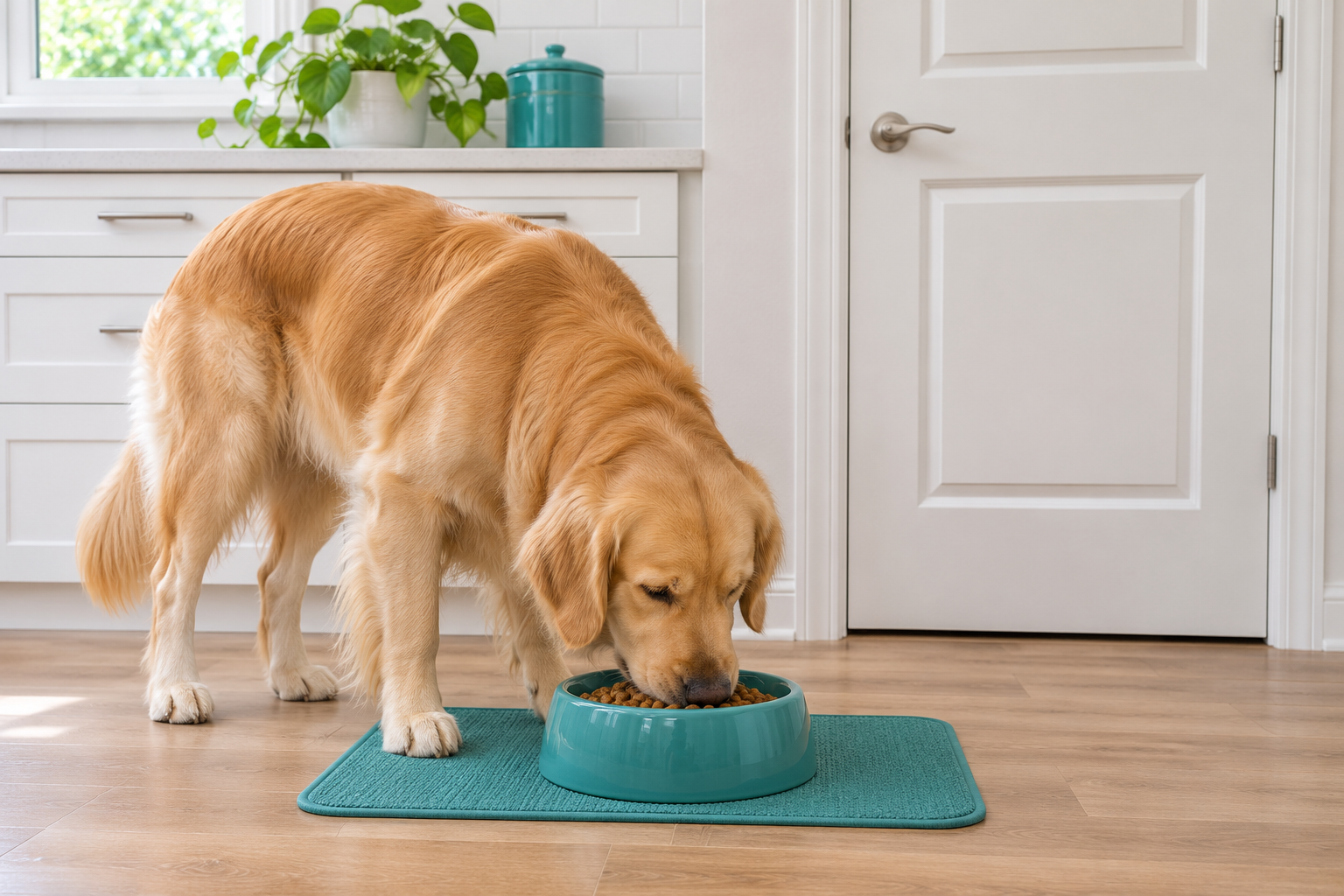
Give each dog a plan, a place, and a meal record
When feeding multiple dogs different diets, prepare each dog's portion separately, prevent access to the other bowls, and clear food before the dogs reunite. Record what each dog actually ate, including leftovers or uncertainty. Two bowls on opposite sides of the kitchen are not a reliable boundary if either dog can walk between them.
Start with the feeding plans your veterinary team has agreed for each dog. This guide helps a household carry those plans out; it does not choose a diet or calculate portions.
Confirm which differences matter
AAHA's nutrition guideline recommends individual feeding plans that account for the animal, diet, and feeding environment. A puppy's growth needs, an adult dog's weight-management plan, and a medical diet may call for different foods or amounts. Do not switch everyone to one dog's food just to simplify shopping without checking that it suits each animal.
Make a short food card for each dog: name, exact formula, daily amount and meal portions, units, allowed extras, and the plan's date. Ask the clinic to clarify:
- Whether the dogs can ever share this food
- Which treats, chews, training rewards, and medication carriers are allowed
- What to do after a refused meal or accidental access to another diet
- When to review weight, body condition, and the feeding plan
If a puppy is part of the household, confirm that their diet is appropriate for growth. Keep each dog's quantities separate even when two dogs eat the same product.
Assign feeding areas before putting bowls down
Choose places where each dog can eat comfortably without the other reaching the food. Closed doors can provide a clearer boundary than a gate that a dog can jump, push through, or reach around. Keep children out of feeding areas.
Use this planning table to spot gaps:
| Household situation | Practical setup | Check before serving |
|---|---|---|
| Two dogs eat at the same time | Separate comfortable rooms with closed doors | Each dog is in the correct room before food arrives |
| One finishes much faster | Keep the fast eater separate while the slower dog eats | Nobody opens the connecting door early |
| A dog eats several smaller meals | Give that dog protected access at each planned meal | Other dogs cannot reach a bowl left available |
| Space permits only one feeding area | Feed in turns if that fits both dogs' plans | The waiting dog is comfortable elsewhere; the area is cleared between turns |
| A caregiver is covering dinner | Use the same named areas and written food cards | The caregiver can identify each dog, food, and portion |
Do not introduce a stressful confinement arrangement at dinner and expect hunger to make it work. Practice moving to feeding areas calmly, using rewards compatible with each dog's plan.
If a dog stiffens, growls, snaps, or guards access to food, avoid confrontations and arrange veterinary or qualified behavior help. Do not punish warnings, reach in to test the dog, or grab a guarded bowl. AVSAB's position statement supports reward-based methods and managing the environment to keep everyone safe. A household checklist is not treatment for food-related aggression.
Follow the same five steps for every meal
- Check the last entry. Confirm who is feeding this meal and whether anyone has already served it. Give one caregiver responsibility for finishing the process.
- Prepare one dog's meal at a time. Match the name on the food card to the exact product and measured portion. Label storage locations and meal containers; do not rely on kibble appearance or bowl color alone.
- Separate, then serve. Establish the agreed boundaries before setting bowls down. Keep the food cards outside the dogs' reach where the caregiver can check them.
- Observe and record. Note food offered, food left, spills, and who saw the dog eat. A bowl that disappeared from view cannot establish which dog finished it.
- Clear, then reunite. Once a dog is safely away from their bowl, remove leftovers and clear spilled food. Check both areas before opening the doors. Follow the food's storage instructions for leftovers.
Let each dog's agreed plan determine meal timing and access. Do not impose an arbitrary short eating deadline on a slow eater or suddenly remove a medically necessary feeding opportunity. If the current routine depends on food being freely available, ask the veterinary team how to make access individual.
For household task assignments beyond meals, use the shared pet care calendar guide.
Extend the boundary to treats and empty bowls
A separate dinner bowl does not prevent food sharing during training, visitor greetings, food-toy use, or kitchen cleanup. Give caregivers a clear list of permitted extras for each dog and record them alongside meals.
A veterinary elimination diet trial needs especially careful control. ICADA's diagnostic guideline identifies treats, medication carriers, flavored products, crumbs, and licking another pet's bowl as possible reasons a trial fails. Ask the prescribing team what is allowed, including rewards and oral-care products. Do not stop or replace medication yourself to avoid a flavoring.
For a dog on a trial, keep their preparation utensils separate, prevent access to the other dog's used bowl, and tell visitors not to improvise snacks. Ask the clinic how to handle an accidental exposure and whether it changes the review plan. Do not assume a small amount is irrelevant or restart the trial clock on your own.
These strict trial precautions should not become a claim that every bite of another dog's ordinary food is poisonous. The response depends on the food, amount, individual dog, and reason for the restriction.
Record a mix-up without guessing the missing meal
Fictional example, not a feeding recommendation: A caregiver offers Milo 80 grams of his usual kibble and Nori 60 grams of her prescribed diet in separate rooms. A door is opened early. Later, Milo's bowl contains 20 grams and Nori's is empty, but nobody saw who ate from which bowl.
The record should say:
| Observation | What can be recorded |
|---|---|
| Milo's bowl | 80 g offered; 20 g left; 60 g no longer in the bowl |
| Nori's bowl | 60 g offered; none left |
| Individual intake | Unknown for both dogs after the door opened |
| Possible diet exposure | Nori may have eaten Milo's food; Milo may have eaten Nori's |
| Next action | Contact Nori's clinic about the restricted-diet exposure and next meal; clarify Milo's plan if needed |
Do not turn “food missing” into “food eaten by the intended dog.” Give the clinic the product names, possible amounts, time, and any signs. Avoid guessing replacement portions or changing either diet to compensate. Fix the access problem before the next meal.
Copy a per-dog feeding handoff
Keep the current food card above the daily entries. When the clinic changes a plan, date the new version and tell everyone who feeds the dogs.
Separate-diet feeding handoff
- Dog and identifying detail:
- Current plan date and veterinary contact:
- Exact food and storage location:
- Meal time, portion, and units:
- Allowed extras and whether included in the daily ration:
- Assigned feeding area and boundary:
- Caregiver responsible for this meal:
- Actual time served and amount offered:
- Leftovers, spills, and amount definitely eaten by this dog:
- Other food access or uncertainty:
- Bowl and floor cleared before dogs reunite:
- Changes noticed, clinic advice, and next action:
- Next meal or review and person responsible:
Pet Care Reminder's vet visit reminders can help you remember the nutrition review and keep the resulting visit notes with the dog's records. Bring each dog's food card and relevant meal entries to that review.
Get help when the problem is more than meal logistics
Tell your veterinarian about a new or persistent intake change, unexpected weight change, or trouble eating rather than assuming another dog explains it. The dog appetite observation guide helps you describe what changed. Follow the individual clinic plan promptly after a missed meal in a dog whose treatment depends on eating.
Breathing difficulty, choking, or suspected poisoning requires immediate veterinary help. Do not delay to complete the log or try to induce vomiting at home unless a veterinarian or animal poison professional specifically directs it. RECOVER's first-aid guideline supports urgent professional care in these situations.
Sources
- 2021 AAHA Nutrition and Weight Management Guidelines for Dogs and Cats. Formal clinical guideline supporting individual feeding plans, growth nutrition, feeding-environment assessment, and nutritional follow-up.
- Canine atopic dermatitis: detailed guidelines for diagnosis and allergen identification. ICADA-approved 2015 clinical guideline identifying other foods, flavored products, crumbs, and shared bowls as elimination-diet trial pitfalls.
- Position Statement on Humane Dog Training. Formal AVSAB statement supporting reward-based methods, environmental management, and professional treatment of serious behavior concerns.
- RECOVER Guidelines: First Aid for Dogs and Cats. Clinical Guidelines. Formal 2026 guideline supporting urgent care for respiratory distress, choking, and suspected poisoning, and advising against routine out-of-clinic vomiting induction.
