
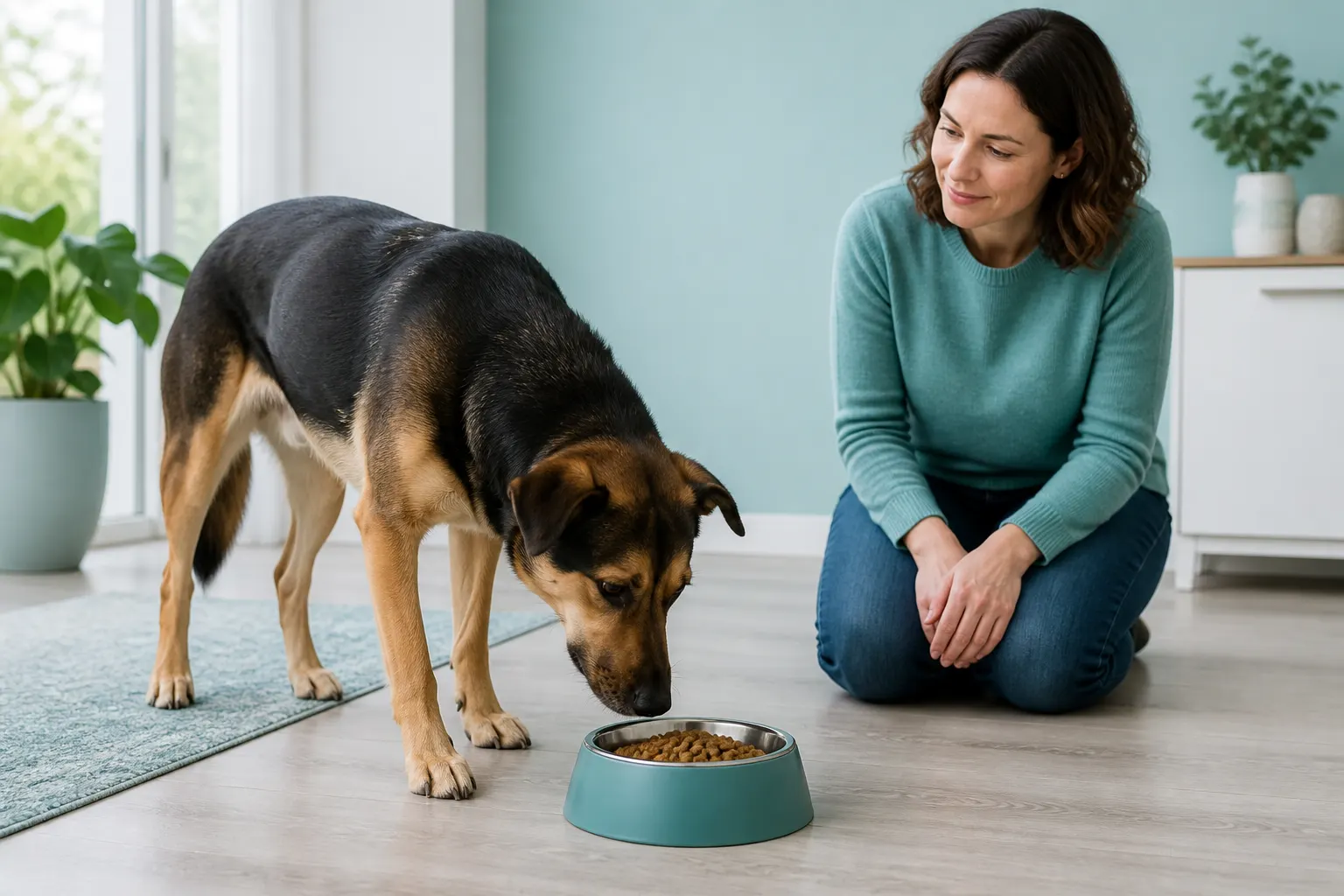
Quick answer
When your dog's appetite changes suddenly, record what was offered, how much was eaten, and what else changed at the same time. Do not write only "would not eat." A useful first entry includes:
- The food, measured amount, and time it was offered
- How much remained after the normal meal period
- Whether your dog approached, sniffed, tried to eat, chewed, and swallowed normally
- Water intake, vomiting, diarrhea, urination, stool, energy, comfort, and behavior
- New food, treats, rubbish, medication, supplements, stress, travel, or possible toxin or foreign-object exposure
- The next veterinary action, including the time you called and the advice you received
Call your veterinarian promptly if the change persists, repeats at the next meal, or comes with another symptom. Call earlier for a puppy, senior dog, pregnant or nursing dog, a dog with diabetes or another medical condition, a dog recovering from a procedure, or a dog who needs food with medication.
Seek emergency veterinary care now for repeated unsuccessful retching, a swollen or painful abdomen, collapse, breathing difficulty, very pale, blue, or grey gums, a seizure, severe weakness, suspected poisoning, a possible swallowed object, or inability to swallow or keep water down.
An appetite log helps a veterinary team assess the pattern. It cannot identify the cause or prove that waiting is safe.
First decide whether this can wait for the next meal
A sudden appetite change is not one diagnosis. It can occur with pain, nausea, dental disease, digestive illness, infection, medication effects, stress, a change in the food or feeding environment, and many other problems. The surrounding signs determine how urgently the dog needs help.
Use three practical levels:
| Level | What you may see | What to do |
|---|---|---|
| Emergency now | Repeated dry heaving, abdominal swelling, collapse, breathing trouble, abnormal gum color, severe pain or weakness, seizure, suspected toxin, or possible swallowed object | Call the nearest emergency veterinary clinic and leave as directed |
| Prompt veterinary advice | More than one refused or substantially reduced meal, worsening intake, vomiting, diarrhea, pain, lethargy, drinking or urination changes, medication concerns, or a higher-risk dog | Call your regular vet or urgent clinic and give the full timeline |
| Brief monitoring may be reasonable | One smaller meal in an otherwise healthy adult dog who is bright, comfortable, drinking normally, and showing no other change or exposure risk | Record the meal, watch closely, and call if the pattern continues or anything else changes |
Do not rely on a universal number of hours. A dog with diabetes who refuses food before insulin is in a different situation from a healthy adult who eats half of one meal after an unusually busy day. Individual veterinary instructions always take priority over a general guide.
When you are unsure which level fits, call. The clinic can ask follow-up questions and decide whether your dog needs emergency care, a prompt appointment, or a specific home-monitoring plan.
Measure the change before trying to explain it
Start with the meal itself. Memory tends to turn "ate less" into either "ate nothing" or "probably ate enough," especially when several people feed the dog.
Record:
- The brand, product, flavor, and form of food
- The measured amount offered
- The amount left, measured in the same way
- The normal amount for comparison
- The time the bowl went down and came back up
- Every treat, chew, table scrap, food toy, training reward, and medication carrier
- Whether another pet or person could have removed food
- Any recent bag, batch, storage, smell, texture, or recipe change
If you use a kitchen scale, weigh the food before and after the meal in the same bowl. If you use a scoop, use the same level scoop each time. A rough percentage such as "ate about one quarter" is still more useful than "not interested" when weighing is impractical.
The AAHA and WSAVA nutrition guidelines emphasize that a proper nutrition history includes the dog, the diet, feeding management, and the environment. That wider view matters because an apparently empty bowl does not always equal normal appetite. Another pet may have eaten the food, the dog may have filled up on treats, or a sore dog may want food but be unable to eat comfortably.
Do not keep offering a succession of richer foods to see what finally works. That can hide the original pattern, upset the stomach, interfere with a prescription diet, and make the timeline harder to interpret.
Track interest, eating ability, and the amount separately
"Appetite" combines several steps. Watch from a comfortable distance and record where the sequence changes.
Interest in food
Does your dog come to the feeding area, notice the bowl, and show their usual anticipation? Or do they stay in bed, avoid the room, seem restless, or act unusually quiet?
Approach and sniffing
Does your dog approach and sniff, then turn away? Do they lip lick, drool, swallow repeatedly, pace, or look at their abdomen? Those observations can help the veterinary team recognize possible nausea or discomfort, but they do not prove a cause.
Picking up food
Does your dog take food into the mouth and drop it? Do they chew on one side, cry out, paw at the mouth, or avoid hard pieces while accepting soft food? That pattern can point the veterinarian toward the mouth, teeth, jaw, throat, or another painful area that needs examination.
Chewing and swallowing
Watch for repeated swallowing, gagging, coughing, regurgitation, food falling out, or extending the neck. Stop offering food and seek prompt advice if swallowing appears difficult. Breathing trouble or a possible obstruction is an emergency.
Finishing and keeping food down
Record the amount eaten and whether vomiting or regurgitation follows. When Should a Dog See the Vet for Vomiting? explains how to distinguish a low-risk isolated episode from patterns that need prompt or emergency care.
Do not put your hand in the mouth of a painful, gagging, panicked, or uncooperative dog. Do not pull on visible string, thread, or fabric. Call a veterinary clinic for immediate guidance.
Build a timeline around the appetite change
The goal is to show what changed before, during, and after the first unusual meal.
| Time | Food and amount | Eating behavior | Other observations | Action |
|---|---|---|---|---|
| 7:30 a.m. | Usual dry food, 180 g offered, about 45 g eaten | Approached and sniffed, then lay down | Drank normally, quieter than usual, no vomiting | Called clinic at 8:05 a.m. |
| 10:00 a.m. | No additional food offered, per clinic advice | Not assessed | Urinated once, loose stool, responsive | Appointment booked for 1:30 p.m. |
| 1:00 p.m. | Followed clinic instructions | Took two bites, stopped | Lip licking and restlessness | Updated clinic before leaving |
Use actual observations. Avoid diagnoses such as "stomach bug," "being stubborn," or "anxiety" unless a veterinarian has made that assessment. A factual timeline lets the clinic see progression without having to separate evidence from guesses.
Include the last definitely normal meal and the last normal day. If the change developed gradually, note when you first began compensating with toppers, hand-feeding, smaller pieces, or extra encouragement. The appetite problem may have started earlier than the first fully refused meal.
Check the whole dog without delaying care
An appetite change becomes more concerning when it is joined by another change. Record:
- Energy and response: normal interaction, unusual sleepiness, weakness, withdrawal, agitation, or confusion
- Vomiting or regurgitation: time, number of episodes, appearance, and whether water stays down
- Stool: frequency, consistency, straining, black appearance, or visible blood
- Water and urine: more or less drinking, more or less urination, accidents, straining, or inability to pass urine
- Comfort: panting at rest, trembling, guarding, repeated stretching, difficulty settling, or reluctance to be touched
- Abdomen: visible swelling, repeated looking at the belly, or obvious pain without pressing on it
- Breathing and circulation: breathing effort, collapse, and gum color if your dog safely allows a brief look
- Mouth and face: drooling, bad breath, swelling, a damaged tooth, food dropping, or one-sided chewing
- Movement: stiffness, limping, reluctance to rise, or an unusual posture
- Weight: a recent measured change, looser harness, or more prominent ribs, spine, or hips
In a peer-reviewed veterinary teletriage study of 1,575 dogs with gastrointestinal signs, vomiting accompanied by other clinical signs increased the rate of emergency referral. Lethargy and abdominal distension were also associated with referral. The study does not provide an at-home diagnosis rule, but it supports looking beyond the food bowl when deciding how urgently to call.
Do not repeatedly press the abdomen, pry open the mouth, force the dog to walk, or create a test that may cause pain. Observe normal behavior and stop if handling is unsafe.
Call earlier for dogs with less room for error
Ask for veterinary advice after the first meaningful appetite change when your dog is:
- A young puppy, especially if very small or not fully vaccinated
- A senior dog or a dog losing weight or muscle
- Pregnant or nursing
- Diabetic or receiving insulin
- Living with kidney, liver, pancreatic, adrenal, gastrointestinal, heart, or another chronic condition
- Taking medicine that must be given with food
- Receiving chemotherapy, immune-suppressing treatment, or another closely monitored medicine
- Recovering from surgery, anesthesia, hospitalization, or a recent illness
- On a prescription diet that is part of disease management
- Known to swallow toys, socks, bones, rubbish, or other objects
Do not give insulin, skip insulin, repeat medication, stop a prescription, or alter a dose because a meal was refused unless the prescribing veterinary team tells you exactly what to do. Call with the product name, strength, prescribed amount, scheduled time, last dose, and current food intake.
If your dog takes several medicines, keep the appetite entry separate from the medication record. The clinic needs to know both what was scheduled and what actually happened.
Record exposures and changes before cleaning everything away
Look for a plausible change without spending so long investigating that care is delayed.
Check:
- Rubbish, compost, food scraps, bones, skewers, corn cobs, string, socks, toys, or packaging
- Human medication, veterinary medication, supplements, nicotine, cannabis, cleaners, garden products, or pest products
- A new food bag, recipe, treat, chew, or storage container
- Spoilage, moisture, insects, unusual odor, or damaged packaging
- A boarding stay, travel day, visitor, move, schedule change, or another pet blocking the bowl
- A recent vaccine, procedure, medication start, or dose change
Save packaging, labels, lot details, and a clear photo when safe. Tell the clinic what may be missing and the earliest possible exposure time.
Do not induce vomiting with hydrogen peroxide, salt, mustard, or another home method. The FDA-approved drug used to induce vomiting in dogs is prescription-only and administered by veterinary personnel after they assess whether vomiting is appropriate. Call a veterinarian or animal poison service immediately for suspected poisoning.
Avoid home experiments that blur the picture
Unless the veterinary team directs otherwise, do not:
- Force-feed or syringe-feed food or water
- Restrict water because drinking has changed
- Fast a puppy, diabetic dog, or medically fragile dog
- Give human nausea, pain, stomach, or appetite medicine
- Use another pet's prescription or leftover veterinary medicine
- Repeat a dose that may have been spat out or vomited
- Replace a prescribed diet with a homemade meal
- Add many toppers or treats to prove the dog can eat
- Wait for weight loss before calling about a persistent appetite change
AAHA nutrition guidance warns that forceful oral syringe feeding can create food aversion and aspiration risk. A dog who is not eating may need treatment of the underlying problem, a veterinary feeding plan, or supervised nutritional support. Appetite stimulants are not a substitute for assessing why intake changed.
Use a concise veterinary call script
Lead with the change, duration, amount, and accompanying signs:
"My dog ate about one quarter of his normal breakfast at 7:30 and refused the rest. Dinner last night was normal. He is quieter than usual and had loose stool at 9:00, but he has not vomited and is keeping water down. He is six years old, weighs about 22 kilograms, and takes no medication."
Then add:
- The last normal meal and first abnormal meal
- Exact food and approximate amount eaten
- Interest, chewing, swallowing, vomiting, and stool details
- Water, urination, energy, pain, breathing, and abdomen changes
- Medical conditions, recent procedures, prescriptions, and supplements
- Possible food, toxin, rubbish, or object exposure
- Your location and travel time to the clinic
Ask: "Should we come in now, book a prompt appointment, or monitor with specific instructions?"
Write down the answer, including what food or water may be offered, medication instructions, the reassessment time, and the exact change that means call back or go to emergency.
How to Prepare for Your Pet's Vet Visit can help you turn the log, medication labels, and exposure details into a concise appointment note without delaying urgent care.
Track only what will change the next decision
If the clinic says home monitoring is appropriate, use a short record rather than watching the dog constantly.
Track:
- Each scheduled meal, measured amount offered, and amount eaten
- Approach, chewing, swallowing, and ability to keep food down
- Water intake and whether water stays down
- Vomiting, stool, urination, energy, comfort, and new symptoms
- Medication instructions and actual administration
- The clinic's reassessment deadline and emergency threshold
Pet Care Reminder can hold the next meal observation, veterinary call, medication clarification, and recheck appointment. Put the facts in the note and mark the task complete only after the action occurs. Do not use a reminder to postpone a call when the emergency threshold has already been met.
If appetite is one part of a broader daily pattern, How to Build a Morning Care Routine for Dogs That Actually Sticks shows how to keep feeding, medication, toilet observations, and household handoffs separate.
What to bring to the appointment
Bring or send:
- The appetite timeline
- Food packaging or a clear photo of the full label and lot details
- Current medication and supplement containers
- Photos of vomit, stool, damaged objects, or possible exposures when relevant
- A short video of eating, swallowing, walking, or another symptom only if it was safe to record
- Recent weight records and relevant veterinary notes
The veterinarian may assess hydration, temperature, weight, body and muscle condition, the mouth, abdomen, pain, and other systems. Tests or treatment depend on the history and examination. Not every dog needs the same workup, and an owner cannot safely choose the cause from appetite alone.
The simple rule
Record amount, ability, and accompanying changes.
Measure what was offered and eaten. Note whether your dog wants food but cannot chew or swallow, or has no interest at all. Add water, vomiting, stool, urine, energy, pain, medication, and exposure details. Then give the veterinary team the timeline and follow its action threshold.
A bright adult dog who eats less at one meal may be suitable for brief monitoring when there are no other concerns. A persistent change, a higher-risk dog, or any accompanying symptom deserves earlier advice. Dry heaving, abdominal swelling, collapse, breathing difficulty, abnormal gum color, severe weakness, poisoning, or a possible swallowed object requires emergency help.
The log does not diagnose your dog. Its job is to make the next veterinary decision faster and clearer.
Sources
- 2021 AAHA Nutrition and Weight Management Guidelines for Dogs and Cats. Formal peer-reviewed veterinary guidelines on nutritional history, risk factors, individualized assessment, changes in food intake, feeding plans, and the risks of forceful oral syringe feeding.
- WSAVA Nutritional Assessment Guidelines. Formal global guidelines covering animal, diet, feeding-management, and environmental factors, plus detailed nutrition histories and monitoring plans.
- Retrospective analysis of teletriage and teleadvice administered to 1,575 dogs with gastrointestinal signs. Peer-reviewed 2026 study of clinical factors associated with emergency referral, including vomiting with additional signs, lethargy, and abdominal distension.
- Gastric dilatation-volvulus in dogs. Peer-reviewed review of this rapidly fatal emergency and signs that can include abdominal distension, unproductive retching, restlessness, breathing changes, weakness, and shock.
- FDA Approves Clevor (Ropinirole Ophthalmic Solution) to Induce Vomiting in Dogs. Official FDA safety notice explaining that this prescription emesis treatment is administered by veterinary personnel after assessment for contraindications.