
Make the day easier to predict, with room to opt out
A daily routine for a stressed cat should offer familiar care, safe retreat options, and friendly interaction the cat can choose. The aim is to reduce avoidable pressures, not make the cat follow a stricter timetable. The AAFP/ISFM environmental guideline supports predictability and control over contact.
New hiding, reduced eating, grooming changes, or unusual irritability deserve a veterinary call. AAHA's behavior guideline treats these as nonspecific observations: medical and behavioral problems can overlap. A home routine supports care; it cannot diagnose stress or replace an assessment.
If the main problem is remembering meals, litter cleaning, or prescribed care, use the cat morning routine checklist. This guide addresses what happens around those tasks: busy rooms, interruptions, interactions, and changes in the household.
Identify the difficult part of the day
Write down one recent event before redesigning the schedule. Separate three things:
- Context: who was present, what was happening, and which room was involved.
- Observation: what the cat actually did, including anything you could not see.
- Interpretation: what you suspect, clearly marked as a question.
“Went behind the sofa when the cleaner arrived” is an observation. “Hates the cleaner” is an interpretation. Record whether this was unusual for your cat and what happened afterward.
Choose an event you can describe and plan around. You do not need to identify the cause before contacting the clinic, and you should not recreate an upsetting event to get a better recording.
Agree on a few predictable household habits
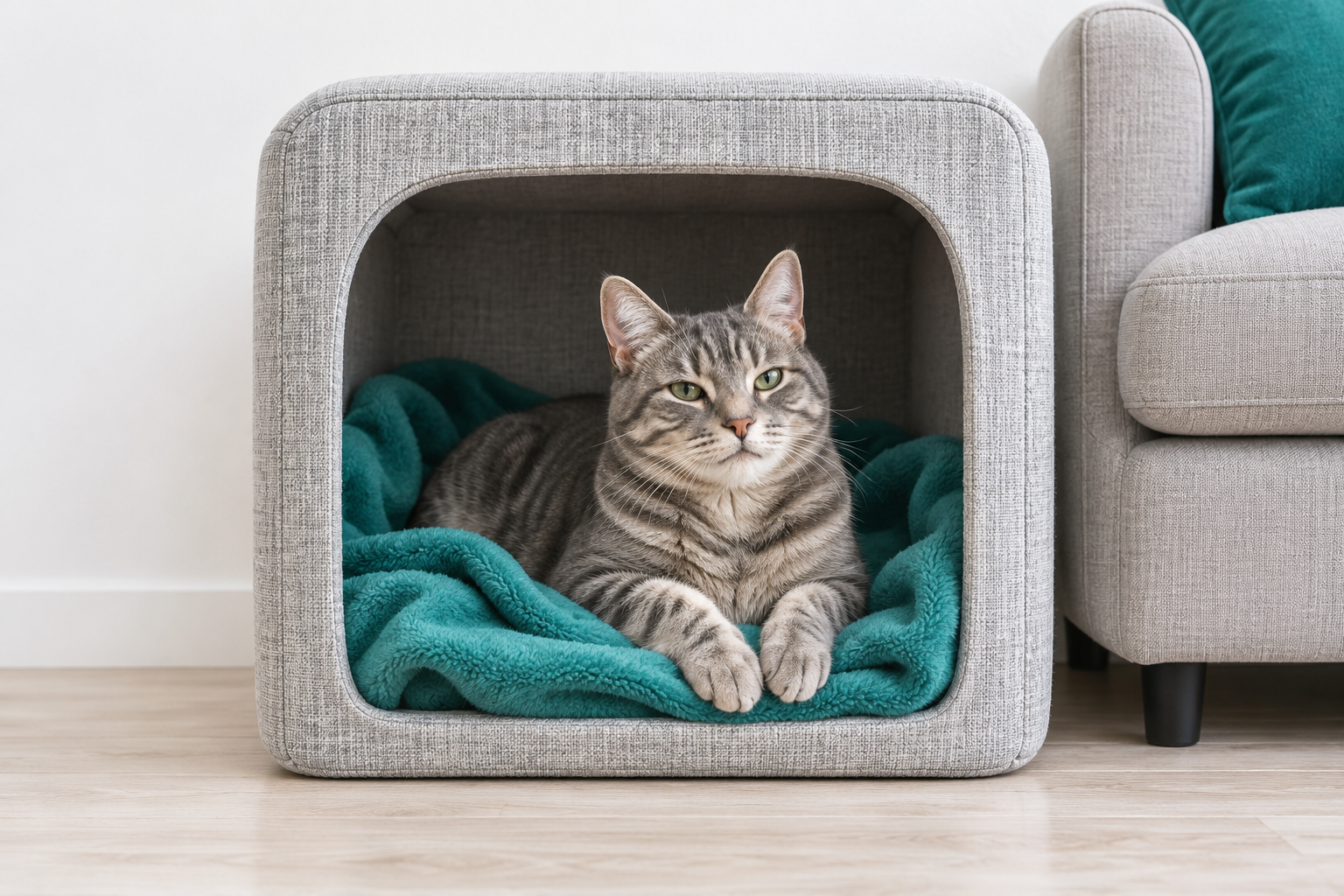
The environmental guideline recommends private retreat spaces, familiar bedding, play opportunities, and voluntary human contact. Keep a comfortable hiding place available. Offer a familiar toy or quiet company, let your cat approach, and stop when the cat leaves. Put string toys away after supervised play. Avoid changing familiar scents unnecessarily.
Turn those principles into household agreements. This table is a planning aid, not a clinically tested schedule or a promise that a particular change will resolve distress.
| Part of the day | Agreement to write down | What to record afterward |
|---|---|---|
| A busy household arrival | Who will check that the usual retreat remains available? | Whether the cat used it, stayed elsewhere, or was not seen |
| Cleaning or another planned disruption | Which room will be worked on, and who will check the cat's available options first? | Actual start and finish, location of the cat if known |
| An interaction opportunity | Which caregiver will offer the cat's familiar activity? | Offered, accepted, declined, or ended by the cat |
| A caregiver change | Who will read the current instructions before taking over? | Any change in the plan and who knows about it |
Make the agreement specific enough for another person to follow. “Give her space” becomes “leave the bedroom retreat available and let her approach.” Do not pull a cat out to complete an activity.
Check access when other cats share the home
The 2024 AAFP intercat-tension guideline highlights subtle staring, stalking, and blocking, not only fights. Check whether each cat can reach food, water, litter boxes, and resting places without another cat controlling the route. Multiple resources should be separated, with visual barriers where useful; several bowls together are still one shared location.
Watch an ordinary transition, such as food preparation, without staging a confrontation. Record who approached, who waited, and who left. A cat sitting in a doorway alone does not prove blocking.
Offer interaction according to each cat's preferences instead of requiring group play or side-by-side meals. Hiding places with more than one exit can prevent another cat from trapping the occupant. Ask the veterinary team for an individual plan if tension persists or escalates.
Keep a context, choice, and response record
Use one short entry for a meaningful event, including ordinary days for comparison. This record is an organizational aid, not a stress score.
Cat routine and response record
- Cat, date, time, and caregiver:
- Current veterinary instructions, if any:
- Event or household change:
- What was usual for this cat before the change:
- Options available: retreat, route, activity, or contact
- What was offered and by whom:
- What the cat actually did:
- What happened afterward and when:
- Not observed or uncertain:
- Other changes to report: appetite, toileting, grooming, movement
- Action taken and clinic advice received:
- Next action, responsible person, and review date:
Fictional example: On Tuesday, Rowan records that their cat, Olive, went behind the sofa during a cleaner's visit. Olive's bedroom retreat was unavailable because its door was shut. Rowan adds a door-access check to the next visit's plan and tells the clinic about the new hiding pattern.
On Friday, Olive uses the bedroom and later returns to her usual chair. Rowan records both events and that Friday's visit was also shorter. The record shows what changed; it does not prove that the open door caused the different response or that a medical concern has been ruled out.
When reviewing entries, keep “not seen” separate from “did not happen.” A caregiver who was out of the house cannot confirm that the cat rested comfortably all afternoon.
Know when routine changes are not enough
Contact your veterinarian promptly about persistent or worsening behavior changes, reduced eating, apparent pain, or altered toileting. Ask how soon your cat should be examined and whether behavior support is appropriate. AAHA recommends early assessment and advises against punishment and flooding, which means prolonged exposure to something that provokes fear. Do not spray, scold, or force repeated encounters to make a cat “get used to it.”
Repeated straining with little or no urine requires immediate veterinary attention. Difficulty breathing also needs emergency care. Contact an open emergency veterinary hospital rather than waiting for a quieter room or the next routine review. The feline cystitis review and RECOVER first-aid guideline support these emergency distinctions. For more urinary detail, see cat litter-box changes and when to call the vet.
At the consultation, agree on the next update date and which observations would mean calling sooner. Pet Care Reminder's vet visit reminders can help keep the appointment and visit notes together. Bring a few dated entries, including uncertainties, so the team can review the actual pattern.
Sources
- AAFP and ISFM Feline Environmental Needs Guidelines. Formal 2013 guideline supporting safe places, familiar surroundings, play opportunities, and predictable interaction that preserves the cat's choice.
- 2024 AAFP intercat tension guidelines: recognition, prevention and management. Formal guideline addressing subtle conflict, separated resources, escape routes, and individual needs in multi-cat homes.
- 2015 AAHA Canine and Feline Behavior Management Guidelines. Formal clinical guideline supporting behavioral assessment, recognition of medical overlap, and avoidance of punishment and flooding.
- Prevalence, Risk Factors, Pathophysiology, Potential Biomarkers and Management of Feline Idiopathic Cystitis: An Update Review. Peer-reviewed 2022 review describing urinary signs, diagnostic uncertainty, and urethral obstruction as an emergency.
- RECOVER Guidelines: First Aid for Dogs and Cats. Clinical Guidelines. Formal 2026 guideline supporting recognition of breathing difficulty and urgent veterinary care.
