
Quick answer
Aim to brush your cat's teeth once every day, provided your cat is comfortable and your veterinarian has not told you to pause. Daily brushing is the clearest target because plaque reforms quickly, and brushing works by disrupting that soft film before it contributes to gum inflammation.
If your cat does not accept a toothbrush yet, do not force a full session. Practice one small cooperative step at a time, such as touching the cheek, lifting the lip, or brushing one outer tooth. Keep the daily cue while you build tolerance, then gradually increase coverage.
Do not start brushing through redness, bleeding, visible tartar, a damaged tooth, mouth pain, or a sudden change in eating or behavior. Brushing is preventive home care, not treatment for an already painful mouth. Arrange a veterinary dental assessment first.
Why daily is the target
Plaque is a soft bacterial film that continually forms on teeth. A toothbrush can physically disrupt plaque on reachable surfaces, particularly near the gumline. Once mineralized deposits are present, home brushing cannot safely remove them.
Both AAHA and WSAVA dental guidelines recommend daily home care and describe tooth brushing as the most effective method of mechanical plaque control. They do not treat occasional brushing as equivalent to a daily routine.
Cat-specific research is more limited than the practical importance of the topic might suggest. One study followed 24 young cats, half with daily brushing of the outer tooth surfaces and half without oral care. The brushed cats showed a modest tendency toward less outer-surface gingivitis, but the difference was not statistically significant in that young cohort. The authors also noted that effective brushing in cats can be difficult.
That result is a reason to make the routine cooperative and consistent, not a reason to scrub harder. Current feline guidance emphasizes regular plaque removal, safe products, and training that encourages the cat to participate willingly.
Check the mouth before introducing a brush
Cats can conceal oral pain, and a normal appetite does not prove that the mouth is healthy. Watch your cat eating, grooming, yawning, and playing, then look for changes rather than relying only on whether the food bowl becomes empty.
Contact your veterinarian before brushing if you notice:
- Red, swollen, receding, or bleeding gums
- Yellow or brown deposits along the gumline
- Persistent or newly strong mouth odor
- A loose, broken, discolored, missing, or unusually shaped tooth
- Drooling, pawing at the face, or rubbing the mouth
- Chewing on one side, tilting the head while eating, or dropping food
- Avoiding hard food, eating more slowly, or walking away from meals
- Facial swelling or discharge from the mouth or nose
- Reduced grooming, hiding, irritability, or a new dislike of face handling
Do not probe a suspicious area or try to inspect the whole mouth by force. Some important feline dental problems, including disease below the gumline and tooth resorption, may require an anesthetized examination and dental radiographs to identify fully.
If your cat recently had a dental procedure, extraction, mouth injury, or oral surgery, follow the discharge plan. Resume brushing only when the veterinary team says the tissues have healed enough.
Use a cat-sized setup
Keep the equipment simple and easy to reach:
- A small, soft-bristled toothbrush that fits your cat's mouth
- Toothpaste or another dental product specifically recommended for that cat by the veterinary team
- A stable, non-slip place where your cat already feels safe
- A small reward your cat values
- A clean, dry storage place for the brush
A long-handled small brush may give you more control than a bulky finger brush, but the best choice depends on the cat and caregiver. Ask the veterinary team to demonstrate the size and technique before you buy several products.
Never use human toothpaste. Cats swallow dental products rather than rinsing and spitting them out. Do not substitute baking soda, peroxide, mouthwash, essential oils, or a homemade paste. A product described as natural is not automatically safe to swallow.
In a multi-cat home, give each cat a separate brush and individual routine. One cat may be ready for brushing while another needs a veterinary examination or a slower training plan.
Teach cooperation before cleaning the whole mouth
Choose a quiet time when your cat is relaxed. Keep early sessions short enough to finish before the cat wants to leave.
Move through these stages at the cat's pace:
- Create the cue. Place the brush nearby, offer the usual reward, and end the session.
- Touch the cheek. Briefly touch the side of the face your cat is comfortable presenting, reward, and stop.
- Lift the lip. Lift one lip for a moment without opening the jaw. Reward calm participation.
- Touch one tooth. Use a clean finger only if your veterinarian has shown you how and it is safe. Touch the outer surface of one canine tooth, then stop.
- Introduce the brush. Let the cat investigate it, then touch the bristles to one outer tooth.
- Make a few gentle movements. Brush one small area along the gumline and finish with the planned reward.
- Add coverage gradually. Extend to more teeth only while the cat remains comfortable.
Move back a step if your cat turns away, flattens the ears, lashes the tail, stiffens, growls, swats, or tries to leave. Do not hold the cat down, pry the mouth open, wrap tightly for restraint, punish avoidance, or continue until a struggle begins.
A cat who suddenly resists a previously accepted routine may be painful. Pause and call the veterinary clinic instead of assuming the cat has become difficult.
How to brush a cat's teeth
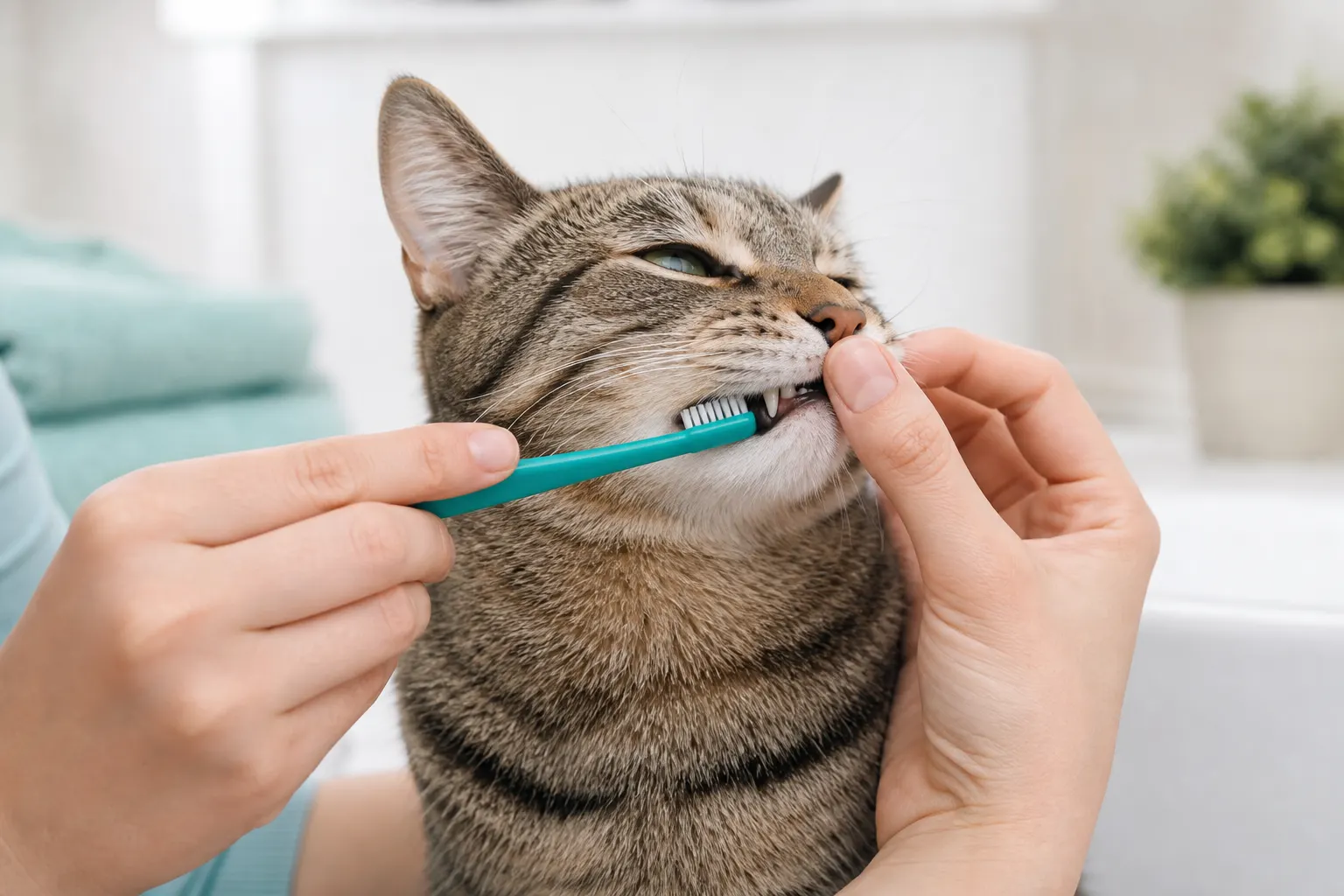
Once your cat accepts the brush, use the same calm sequence each day:
- Settle your cat in the familiar location with secure footing.
- Put the veterinarian-approved product on the brush if one is being used.
- Support the head gently without squeezing or forcing a position.
- Lift the lip while keeping the jaw mostly closed.
- Angle the soft bristles toward the gumline.
- Use small, gentle movements over the outer surfaces of the teeth.
- Work only as far back as your cat comfortably allows.
- Stop while the cat is still cooperating, give the reward, then rinse and dry the brush.
The outer surfaces are the practical priority because they can be reached without forcing the mouth open. Do not jab the gums, scrape deposits, or extend the session to compensate for a tooth you could not reach.
At first, a successful session may cover only one side or a few teeth. Record what was actually brushed. Over time, aim for gentle daily coverage of both outer tooth rows rather than one long, stressful session each week.
What if you miss a day?
Resume the normal routine at the next scheduled time. Do not brush twice, scrub harder, or make the next session longer to catch up.
Look for the reason the task was missed:
- The time is unreliable: Attach brushing to a dependable event, such as the final evening meal cleanup.
- The equipment is scattered: Store the brush, approved product, and reward together.
- Another caregiver assumed it was done: Use one shared completion record and log only after brushing happens.
- The cat avoided the session: Return to the last comfortable training step.
- Resistance appeared suddenly: Pause and ask the veterinary team whether pain needs to be ruled out.
Pet Care Reminder can hold a recurring daily tooth-brushing task for each cat. Mark it complete after the session, and add a brief note when only one area was brushed or the cat refused. The history can show whether a training plan is improving or whether repeated resistance needs veterinary advice.
What if daily brushing is not possible yet?
First separate a skill problem from a medical problem. A cat who has never learned face handling may need a slower cooperative-care plan. A cat with pain, inflamed gums, tooth resorption, stomatitis, or another oral condition needs veterinary care, not more persistence at home.
If brushing remains impractical after pain has been addressed, ask the veterinarian about an individualized alternative. Depending on the cat, that plan may include an evidence-supported dental diet, treat, wipe, gel, or water additive. Product claims vary, and a product that helps with plaque or calculus does not necessarily prevent every dental disease.
Alternative home care should not become a reason to skip oral examinations. Standard dry food alone should not be assumed to clean the teeth, and very hard chews or objects can damage teeth. Use only products and methods the veterinary team considers safe for your cat's age, health, diet, and chewing behavior.
Brushing does not prevent every feline dental problem
Daily brushing focuses on plaque control and periodontal health. It cannot:
- Remove hardened calculus safely
- Diagnose or treat disease below the gumline
- Stop a tooth resorption lesion
- Repair a fractured or infected tooth
- Treat feline chronic gingivostomatitis
- Replace dental radiographs or professional treatment
This distinction matters because a clean-looking front tooth does not show what is happening around every root. The 2025 FelineVMA guideline describes tooth resorption as common, progressive, and often painful, with no known method for preventing it or stopping an existing lesion from progressing.
Keep routine veterinary oral checks even when brushing is going well. Bring notes about new odor, eating changes, resistance, or areas you cannot reach. How to Prepare for Your Pet's Vet Visit can help you turn those observations into a concise appointment record.
When to seek urgent help
Contact a veterinarian promptly for mouth pain, bleeding gums, a broken or loose tooth, facial swelling, drooling, food dropping, a significant eating change, or sudden resistance to mouth handling.
Seek urgent or emergency veterinary care for difficulty breathing, major facial or jaw trauma, uncontrolled oral bleeding, collapse, or another rapidly worsening sign. A cat that has not eaten or is eating much less also needs prompt veterinary advice because cats can become seriously ill when food intake drops.
Do not give human pain medicine, apply a numbing gel, pull a loose tooth, or use a dental tool at home. Do not force food or water into a cat whose mouth may be injured unless a veterinary professional specifically instructs you to do so.
A routine that can last
Once a week, review whether:
- Brushing is happening daily or training is moving steadily toward that goal
- The cat stays comfortable through the current step
- Both outer tooth rows are receiving gentle attention
- The gums, teeth, appetite, grooming, and behavior remain at their normal baseline
- The brush is clean, soft, and in good condition
- The dental product is cat appropriate and within its use-by date
- The next veterinary oral check or recommended dental recheck is scheduled
The goal is not a perfect session at any cost. It is a brief daily habit that removes reachable plaque without fear or pain and alerts you when home care is no longer the right next step.
The simple rule
Brush your cat's teeth once a day when the mouth is comfortable and your cat can participate calmly. Build the routine in small steps, focus on the outer surfaces near the gumline, and use only cat-appropriate products recommended by the veterinary team.
If you see inflammation, tartar, a damaged tooth, eating changes, facial swelling, or sudden resistance, stop brushing and book an examination. Daily brushing is valuable prevention, but it does not replace feline dental assessment and treatment.
Sources
- 2025 FelineVMA feline oral health and dental care guidelines. Current feline-specific practice guideline covering caregiver education, regular plaque removal, cooperative care, signs of hidden oral pain, tooth resorption, oral assessment, radiography, and professional treatment.
- World Small Animal Veterinary Association Global Dental Guidelines. Global clinical guidance on daily plaque control, tooth brushing as the most effective mechanical home-care method, brush selection, gradual introduction, technique, and evidence-supported alternatives.
- 2019 AAHA Dental Care Guidelines for Dogs and Cats. Peer-reviewed veterinary guideline on daily brushing, the distinction between plaque and calculus, painful inflamed gums, anesthetized oral assessment, dental radiographs, and individualized home care.
- The effect of toothbrushing on periodontal disease in cats. Peer-reviewed study comparing daily brushing of the outer tooth surfaces with no oral care in 24 young cats and reporting the practical limitations and gingivitis findings.