Spring Allergy Season for Dogs: What to Watch and Track
Quick answer
If your dog becomes itchier in spring, start a simple daily record before changing food, products, or medication. Track:
- Scratching, licking, chewing, rubbing, scooting, and head shaking
- Which body areas are affected, especially paws, ears, face, belly, armpits, groin, and around the tail
- Redness, bumps, broken skin, hair loss, odor, discharge, or greasy skin
- When the signs start, how long they last, and whether sleep, walks, play, or meals are interrupted
- Where your dog went, including grass, woodland, gardens, daycare, grooming, swimming, or travel
- Weather and broad seasonal conditions, without assuming that a pollen count proves the cause
- Flea and tick prevention, baths, food, treats, medication, and any recent changes
- Photos taken in the same light and notes about what happened after each veterinary treatment
Call your veterinarian if the itch is persistent, worsening, disturbing sleep, causing skin damage, or joined by ear pain, odor, discharge, sores, or hair loss. Seek emergency veterinary care for sudden breathing difficulty, collapse, severe weakness, or rapidly developing swelling, especially when vomiting or diarrhea also occurs.
A spring pattern can be useful evidence, but it is not a diagnosis. Fleas, mites, skin infection, food-related disease, contact irritation, and other problems can look similar or occur at the same time.
Spring is a clue, not a conclusion
Some dogs with canine atopic dermatitis have seasonal itching linked to environmental allergens such as pollens. Other dogs have year-round signs, or a year-round problem that becomes worse during one season. A dog can also have more than one source of itch.
The International Committee for Allergic Diseases of Animals guidelines describe canine atopic dermatitis as an itchy inflammatory skin disease with varied clinical presentations. They emphasize that no single history detail, examination finding, or allergy test confirms it on its own. A veterinary workup may need to address parasites, infection, food-related disease, and other conditions before atopic dermatitis is diagnosed.
That is why an owner log should answer what happened and when, not declare "pollen allergy."
Useful:
- "Licked both front paws for 12 minutes after the evening walk"
- "Shook head six times between dinner and bedtime"
- "Redness between the toes was more visible than yesterday"
- "Slept through the night after the treatment prescribed on Tuesday"
Less useful:
- "Allergies bad"
- "Grass caused it"
- "The pollen app was high, so that must be the trigger"
- "Medicine did not work" without dose times or a description of the response
A 2024 prospective study followed 37 dogs with atopic dermatitis from April through November. Owners recorded weekly itch scores and medication, while researchers collected local weather and pollen data. The study found no correlation between specific pollen counts and itch scores in dogs with positive intradermal reactions to those pollens. It was a small regional study, but it is a good reminder to interpret pollen data cautiously and prioritize the individual dog's timeline.
Watch behavior before waiting for a rash
Itch can appear as more than obvious scratching. Look for a change from your dog's normal pattern:
- Licking or chewing paws
- Rubbing the face on carpet, furniture, or legs
- Scratching the ears, neck, chest, or sides
- Head shaking or holding one ear differently
- Rolling or rubbing the back repeatedly
- Scooting or licking around the rear
- Waking to scratch or moving from place to place instead of settling
- Pausing during walks or play to lick or chew
- Becoming reluctant to have paws, ears, or skin folds touched
Record the behavior before interrupting it when it is safe to watch briefly. Note the start time and an approximate duration. Do not allow prolonged self-trauma merely to make the record more precise.
If your dog is chewing hard enough to break skin, cannot sleep, cries during handling, or seems unable to stop, call the veterinary clinic promptly. Severe itch can quickly create wounds and may occur alongside bacterial or yeast overgrowth that needs examination.
Make a body map
The location of itch and skin change can help the veterinary team. Check your dog gently once a day in consistent light. Include areas that are easy to miss:
- Between and underneath the toes
- Paw pads and nail folds
- Inner ear flaps and the visible entrance to each ear canal
- Around the eyes, lips, chin, and muzzle
- Neck and chest
- Armpits and groin
- Belly and skin folds
- Base of the tail and inner thighs
- Any area covered by a collar, harness, coat, or boot
Look for redness, bumps, crusts, scaling, moisture, thinning hair, broken hair, darkened skin, greasy residue, odor, discharge, or a new sore. Compare left and right when possible.
Do not insert cotton swabs or cleaners into the ear canal, squeeze bumps, scrape skin, or press a painful paw. If you find a seed head, splinter, sting, chemical residue, or another possible exposure, stop handling and call the clinic for instructions rather than digging into inflamed tissue.
Take one overview photo and one closer photo with a familiar object nearby for scale, without covering the affected area. Use the same room, distance, and lighting for follow-up images. A photo series is more useful when the dates and treatment times are saved with it.
Use one daily itch score
A repeatable household score can show whether a flare is stable, improving, or worsening. It does not need to be a clinical diagnosis tool.
Choose a scale and keep the anchors fixed:
| Score | Household description |
|---|---|
| 0 | Normal for this dog, no unusual itch behavior noticed |
| 1 to 3 | Occasional extra licking or scratching, normal sleep and activity |
| 4 to 6 | Repeated itch behavior, interrupts rest or activity, skin change may be visible |
| 7 to 9 | Frequent or prolonged itch, difficult to settle, self-trauma or marked discomfort |
| 10 | Worst itch you have observed in this dog, urgent veterinary contact needed |
Score at about the same time each day and add one sentence explaining the number. "Score 6, woke three times and chewed both front paws" is more informative than a number alone.
Do not compare your dog's score with another dog's score. The purpose is to compare this dog with their own baseline. If several people provide care, agree on the anchors and name the person who made each entry.
Build a seven-day spring allergy log
Use one row per day, plus extra entries when a sudden change occurs:
| Date and time | Itch score and behavior | Body areas and skin or ear changes | Places and exposures | Food, prevention, and treatment | Action or response |
|---|---|---|---|---|---|
| Apr 8, evening | 5, licked paws after walk and woke once | Both front paws mildly red between toes, no broken skin | Park path and short grass, dry day | Usual food; preventive current; prescribed rinse used as directed | Photo saved; clinic call booked |
| Apr 9, evening | 4, less licking, no sleep interruption | Redness looks unchanged in same light | Pavement walk only, light rain | No diet change; all treatment times recorded | Continue clinic plan; reassess tomorrow |
Track these categories consistently:
Time and severity
Record the first unusual day, the worst time of day, and whether the dog can sleep, eat, walk, and play normally. If a flare has happened before, note when the previous episode began and ended.
Place and activity
Write down the actual route and activity: tall grass, recently cut lawn, wooded trail, garden work, swimming, grooming, daycare, boarding, or a new home. "Outside" is usually too broad.
Weather and season
Note rain, dry or windy conditions, unusual warmth, and the general pollen information for your area if you already use it. Do not restructure the dog's treatment from an app forecast. The dog's signs and the veterinary plan matter more than one environmental number.
Products and household changes
Include shampoo, wipes, laundry products, floor cleaners, lawn treatments, bedding, harnesses, and topical preventives. Save labels or clear label photos. A new product close to the first symptom is worth reporting, but timing alone does not prove causation.
Food and medication
Record meals, treats, chews, flavored supplements, prescription products, flea and tick prevention, and every dose of any treatment. Do not start a food trial by removing random ingredients. A veterinary elimination diet has to be planned and followed strictly to produce interpretable results.
Keep flea prevention in the picture
Do not assume a spring flare is environmental atopy. Flea allergy can cause intense itching, and a dog with atopic dermatitis can also have flea allergy.
Record:
- The exact flea and tick product
- The dog it was intended for
- The date and time it was actually given or applied
- Whether the full dose was received
- Bathing, swimming, vomiting, or another event that may matter for that specific product
- Other pets in the household and their prevention status
- Recent travel, boarding, grooming, or contact with animals
The diagnostic guidelines recommend checking itchy dogs for fleas or flea dirt and using effective control when flea allergy is a possibility. Finding no flea at home does not rule it out, especially when a sensitive dog may react to bites.
Follow the product label and your veterinarian's instructions. Do not reapply early, combine products, or use another animal's preventive without professional guidance. Dog Flea and Tick Treatment Schedule by Month can help you preserve the confirmed schedule while the clinic investigates the itch.
Do not change five things at once
When a dog is uncomfortable, it is tempting to change food, wash every blanket, add supplements, switch shampoo, restrict walks, and try medication on the same day. That can make the pattern impossible to interpret and may create new problems.
Before making a non-urgent change:
- Record the current routine and first symptom date.
- Call the veterinary clinic with the severity, body areas, and associated signs.
- Ask which existing routines should stay stable.
- Change only what the veterinarian recommends.
- Record the exact start time and response.
Do not give a human antihistamine, pain reliever, steroid cream, essential oil, leftover prescription, or another pet's medicine unless a veterinarian has approved the exact product and direction for this dog. Even a familiar medicine may be unsuitable because of the formulation, dose, other medications, or the dog's health history.
The FDA recommends asking the veterinarian what a medicine should do, how it should be given and stored, what interactions or side effects matter, and what to do after a missed or vomited dose. Keep those medication-specific answers with the allergy log.
Use gentle after-walk care, not a home treatment experiment
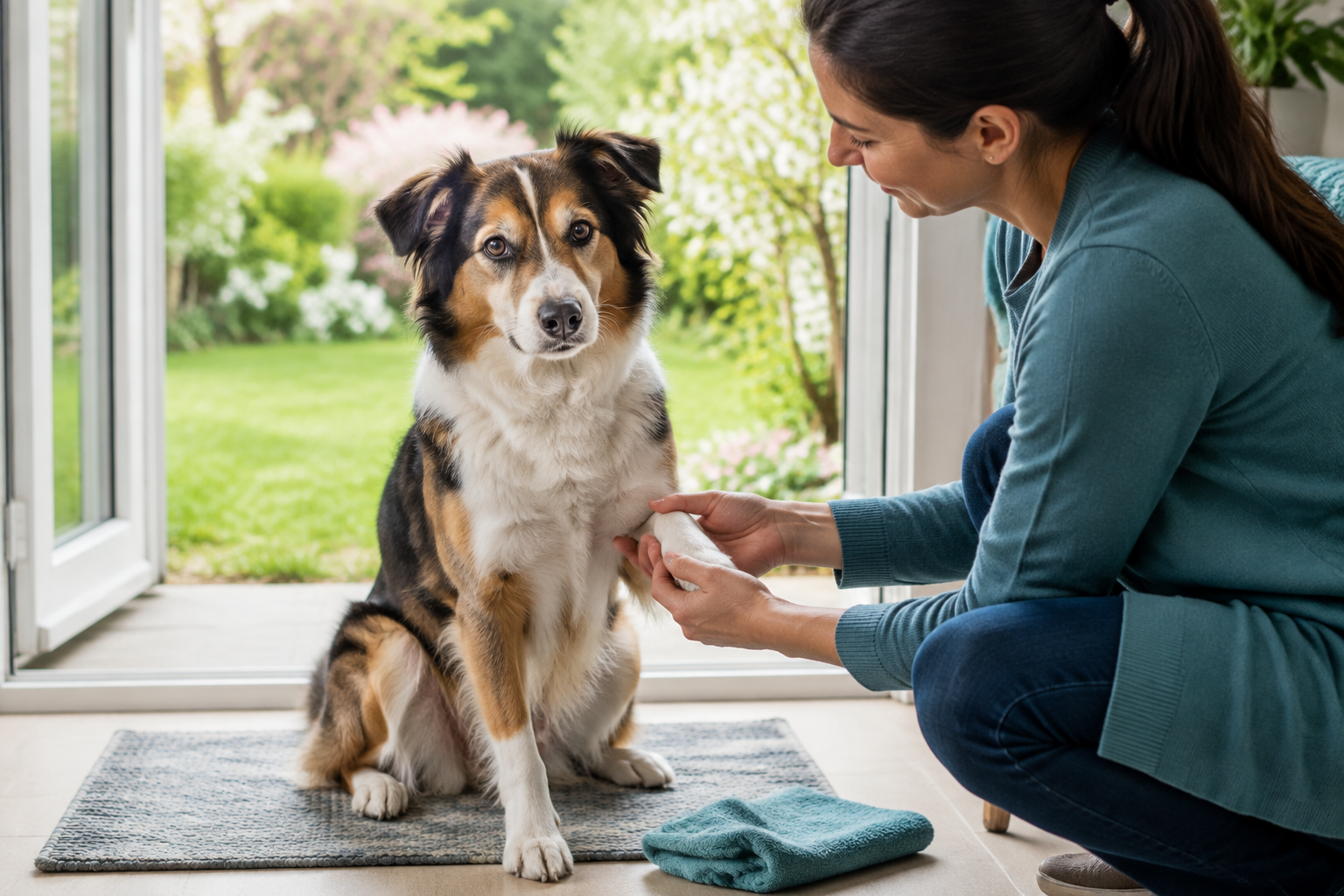
If the skin is intact and your veterinarian has not given different instructions, a brief check after outdoor activity can help you notice a problem early:
- Look between the toes and around the pads.
- Remove loose visible plant material from the coat without pulling at the skin.
- Use only a plain damp cloth or a veterinary-approved product if the clinic has recommended wiping.
- Dry paws and skin folds gently.
- Wash reusable cloths and keep bedding dry.
- Stop if touching is painful or the skin is raw.
Do not scrub inflamed skin, soak sore paws, use scented household wipes, apply disinfectant, or bathe repeatedly without veterinary guidance. Topical care needs to match the skin condition, any infection, and the rest of the treatment plan.
If you notice that signs reliably change after a particular route or activity, record the pattern and ask the clinic whether temporary exposure adjustments are appropriate. Do not eliminate exercise or outdoor toilet breaks without a workable alternative.
Know why the veterinary workup may take more than one visit
The 2023 AAHA allergic skin disease guidelines use a stepwise approach. The history and physical examination come first, followed by a minimum dermatologic database that can include skin or ear cytology and skin scrapings. The plan also addresses itch, secondary infections, parasites, rechecks, and, when appropriate, a diet trial.
Allergy testing is not a shortcut that proves why a dog is itchy. The ICADA diagnostic guidelines state that intradermal testing and allergen-specific blood testing should not be used as screening tests. They are considered after a clinical diagnosis, particularly when results may guide allergen-specific immunotherapy.
At the appointment, be ready to answer:
- When did this episode begin, and has it happened in the same season before?
- Did the signs ever fully disappear between seasons?
- Which body areas were affected first?
- Are ears, paws, skin folds, or the area near the tail involved?
- Are other pets or people itchy?
- Is flea and tick prevention current for every relevant pet?
- Did food, treats, medication, grooming, travel, or household products change?
- What was given or applied, at what time, and what happened next?
- Has the dog had vomiting, diarrhea, appetite change, weight change, or another symptom?
Bring the log, photos, medication and preventive labels, product labels, and any previous dermatology records. How to Prepare for Your Pet's Vet Visit explains how to turn those materials into a concise handoff.
When to call the veterinarian
Contact your regular veterinarian promptly if:
- Itching repeats, worsens, or lasts beyond a brief isolated episode
- Scratching or licking interrupts sleep, walks, meals, or play
- Skin is red, moist, painful, broken, crusted, greasy, or losing hair
- There is a strong or new odor from the skin or ears
- An ear is painful, swollen, producing discharge, or repeatedly shaken
- A paw is swollen, bleeding, or too painful to bear weight normally
- The dog is unusually quiet, restless, irritable, or reluctant to be touched
- Vomiting, diarrhea, appetite change, or another health change appears
- A prescribed treatment is not working as expected or is difficult to give
- You are unsure whether a medication or preventive dose was given correctly
Ask the clinic for a specific reassessment point and the signs that should trigger an earlier call. Do not wait for a routine appointment if your dog is creating wounds or becoming more uncomfortable.
Seek emergency veterinary care immediately for sudden difficulty breathing, collapse, severe weakness, pale or blue gums, rapidly developing facial or throat swelling, or sudden widespread hives accompanied by repeated vomiting, diarrhea, breathing changes, or weakness.
The 2026 RECOVER First Aid guidelines distinguish uncomplicated acute allergic reactions from potentially life-threatening anaphylaxis. They identify cardiovascular collapse, low blood pressure, or severe respiratory distress as features of severe anaphylaxis. Do not delay travel to give an oral antihistamine when breathing is affected. Call the nearest emergency clinic and follow its transport instructions.
Track treatment response without rewriting the plan
Once the veterinarian provides a plan, copy each direction exactly:
- Product name, strength, and form
- Amount and route
- Date and time to start
- Frequency and duration
- Bathing or topical-care directions
- What to do if a dose is late, missed, spat out, or vomited
- Expected response and possible adverse effects
- Recheck date and reason
Record what actually happened at every dose or treatment. "Given" means the full treatment was completed as directed. Use "partial," "spat out," "spilled," "vomited afterward," or "unknown" when that is more accurate, then call for product-specific advice.
Keep the daily itch score, body map, and photos going at the interval the clinic requests. A flare can improve while an ear or skin infection remains, or scratching may continue even when one trigger has been addressed. Let the veterinarian interpret the response.
Pet Care Reminder can hold the confirmed medication, bath, preventive, and recheck schedule. Keep observations in the notes, assign each task to one caregiver, and mark it complete only after the action occurs. The reminder supports the veterinary plan; it does not decide whether a flare is safe to monitor.
The simple rule
Track the dog, not the pollen count.
Record the itch behavior, body areas, skin and ear changes, sleep disruption, places visited, prevention status, product changes, and treatment response. Keep the same scale and photo method long enough to show a trend.
Then give the veterinary team the timeline. Spring may reveal a repeatable pattern, but a careful workup is what separates environmental allergy from fleas, infection, food-related disease, and other causes. If the dog is damaging the skin or cannot rest, call promptly. If swelling is sudden or breathing, strength, or circulation changes, seek emergency care.
Sources
- 2023 AAHA Management of Allergic Skin Diseases in Dogs and Cats Guidelines. Formal veterinary guidelines on history, examination, minimum dermatologic testing, parasites, secondary infection, diet trials, seasonal patterns, treatment, and rechecks.
- Canine atopic dermatitis: detailed guidelines for diagnosis and allergen identification. Peer-reviewed ICADA diagnostic guidelines on itch behaviors and body areas, seasonal and nonseasonal presentations, differential diagnoses, and the proper role of allergy testing.
- A prospective study evaluating the correlation between local weather conditions, pollen counts and pruritus of dogs with atopic dermatitis. Peer-reviewed prospective study of owner-recorded itch, medication, local weather, and pollen data in 37 dogs, supporting cautious interpretation of pollen counts.
- Medications for Your Pet ... Questions for Your Vet. Official FDA guidance on medicine directions, expected effects, interactions, storage, adverse effects, and instructions for missed or vomited doses.
- RECOVER Guidelines: First Aid. Evidence, Treatment Recommendations, Knowledge Gap Analysis, and Clinical Guidelines for Acute Allergy and Anaphylaxis in Dogs and Cats. Peer-reviewed 2026 emergency guidelines on recognizing acute allergic reactions and anaphylaxis, including respiratory distress, cardiovascular collapse, gastrointestinal signs, and prehospital antihistamine cautions.