
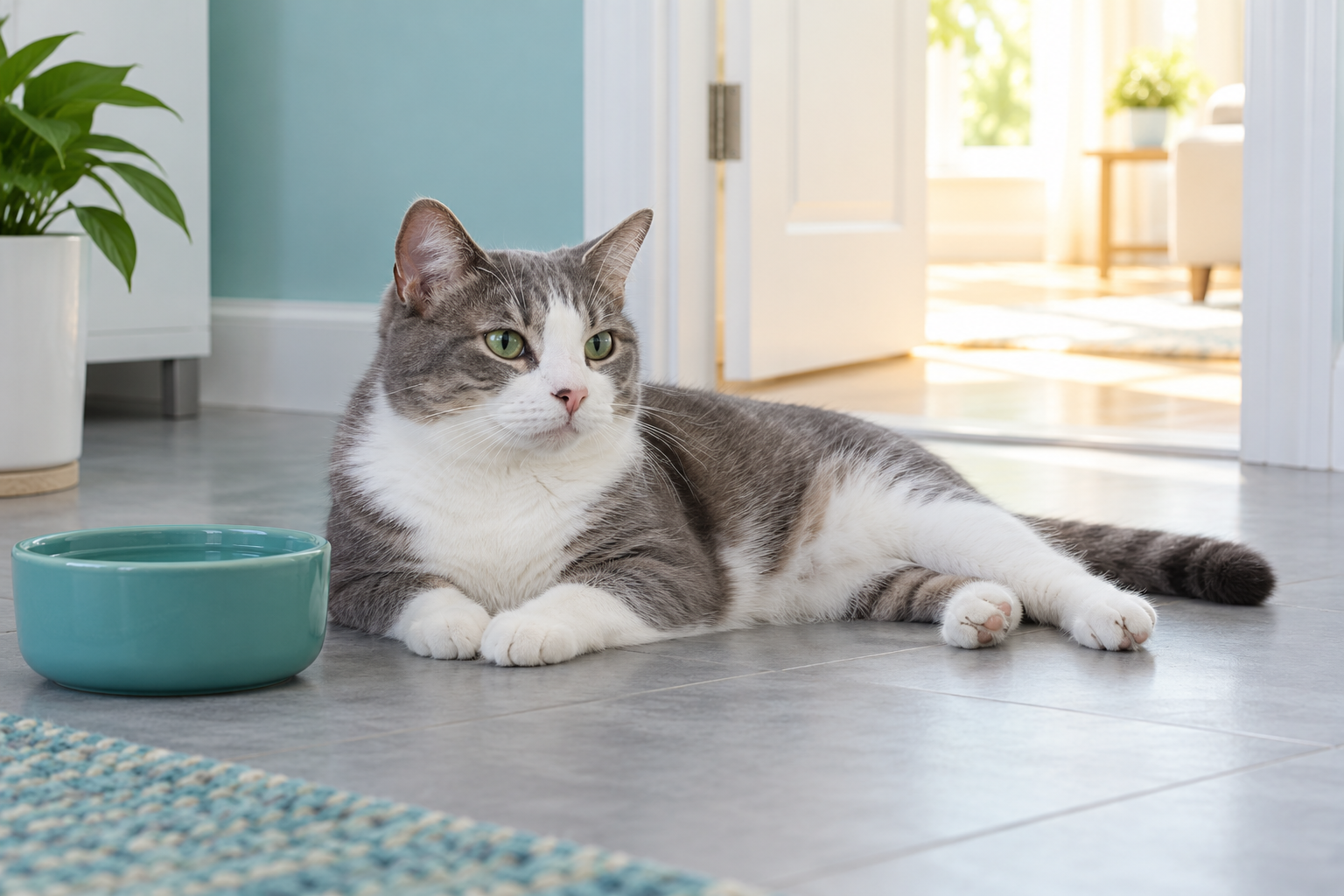
Yes, an indoor cat can overheat
Cats can develop heat-related illness in hot indoor spaces, even while resting. A closed mouth does not rule it out: cats may not pant. The 2026 RECOVER first-aid guideline identifies poorly ventilated, enclosed spaces as a concern.
An indoor-only lifestyle still needs a heat plan. Start with the room your cat can actually reach, then decide who will check on them and where they can go if cooling fails.
Recognize signs and get veterinary help
Unusual inactivity, drooling, vomiting, diarrhea, disorientation, or stumbling after heat exposure warrant immediate veterinary contact. Breathing difficulty or collapse requires emergency care. These signs cannot establish the cause at home.
Move your cat to a cooler area and call an open emergency veterinary hospital. If safe, begin cooling with cool running water over the body behind the neck, reaching the skin and keeping the face dry. Ask the clinic how long to cool, when to stop, and how to transport your cat. Do not struggle with a cat if handling risks injury; tell the team immediately. Veterinary assessment is still needed after cooling.
Do not delay that call to take a temperature, complete a checklist, or film your cat. Tell the team where the cat was found and what has changed.
Check access, not just the thermostat
Use this room-by-room check before leaving home. It is a planning tool, not a temperature-based medical assessment.
| Check | What to write down or arrange |
|---|---|
| Where does the cat spend the afternoon? | Name the actual room, including any enclosed porch or sunroom |
| Can the cat leave that space? | Check doors as they will be left, rather than assuming access |
| Where is the cooler alternative? | Identify the room and confirm the route is available |
| Who will check the cat and room? | Assign a person and a time; include how they will enter |
| What happens if cooling stops? | Choose a backup location and a person who can provide transport |
A thermostat reading elsewhere in the home does not answer the access questions. If a sitter closes a door, update the plan. For several cats, record where each one is instead of treating one sighting as a household check.
For the broader outdoor and travel checklist, see summer safety for dogs and cats.
Prepare the carrier before a hot-day problem
The AAFP/ISFM feline handling guideline supports positive carrier training and calm, individual handling. Practice carrier familiarity during ordinary days. Avoid scruffing or forceful restraint; an emergency should not be the first time you work out how the carrier opens.
Keep the carrier accessible, with its fasteners checked. Ask your veterinary team in advance about moving a cat who is difficult to handle. During an emergency, describe that difficulty when you call so the team can adapt its instructions.
The cat first-aid kit guide helps organize the carrier, clinic contacts, and records together.
Write a cooling-failure handoff
Before relying on a friend, relative, or boarding facility as a backup, confirm that they can accept your cat and provide the planned space. Decide who has keys, who can drive, and who contacts the destination. A name on a list is not the same as an agreed arrangement.
US CDC preparedness guidance recommends keeping veterinary records, prescriptions, contact information, a suitable carrier, food and water supplies, and litter equipment ready. Put the relevant supplies beside your relocation plan.
Indoor cat heat and backup plan
- Cat's name and usual daytime location:
- Cooler room and access route:
- Doors or access arrangements to check:
- Person checking, time, and entry arrangements:
- Backup person if the first cannot attend:
- Cooling failure reported at:
- Backup destination and acceptance confirmed by:
- Driver and carrier location:
- Records, medications, food, water, and litter supplies:
- Open emergency clinic, phone, and route:
- If a problem occurs: signs observed and time first noticed:
- Veterinary instructions, person contacted, and time:
Illustrative example: A sitter checks the cat's afternoon room and discovers that a closed door blocks the agreed cooler room. They restore the planned access and confirm it in the handoff. The record describes what was checked and changed, rather than simply saying “house checked.” This fictional example illustrates coordination, not proof that a room is medically safe.
After veterinary assessment, record any follow-up instructions separately from the household checklist. Pet Care Reminder's vet-visit reminders can hold the agreed recheck date and visit notes, giving the next caregiver a clear appointment to follow.
Sources
- RECOVER Guidelines: First Aid for Dogs and Cats. Clinical Guidelines. Formal 2026 guideline covering heat-illness recognition, first aid, and veterinary assessment.
- 2022 AAFP/ISFM Cat Friendly Veterinary Interaction Guidelines: Approach and Handling Techniques. Formal feline guideline supporting carrier preparation and handling adapted to the individual cat.
- Build a Pet Disaster Preparedness Kit. US government technical guidance on records, carriers, and supplies for pet emergencies.
