What to Keep in a Dog First Aid Kit
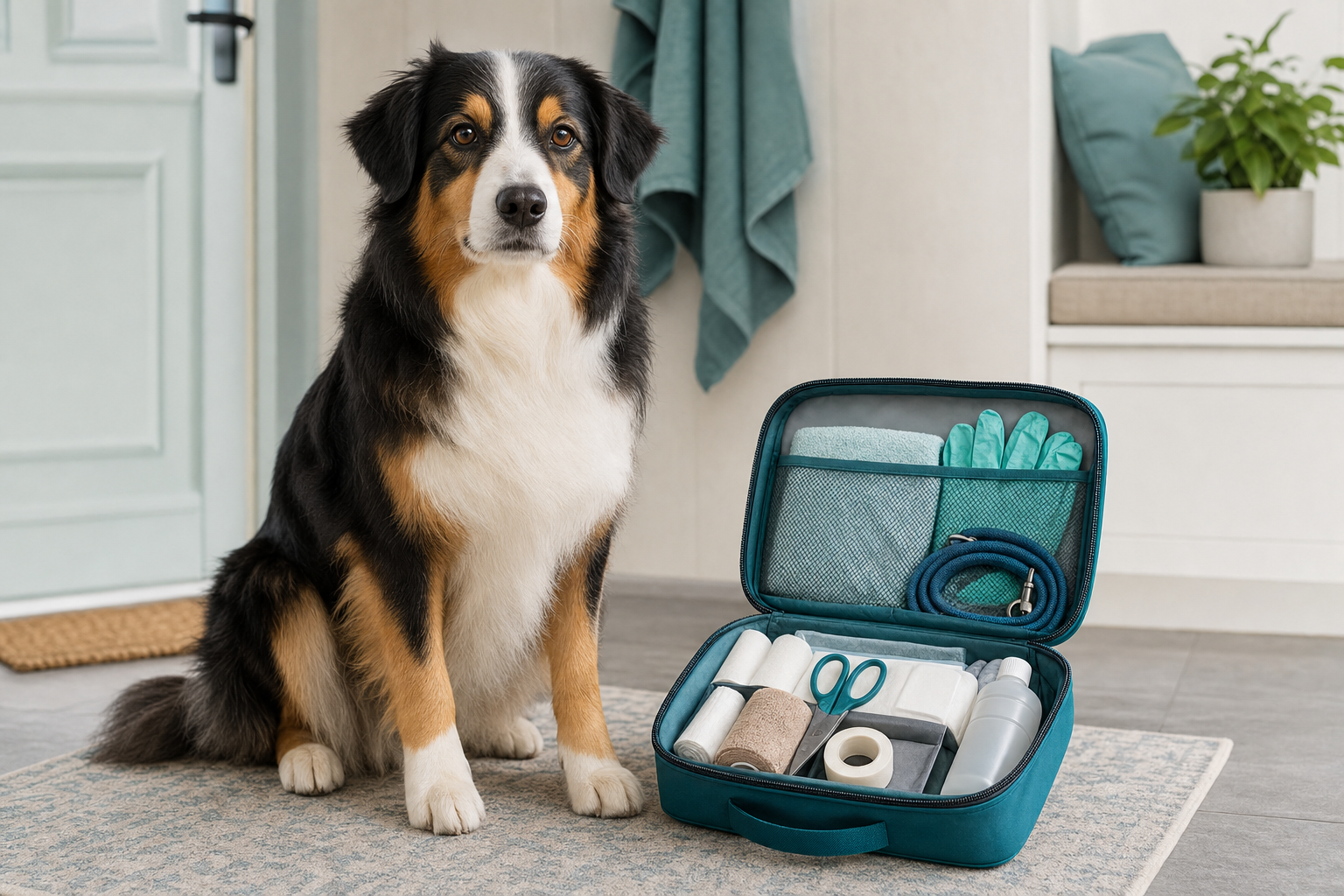
Quick answer
A useful dog first aid kit should help you contact the right professional, control a simple problem during transport, and move your dog safely. It should not turn you into the treating clinician.
Start with:
- Your regular veterinarian's number
- The nearest emergency veterinary clinic's number, address, and route
- A veterinary poison service appropriate to your location
- A current medication list and a brief medical summary
- Disposable gloves
- Sterile saline for flushing
- Sterile nonstick dressings
- Gauze rolls
- Self-adhering bandage wrap
- Medical adhesive tape
- Clean towels
- Blunt-tip scissors
- A spare leash, collar, or harness
- Sealable bags
- A flashlight
Ask your veterinarian to customize the kit for your dog and show you how to use anything unfamiliar. A first aid kit can buy time, but it does not replace veterinary assessment after an injury, poisoning, breathing problem, collapse, or other emergency.
Put contact information at the top
The most valuable part of the kit may be the information you can reach without searching.
Write one emergency card with:
- Your dog's name, age, breed or description, weight, and a recent photo
- Your name and phone number
- Your regular veterinary clinic
- The nearest open emergency veterinary clinic
- A backup emergency clinic in case the first is closed or full
- An animal poison service that serves your country or region
- The name and number of a person who can help transport or handle your dog
Confirm opening hours and routes before you need them. Save the same contacts in your phone, but keep the paper card in the kit in case another caregiver has your dog or your phone is unavailable.
The FDA advises owners to call their veterinarian, an emergency animal hospital, or an animal poison control center when a pet needs urgent veterinary advice. A product manufacturer, general internet search, or regulatory agency cannot examine your dog or give a treatment plan for that individual emergency.
When you call, be ready to state what happened, when it happened, your dog's current signs, and whether you are already travelling to the clinic. Calling ahead lets the veterinary team tell you what to do next and prepare for arrival.
Add a short medical record
Do not make the veterinary team reconstruct your dog's care from memory while you are frightened.
Keep a printed summary in a waterproof pouch:
- Current weight and the date it was recorded
- Important medical conditions
- Allergies or previous medication reactions
- Every current medication, strength, dose, route, and schedule
- The date and time of the most recent dose
- Vaccination information
- Your dog's microchip number
- The name and contact details of the prescribing clinic
- Any individual emergency instructions already provided by your veterinarian
Include copies rather than the only originals. Keep a secure digital copy that you can reach from another device, too.
Government disaster guidance also recommends keeping veterinary records, prescriptions, identification details, photographs, and microchip information with a pet emergency kit. These records matter during an evacuation, but they are just as useful when an unfamiliar emergency clinic needs a rapid history.
If your dog has seizures, diabetes, heart disease, adrenal disease, a bleeding disorder, severe allergies, or another condition that changes emergency care, ask the veterinary team what information should appear first on the page.
Pack basic wound and cleanup supplies
Choose simple supplies that help protect a wound or control bleeding while you arrange veterinary care.
| Supply | What it can help with | Important limit |
|---|---|---|
| Disposable nitrile gloves | Protecting you and keeping supplies cleaner | Change them if torn or heavily soiled |
| Sterile saline | Gently flushing debris from a wound when a vet advises it | Use plain sterile saline, not a medicated or disinfecting solution |
| Sterile nonstick dressings | Covering a wound without placing loose fibers directly on it | Do not press on an embedded object |
| Gauze rolls | Holding a dressing or adding padding | A tight or poorly placed wrap can cause harm |
| Self-adhering bandage wrap | Securing outer layers temporarily | It tightens easily and should never be stretched firmly around a limb |
| Medical adhesive tape | Securing bandage material | Do not wrap it tightly around fur, skin, or a limb |
| Clean towels | Applying pressure, padding, warmth, or gentle handling | Add new layers over soaked ones rather than repeatedly lifting the first layer |
| Blunt-tip scissors | Cutting gauze or tape | Keep the point away from the dog and use only when movement is controlled |
| Sealable bags | Carrying packaging, a tick, or material the clinic asks you to bring | Label the bag and keep it away from food |
| Flashlight | Checking the scene and helping with safe transport | Do not shine it continuously into the dog's eyes |
Store sterile items sealed. Pick sizes that suit your dog rather than filling the kit with tiny dressings that cannot cover a large wound.
For external bleeding, place a clean dressing or towel over the area and apply steady direct pressure while contacting a veterinary clinic. If blood soaks through, add material on top instead of repeatedly removing the first layer. Severe or continuing bleeding needs immediate veterinary care.
Do not probe a wound, pull out an embedded object, or attempt a complicated splint or bandage from written instructions alone. The AVMA warns that a poorly applied bandage or splint can do more harm than good.
Include safe handling and transport gear
Pain and fear can make even a gentle dog bite. Your plan needs to protect the dog, you, and anyone helping.
Keep these items together:
- A strong spare leash
- A correctly fitted collar or harness with identification
- One or two clean towels
- A blanket suitable for lifting or padding
- The location of a carrier or crate if your dog can travel in one
Move slowly, keep your face away from the dog's mouth, and avoid hugging or crowding an injured dog. If your dog can walk safely, use a leash before opening a door or vehicle. If your dog cannot walk, ask the veterinary team how to move them with the people and equipment available.
A muzzle is not a universal first aid item. If your veterinarian recommends one, choose a dog-appropriate muzzle, fit it in advance, and learn how to use it calmly. Never muzzle a dog who is vomiting, struggling to breathe, unconscious, or injured around the face. Do not practice for the first time during a crisis.
The carrier, crate, stretcher, or blanket you may use for transport does not have to fit inside the kit. Put a note on the emergency card stating where it is stored.
Ask your vet about optional dog-specific items
Some supplies are useful only when they match the dog, the location, and the caregiver's training.
Discuss whether your kit should contain:
- A digital thermometer and the lubricant and technique needed to use it safely
- A tick-removal tool for local or travel exposure
- A temporary paw covering for the walk back from a minor paw injury
- Extra dressings sized for a large or deep-chested dog
- A copy of an individual seizure, allergy, or other emergency plan
- A prescribed rescue medication in its original labeled container
Do not add a rescue medicine simply because another dog uses it. A veterinarian must decide whether it is appropriate, prescribe it for your dog, and explain when and how it should be given.
If prescribed medication belongs in the kit, record its expiry date and storage requirements. Replace it through the prescribing clinic rather than moving loose tablets into an unlabelled container.
Leave risky home treatments out
More products do not make a safer kit. Avoid turning it into a collection of remedies that invite guessing.
Do not pack these for unsupervised use:
- Human painkillers or other human medicines
- Medication prescribed for another animal
- Loose or unlabelled tablets
- Hydrogen peroxide for wound cleaning or automatic vomiting induction
- Activated charcoal for routine home use
- Alcohol or harsh disinfectants for open wounds
- Tourniquets, skin staples, suture material, or splints that nobody is trained to use
- Expired prescription or over-the-counter products
If your dog may have swallowed or contacted something harmful, call a veterinarian, emergency clinic, or veterinary poison service immediately. Keep the product packaging and estimate the amount and time of exposure if you can do so safely.
Do not induce vomiting, give food, offer a home remedy, or administer medication unless a veterinary professional or poison service tells you to do so for that substance and that dog. Some materials cause more injury when vomited, and some dogs are not safe candidates for vomiting.
Keep first aid separate from disaster supplies
A first aid kit and an evacuation kit solve different problems.
The first aid kit holds contacts, records, protective supplies, and transport essentials for an injury or sudden illness. A disaster kit also needs food, water, bowls, medications, feeding instructions, cleaning supplies, identification, bedding, and a suitable carrier for the period recommended by local authorities.
You can keep the first aid pouch inside a larger evacuation bag, but label it clearly so you can grab it without unpacking everything.
For walks or car journeys, make a smaller travel version with:
- The emergency card
- Gloves
- Saline
- Nonstick dressings
- Gauze
- Self-adhering wrap
- Tape
- A small clean towel
- A spare lead
The travel kit should match the distance, weather, terrain, and time to veterinary care. It still needs a plan for contacting help and transporting your dog.
Check the kit every three months
A kit that contains an empty saline bottle, crumbling tape, and an old clinic number is not ready.
Use a short recurring check:
- Confirm the emergency clinics, phone numbers, and routes.
- Update your dog's weight, medications, conditions, and recent photo.
- Replace used, opened, damaged, or expired supplies.
- Check seals on sterile items.
- Make sure scissors work and batteries are fresh.
- Confirm the leash, harness, towels, and carrier still fit the plan.
- Ask every caregiver where the kit is and who calls the clinic.
- Repack the same way so important items stay easy to find.
Pet Care Reminder can hold a recurring kit check and separate expiry reminders for prescribed rescue medication or time-sensitive supplies. Mark the check complete only after the contents and contact card have actually been reviewed.
Keep the kit in a dry, secure, easy-to-reach place that dogs and children cannot access. Tell sitters and family members where it is, but do not leave medication available to anyone who has not received the instructions.
Know when to leave immediately
Do not spend valuable time using every item in the kit when your dog needs urgent transport.
Call an emergency veterinary clinic and follow its directions for:
- Difficulty breathing, blue or very pale gums, or choking
- Collapse, unresponsiveness, or sudden extreme weakness
- A seizure, repeated seizures, or failure to recover normally
- Severe or continuing bleeding
- Major trauma, including a vehicle strike or a serious fall
- A swollen abdomen with repeated unsuccessful retching
- Suspected poisoning or an incorrect medication dose
- Heat illness, severe burns, or electrical injury
- An eye injury
- Inability to pass urine
- A deep wound, bite wound, or embedded object
If the scene is unsafe, protect yourself and call the appropriate emergency service. A first aid kit does not make traffic, fire, floodwater, electricity, aggressive animals, or hazardous chemicals safe to approach.
The simple rule
Build the kit around contact, cover, and carry:
- Contact the veterinary professional who can guide the next step.
- Cover or support a simple injury only as needed for transport.
- Carry or move your dog without creating another injury.
Start with emergency contacts and a current medical summary, then add straightforward wound, handling, and transport supplies. Remove products that encourage improvised treatment, check the kit regularly, and ask your veterinarian to adapt it to your dog's health and your local risks.
Sources
- Pet First Aid. American Veterinary Medical Association emergency guidance covering a pet first aid checklist, owner safety, bleeding control, poisoning response, transport, and the need for prompt veterinary care.
- Build a Pet Disaster Preparedness Kit. CDC technical guidance on veterinary records, prescriptions, identification, medications, carriers, first aid supplies, and other items to prepare for pet emergencies.
- Who Do You Call if You Have a Pet Emergency?. FDA guidance on contacting a veterinarian, emergency animal hospital, or animal poison control center for urgent veterinary advice.