How Often Should You Brush a Dog's Teeth?
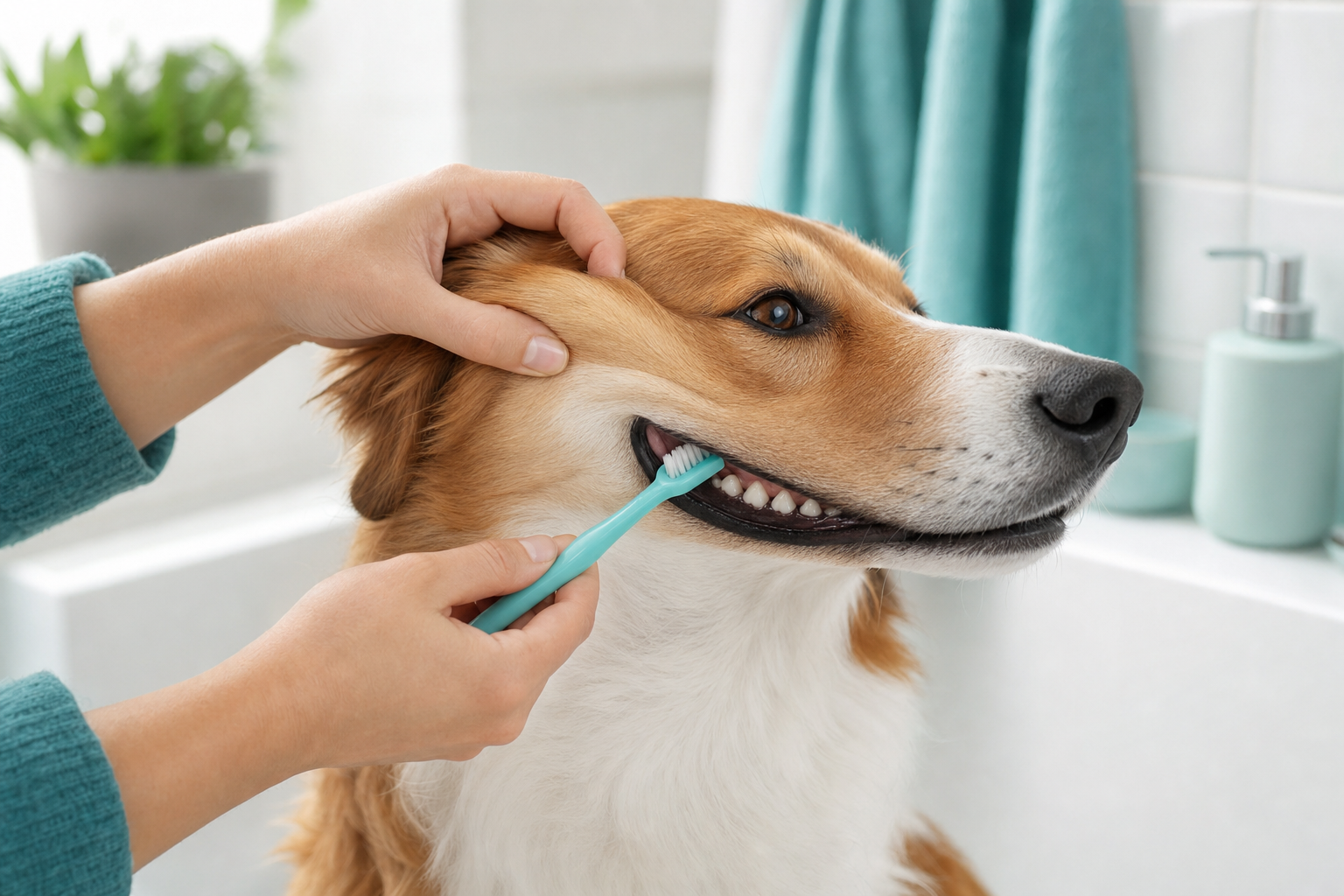
Quick answer
Brush your dog's teeth once a day if your dog can do so comfortably and your veterinarian has not told you to pause. Daily brushing is the clearest target because plaque builds up continuously, and brushing works by physically removing that soft film before it becomes harder to control.
A randomized study comparing brushing schedules found that daily and every-other-day brushing produced better plaque, calculus, and gingivitis results than weekly or every-other-week brushing. The study still recommended daily brushing, and current veterinary dental guidelines describe daily home care as the goal.
If daily brushing is not realistic yet, do not give up. Build toward it gradually. Every other day is a useful intermediate routine, but once-weekly brushing should not be treated as enough to maintain oral health.
Brushing prevents buildup, but it does not remove existing tartar
Tooth brushing is preventive home care. It removes soft plaque from accessible tooth surfaces, especially around the gumline. It does not safely remove hardened calculus, diagnose disease below the gumline, repair a fractured tooth, or replace a professional dental assessment.
Look at your dog's mouth before starting a new brushing routine. Call your veterinarian first if you notice:
- Red, swollen, painful, or bleeding gums
- Heavy yellow or brown calculus
- Persistent bad breath
- A loose, broken, discolored, or missing tooth
- Drooling, pawing at the face, or pulling away when the mouth is touched
- Dropping food, chewing on one side, or difficulty eating
- A lump, facial swelling, or discharge around the mouth or nose
Brushing inflamed gums can hurt and make a dog more resistant the next time. Do not scrape calculus with a metal tool or try to copy a professional cleaning at home. If your dog has recently had dental treatment or oral surgery, follow the discharge instructions and wait until the veterinary team says brushing can resume.
If dental signs are part of a longer list of missed care, Signs You're Overdue for a Vet Visit can help you decide what to book first.
What you need
Keep the setup simple:
- A small, soft-bristled toothbrush that fits your dog's mouth
- Toothpaste made for dogs, if your veterinarian recommends one
- A quiet place with good footing
- A small reward your dog already enjoys
- Enough time to stop before either of you becomes frustrated
A soft children's toothbrush may suit some small dogs, but the brush size and handle should let you work gently without pushing into the gums. The mechanical action of the bristles is the important part.
Never use human toothpaste. Dogs swallow rather than rinse, and human products are not formulated for that use. Do not substitute baking soda, mouthwash, peroxide, essential oils, or a homemade dental mixture. Ask your veterinary team which pet toothpaste or dental product is appropriate for your dog.
Start with cooperation, not a full-mouth brushing session
Many dogs need days or weeks to learn that mouth handling is safe. Going slowly is not wasted time. It is what makes a lasting daily routine possible.
Move through these stages at your dog's pace:
- Approach the face. Briefly touch the cheek, then reward and stop.
- Lift the lip. Lift one side for a second without opening the mouth. Reward calm behavior.
- Touch the outer teeth. Use a clean finger to touch one canine tooth, then a back tooth. Stop if your dog stiffens, turns away, growls, snaps, or tries to leave.
- Introduce the brush. Let your dog inspect it, then touch one tooth with the bristles. Reward and finish.
- Brush one small area. Make a few gentle movements on the outer surface of one section.
- Add sections gradually. Extend the session only while your dog remains relaxed.
Do not hold the dog down, force the mouth open, chase the dog with the brush, or punish avoidance. Forcing home dental care can increase fear and create a bite risk. If your dog guards the mouth, has a history of biting, or suddenly resists a routine that used to be comfortable, stop and ask your veterinarian for help.
How to brush your dog's teeth
Once your dog accepts the brush, use the same short sequence each day:
- Choose a calm time and put your dog on a secure, non-slip surface.
- Apply the dog-safe toothpaste if you are using one.
- Gently lift the lip while keeping the mouth mostly closed.
- Hold the bristles at about a 45-degree angle toward the gumline.
- Use small, gentle circular or back-and-forth movements on the outer surfaces of the teeth.
- Work along one side, including the canine tooth and the back premolars and molars, then repeat on the other side.
- Stop while your dog is still cooperating and give the planned reward.
- Rinse the brush and let it dry where the dog cannot reach it.
The outside surfaces are the practical priority because they are accessible without forcing the mouth open. Pay attention to the back teeth, which are easy to miss. Do not scrub hard, push the bristles into the gums, or worry about making the session look like human tooth brushing.
A careful partial session is better than turning brushing into a struggle. As tolerance improves, work toward consistent coverage of both sides.
What if you miss a day?
Resume the normal routine the next day. Do not brush twice as hard or prolong the next session to make up for it.
The more important question is why the routine was missed. If the time is unreliable, connect brushing to an event that already happens every day, such as the final evening trip outside or cleaning the food bowl. Keep the toothbrush, dog toothpaste, and reward together so setup takes only a moment.
Pet Care Reminder can hold a recurring daily tooth-brushing task. Mark it complete only after brushing happens, and use the history to notice whether the routine is genuinely daily or has quietly become occasional.
What if daily brushing is not possible?
First separate a training problem from a medical problem. A dog who has never learned mouth handling may need a slower introduction. A dog who suddenly avoids the brush may have pain and needs a veterinary examination.
If brushing remains unsafe or impractical, ask your veterinarian to build another home-care plan. Depending on the dog, that may include a dental diet, chew, wipe, or other product with evidence for plaque or calculus control. Products accepted by the Veterinary Oral Health Council can help identify options that have met defined effectiveness standards.
These products are not all interchangeable, and they do not make every chew safe. Avoid bones, antlers, and other very hard objects that can fracture teeth. Choose products for your dog's size, chewing style, health, and calorie needs with veterinary guidance.
An alternative product can support oral care, but it should not become a reason to skip oral examinations or ignore pain.
Does daily brushing replace professional dental care?
No. Even excellent daily brushing reaches only the surfaces you can access at home. A complete veterinary oral assessment may require anesthesia, probing, and dental radiographs to find disease below the gumline or inside apparently normal teeth.
Ask your veterinarian to check your dog's mouth during routine visits and to set an individual dental plan. Breed, tooth crowding, age, previous periodontal disease, chewing habits, and how consistently home care is performed all affect how often a dog may need professional assessment and treatment.
Seek prompt veterinary advice for ongoing bad breath, bleeding, pain, eating changes, a damaged tooth, or facial swelling. Oral bleeding that will not stop, major mouth or jaw trauma, sudden severe swelling, or difficulty breathing needs urgent or emergency veterinary care.
A routine that is realistic enough to last
Use this weekly check to keep brushing effective:
- Is brushing happening daily or at least moving steadily toward daily?
- Can your dog stay relaxed through the current step?
- Are both outer tooth rows getting attention, including the back teeth?
- Are the gums becoming red, swollen, or painful?
- Is the brush still soft and in good condition?
- Is the toothpaste made for dogs and within its use-by date?
- Is a dental exam or recommended recheck due?
If the answer reveals pain or a sudden behavior change, do not push through. Pause and call the veterinary team. If the problem is simply an inconsistent schedule, shorten the session and attach it to a more dependable daily cue.
The simple rule
Aim to brush your dog's teeth once every day. Introduce the brush slowly, clean the outer surfaces gently along the gumline, and use only products suitable for dogs.
Brushing is most useful in a comfortable mouth before plaque becomes hardened calculus. If your dog has painful gums, visible buildup, a damaged tooth, eating changes, facial swelling, or a sudden new resistance to mouth handling, arrange a veterinary dental assessment instead of trying to brush through it.
Sources
- Effect of Frequency of Brushing Teeth on Plaque and Calculus Accumulation, and Gingivitis in Dogs. Randomized, controlled, blinded study comparing daily, every-other-day, weekly, every-other-week, and no brushing in dogs; daily and every-other-day brushing performed better than less frequent schedules, with daily brushing recommended.
- 2019 AAHA Dental Care Guidelines for Dogs and Cats. Formal, peer-reviewed veterinary guidelines covering daily brushing, the limits of brushing once calculus or inflamed gums are present, home-care products, oral examinations, radiographs, and professional treatment.
- World Small Animal Veterinary Association Global Dental Guidelines. Global clinical guidance on daily plaque control, suitable brushes and pet toothpaste, gradual positive introduction, safe brushing technique, and the role of professional veterinary dental care.