What to Tell a Dog Sitter Before You Leave
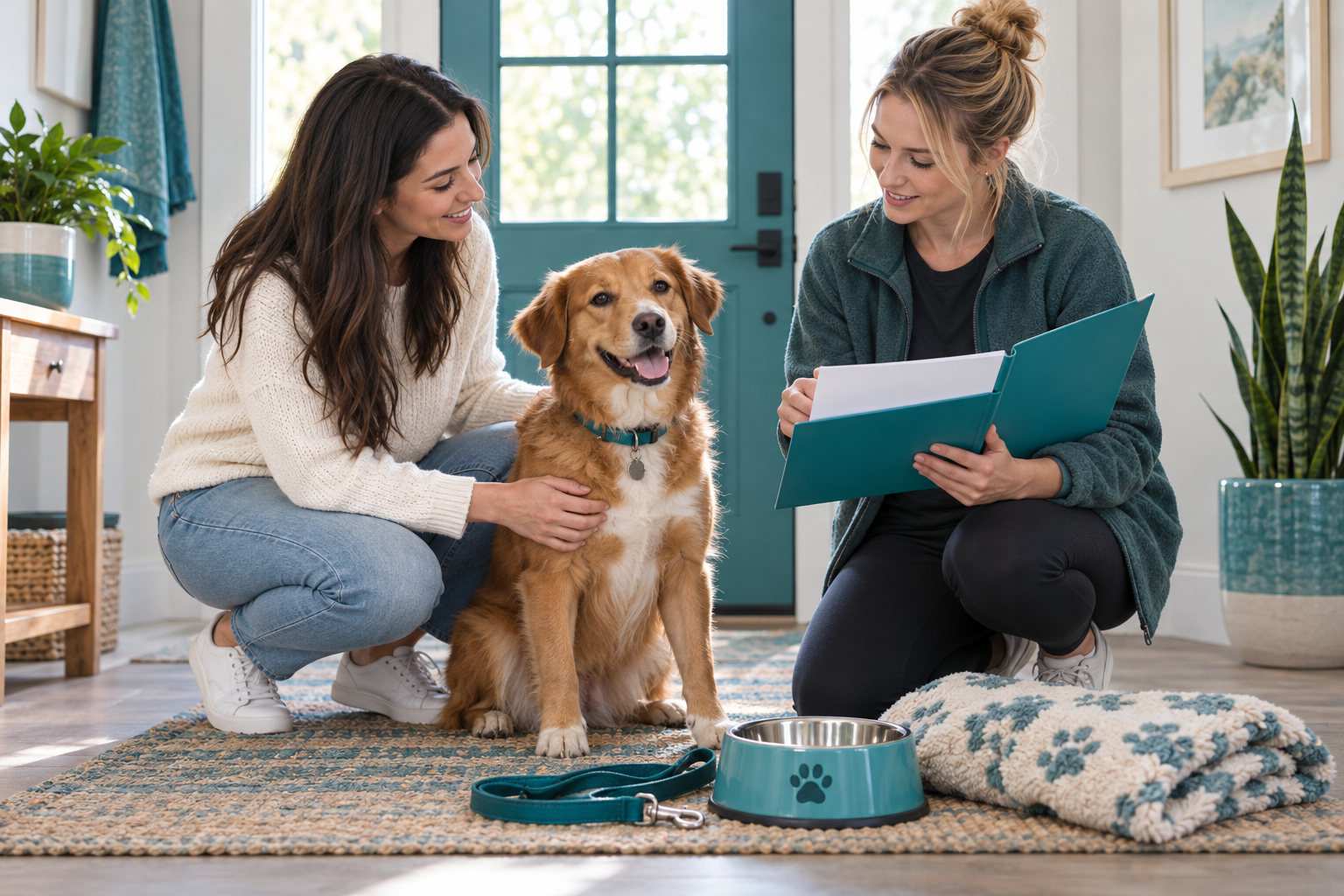
Quick answer
Before you leave, give your dog sitter one written care sheet and walk through it together. The sitter should know:
- The exact first visit, last visit, and overnight dates and times
- What and how much your dog eats, when meals happen, and what to do if a meal is refused
- The usual toilet and walking routine, approved routes, equipment, and weather limits
- Every medication's name, amount, route, time, storage, and veterinarian-provided missed-dose instructions
- Your dog's normal appetite, drinking, stool, urination, energy, mobility, and behavior
- Triggers, handling limits, escape risks, dog or visitor rules, and calming routines
- Which changes require an update, a same-day veterinary call, or immediate emergency care
- Your regular veterinarian, nearest open emergency clinic, local backup contact, and transport plan
- Home access, alarm, key, door, yard, cleanup, and supply details
- How the sitter will record completed care and contact you
Write observable instructions such as "half a measured cup at 7 a.m." or "keep the front door closed before unclipping the leash." Avoid shorthand such as "usual breakfast," "normal walk," or "give medicine at night."
The test is simple: if a different trusted person had to take over halfway through the trip, could they follow the same sheet without guessing?
Start with one care sheet
Messages, sticky notes, prescription labels, and a conversation at the door are easy to separate from one another. Put the essential plan in one document, even if supporting veterinary records and medication labels remain separate.
Use this order so the sitter can find urgent information quickly:
| Section | What to include |
|---|---|
| Trip | Departure, return, first visit, final visit, overnight expectations, and any time you will be unreachable |
| Dog | Name, current photo, identifying details, microchip information, and collar or harness details |
| Daily care | Meals, fresh water, toilet breaks, walks, play, rest, and bedtime |
| Medication | Exact written directions, storage, administration record, and who to call after a problem |
| Behavior | Normal greeting, triggers, handling limits, escape risks, and safe calming routine |
| Health | Normal baseline, conditions, allergies, recent changes, and warning signs |
| Contacts | Owner, local backup, regular veterinarian, emergency clinic, and poison advice service |
| Home | Entry, alarm, doors, gates, yard, supplies, cleanup, and household boundaries |
| Updates | When to message, what to record, and what needs an immediate call |
Put your dog's name and your phone number on each separate medication or feeding page. Save a copy where both you and the sitter can reach it if a phone is lost or the home internet is unavailable.
If your dog will stay at a facility rather than at home, use Dog Boarding Checklist: Vaccines, Medications, and Feeding Notes. A home sitter needs many of the same care details, but also needs precise access, walk, household, and visitor rules.
Walk through the routine before departure day
Arrange a handoff while you are still available to answer questions. Ideally, the sitter should see the dog in the home before the first solo visit.
Show the sitter:
- How each exterior door, gate, and lock works
- Where the dog waits while someone enters or leaves
- Which collar, harness, leash, and identification the dog uses
- How the equipment fits and where it is stored
- The approved walk route and places to avoid
- Where food, bowls, treats, medication, waste bags, towels, and cleaning supplies are kept
- Where the dog sleeps and which rooms are off-limits
- How the dog usually signals a need to go outside
- What a normal greeting, meal, walk, and bedtime look like
Watch the sitter complete any task that depends on equipment or a sequence of steps. This can reveal a stiff gate latch, a confusing food scoop, or a harness that is easy to fasten incorrectly. Do not use the handoff to introduce a new walking tool, training method, food, or medication unless your veterinarian or qualified behavior professional has already planned the change.
If your dog is wary of strangers, handling-sensitive, reactive, or protective of the home, a casual key exchange is not enough. Arrange introductions early and ask the veterinary team whether the proposed care setup is appropriate.
Turn the daily routine into clock times and actions
Write what should happen, when it should happen, and how much flexibility is safe.
For example:
| Time | Task | Completion detail |
|---|---|---|
| 7:00 a.m. | Breakfast | 85 g of usual dry food in the kitchen bowl; note amount eaten |
| 7:30 a.m. | Toilet walk | 15-minute approved block route; record urine and stool |
| 1:00 p.m. | Midday visit | Fresh water, yard toilet break on leash, 10 minutes of calm play |
| 6:30 p.m. | Dinner | 85 g of usual food; no extra treats unless listed |
| 7:00 p.m. | Evening walk | Approved route; return earlier in heat, storms, or if the dog is uncomfortable |
| 10:00 p.m. | Final toilet break | Secure the gate first; confirm dog is indoors before locking up |
Use a time window only when it is genuinely acceptable. "Between 6:30 and 7 p.m." is useful. "Sometime in the evening" forces the sitter to interpret the routine.
If the dog is a puppy, senior, diabetic, recovering from illness or surgery, taking time-sensitive medication, or unable to hold urine for long, confirm the timing with the veterinary team. The sitter should not have to decide how far a prescribed schedule can move.
How to Build a Morning Care Routine for Dogs That Actually Sticks can help you turn a familiar household routine into repeatable steps before someone else takes it over.
Make food and water instructions measurable
Write the complete food name and variety, amount per meal, preparation, meal times, approved treats, and storage. Include veterinary diet instructions and known food reactions.
Avoid:
- "One scoop" when several scoops are in the cupboard
- "A little wet food" without an amount
- "Top up the bowl" when intake needs to be monitored
- "Treats are fine" without naming safe treats and a limit
- Moving food into an unmarked container without preserving the product details
The WSAVA Nutrition Guidelines support individualized nutrition plans and a clear diet history. Keep the sitter's plan aligned with the diet your dog already follows. A trip is not a good time for the sitter to estimate a new portion, substitute a food, or test unfamiliar treats.
Explain what normal drinking looks like for your dog and how the sitter should refresh the water. Ask for a note if the bowl is repeatedly empty, untouched, tipped over, or contaminated. A change matters more when the sitter knows the baseline.
Write what to do after a refused meal. The response may depend on age, illness, medication, and how long the change continues. For a dog with diabetes or another condition linked to food intake, get specific written instructions from the veterinary team before the trip.
Define the walk and toilet rules
Do not leave "take a normal walk" as the whole instruction. Tell the sitter:
- Which equipment must be used and how it should fit
- Whether the dog wears identification on every outing
- The approved route, duration, pace, and toilet locations
- Whether the dog may enter a yard only on leash
- Which dogs, people, wildlife, traffic areas, or surfaces to avoid
- Whether greetings with unfamiliar people or dogs are allowed
- Whether dog parks, off-leash areas, car trips, shops, and visitors are prohibited
- The dog's scavenging, pulling, freezing, chasing, guarding, or escape habits
- The weather conditions that shorten or cancel a walk
- How to secure the dog before opening a door, gate, or vehicle
Point out the exact place where the leash goes on and comes off. For an escape-prone dog, write the door sequence step by step. Make sure the sitter knows which gate may look closed without latching.
Record normal urine and stool frequency in plain language. Ask the sitter to note straining, repeated attempts, diarrhea, blood, a major change in frequency, or a missed toilet opportunity, then follow your veterinary contact plan. Do not ask the sitter to diagnose what caused the change.
Describe behavior as something the sitter can observe
"Friendly" and "nervous" are too broad to guide a difficult moment. Explain what your dog actually does.
Useful details include:
- "Barks when a person enters, then moves away and takes treats after a few minutes"
- "Stiffens and guards the food bowl if approached while eating"
- "Hides upstairs during thunder and should not be pulled out"
- "Freezes when the harness goes over the head, so use the step-in harness shown at the handoff"
- "Does not tolerate paw handling"
- "May bolt toward the front door when a delivery arrives"
- "Has never lived with cats and must not meet the neighbor's cat"
The AAHA behavior management guidelines emphasize reading canine body language, recognizing stress, moving at the animal's pace, and using cautious, calm handling. Tell the sitter which signs mean your dog needs space and which familiar routine helps the dog settle.
Do not authorize a sitter to improvise a correction, force contact, test a feared situation, or introduce the dog to another animal. If the dog has a bite history, serious separation distress, repeated escape behavior, or a condition that makes routine handling unsafe, disclose it before booking. A qualified in-home professional, veterinary-supervised arrangement, or different care plan may be necessary.
Write medication directions that cannot be misread
Copy the current prescription label and veterinarian's written directions. Use one row per product, including prescribed medication, topical products, supplements, and as-needed medication.
| Field | What the sitter needs |
|---|---|
| Product | Name, strength, and form |
| Amount | Exact quantity for one dose |
| Route | By mouth, on skin, in eye, in ear, or other prescribed route |
| Time | Exact dose time and first dose due during the trip |
| Food | With food, after food, or on an empty stomach, as directed |
| Preparation | Shake, measure with supplied device, or another label instruction |
| Storage | Temperature, light, security, and handling requirements |
| Response | Expected effect and veterinarian-identified adverse signs |
| Problem plan | What to do after a refused, spat-out, vomited, late, missed, spilled, or uncertain dose |
| Contact | Prescribing clinic and after-hours option |
The FDA's medication guidance explains that route, amount, timing, food instructions, storage, interactions, and the response to a missed or vomited dose can all be product-specific. Do not tell the sitter to repeat a dose or double the next dose unless the prescribing veterinary team has provided that exact instruction.
Keep each medicine in its original labeled container, separate pet medicine from human medicine, and store everything out of reach of animals. Supply the correct measuring device. If a label is outdated after a recent dose change, ask the clinic for clear written instructions before departure.
Record the final dose you give before leaving and the first dose the sitter is responsible for. The sitter should mark a dose complete only after it was actually given. "Unknown" is safer than a guessed checkmark. If administration is uncertain, the sitter should call the prescribing clinic with the product, scheduled time, and what happened.
Give the sitter a normal-baseline card
The sitter needs to know what is normal before a change is meaningful. Write down your dog's usual:
- Appetite and meal-finishing pattern
- Water use
- Urine and stool frequency
- Energy, sleep, play, and greeting behavior
- Breathing at rest
- Gait, stairs, and mobility
- Coughing, scratching, licking, or other existing signs
- Response to being touched, harnessed, and left alone
Add any recent illness, surgery, medication change, exposure, or veterinary appointment. Include the date and the plan your veterinarian gave you.
Use observable thresholds for updates. "Tell me if anything seems off" leaves the sitter to decide what matters. Better instructions are "message me after one refused meal" or "call the veterinary clinic promptly if vomiting repeats, the limp worsens, or she cannot settle because of pain."
Build an emergency ladder before you travel
Write the contacts in the order the sitter should use them:
- Your regular veterinary clinic and opening hours
- The nearest open emergency veterinary clinic, with address and phone number
- The animal poison advice service appropriate to your location
- You and any second owner
- A local backup who can collect the dog, provide transport, or take over care
Confirm who may authorize examination and treatment if you cannot be reached. Discuss payment and transport in advance. Leave a secure carrier plan for a small dog or an appropriate vehicle-restraint plan for a larger dog. Make sure the sitter can find the leash and leave the home quickly.
Tell the sitter to seek emergency veterinary care immediately for difficulty breathing, collapse, unresponsiveness, an active seizure, severe uncontrolled bleeding, major trauma, or suspected poisoning. They should call the clinic while preparing to travel when it is safe to do so, rather than waiting for you to reply.
The 2026 RECOVER first-aid guideline was written to help veterinary professionals advise owners and temporary caregivers, including pet sitters. It recommends prompt veterinary care for suspected toxin ingestion and advises against routinely inducing vomiting outside a clinic. The sitter should not give a home remedy or try to make the dog vomit unless a veterinarian or animal poison control professional gives situation-specific instructions.
For a practical toxin-information handoff, see What to Do If Your Dog Eats Something Toxic.
This article provides general preparation, not a diagnosis or an individual emergency plan. Ask your veterinarian to tailor instructions for your dog's conditions and medication.
Cover the house rules that affect the dog
Keep home instructions relevant and specific:
- Which entrance to use and where the key is returned
- How the alarm works and whom to call after a problem
- Which doors, windows, and gates must stay closed
- Whether anyone else may enter the home
- Which plants, bins, food, chemicals, or rooms must remain inaccessible
- Where leads, towels, waste bags, cleaning supplies, and spare food are stored
- How to handle deliveries without exposing the dog to an open door
- What to do after a toilet accident, spill, power outage, or lost key
- Whether cameras are present in care areas
Test the key, code, alarm, gate, and backup-entry plan before leaving. A sitter locked outside cannot complete a perfectly written feeding or medication schedule.
Respect the sitter's safety too. Disclose other household animals, expected visitors, building staff, difficult neighbors, construction, faulty locks, and any part of the routine that requires lifting or physical control. Do not leave a high-risk task as a surprise.
Agree on updates and proof of completion
Choose a communication plan that does not depend on either person interpreting silence.
For routine care, ask the sitter to record:
- Arrival and departure time
- Meals offered and amount eaten
- Medication actually given
- Urine and stool
- Walk or yard activity
- Behavior and energy
- Any unusual sign, incident, supply shortage, or home problem
Agree on one normal update time and what warrants an immediate call. A photograph can show that the sitter visited, but it does not prove that medication was swallowed or that a gate was secured. Use a written completion record for care tasks.
Pet Care Reminder can hold the confirmed meal, walk, medication, and check-in schedule. Share the plan with the person providing care, record exceptions in notes, and mark each task complete only after it happens. The reminder supports the handoff; it does not replace the care sheet or emergency judgment.
Do a five-minute departure handoff
On the day you leave:
- Record the last meal, medication, toilet break, and walk you completed.
- Note any change in appetite, stool, urine, energy, mobility, skin, or behavior.
- Put the current care sheet in the agreed place and send the digital copy.
- Check food and medication quantities against the trip length, plus an agreed delay allowance.
- Confirm that the sitter has working access and the backup key.
- Confirm the first visit and first task due.
- Make sure the emergency contact and clinic details are visible.
Do not change the plan in several last-minute messages. If something important changes, update the master care sheet and tell the sitter exactly which version is current.
Ask for a return handoff
When you return, ask for:
- The time of the last meal, medication, walk, and toilet break
- Food and medication remaining
- Any refused, partial, delayed, missed, vomited, or uncertain dose
- Appetite, water, urine, stool, sleep, mobility, and behavior changes
- Any contact with a veterinarian, poison service, neighbor, or backup caregiver
- Any incident, escape attempt, equipment problem, or home issue
Do not give an extra medication dose because you are unsure what happened. Check the sitter's record and call the prescribing clinic if a dose remains uncertain.
Continue monitoring a reported change after you return. Contact your veterinarian if a problem persists, worsens, or does not match the plan the clinic previously gave you.
A copyable sitter brief
Use this as a starting point, then replace every bracketed item:
- Trip: [first visit date and time] to [final visit date and time]
- Dog: [name, description, microchip, collar or harness]
- Meals: [food, amount, preparation, times, refused-meal plan]
- Water: [where, refresh routine, what change to report]
- Toilet: [usual frequency, location, what to record]
- Walks: [equipment, route, duration, restrictions, weather plan]
- Medication: [exact directions or attached current medication sheet]
- Behavior: [normal greeting, triggers, handling limits, calming routine]
- Health baseline: [normal appetite, energy, mobility, and existing signs]
- Call me when: [specific non-urgent update thresholds]
- Call the vet when: [veterinarian-approved prompt-care thresholds]
- Emergency: [clinic, address, phone, poison service, authorization, transport]
- Backup person: [name, phone, role]
- Home access: [entry, alarm, doors, gates, supplies, backup key]
- Updates: [time, method, and details to record]
Read it aloud with the sitter. If either of you has to explain what a line probably means, rewrite that line.
The simple rule
Tell the sitter what is normal, what happens next, and what must never be guessed.
A useful handoff names each task, time, amount, completion record, exception, and contact. Pair that written plan with a real walk-through, clear home and behavior boundaries, and an emergency ladder that works when you are unreachable.
Then leave knowing the sitter can care for the dog in front of them, not a vague version of your routine remembered from a hurried conversation.
Sources
- Medications for Your Pet ... Questions for Your Vet. Official FDA guidance on medication purpose, route, dose, timing, food instructions, storage, interactions, adverse effects, and product-specific action after a missed, spat-out, or vomited dose.
- 2015 AAHA Canine and Feline Behavior Management Guidelines. Formal clinical guidance on reading animal body language, recognizing fear and stress, moving at the animal's pace, and using cautious, calm handling.
- Nutrition Guidelines. WSAVA global clinical guidelines and tools for individualized nutrition planning, collecting a clear diet history, writing feeding instructions, and monitoring intake.
- RECOVER Guidelines: First Aid for Dogs and Cats. Clinical Guidelines. Peer-reviewed 2026 consensus guidance for veterinary first-aid education of owners and temporary caregivers, including pet sitters, with recommendations for respiratory distress, poisoning, seizures, trauma, and transport for professional care.