
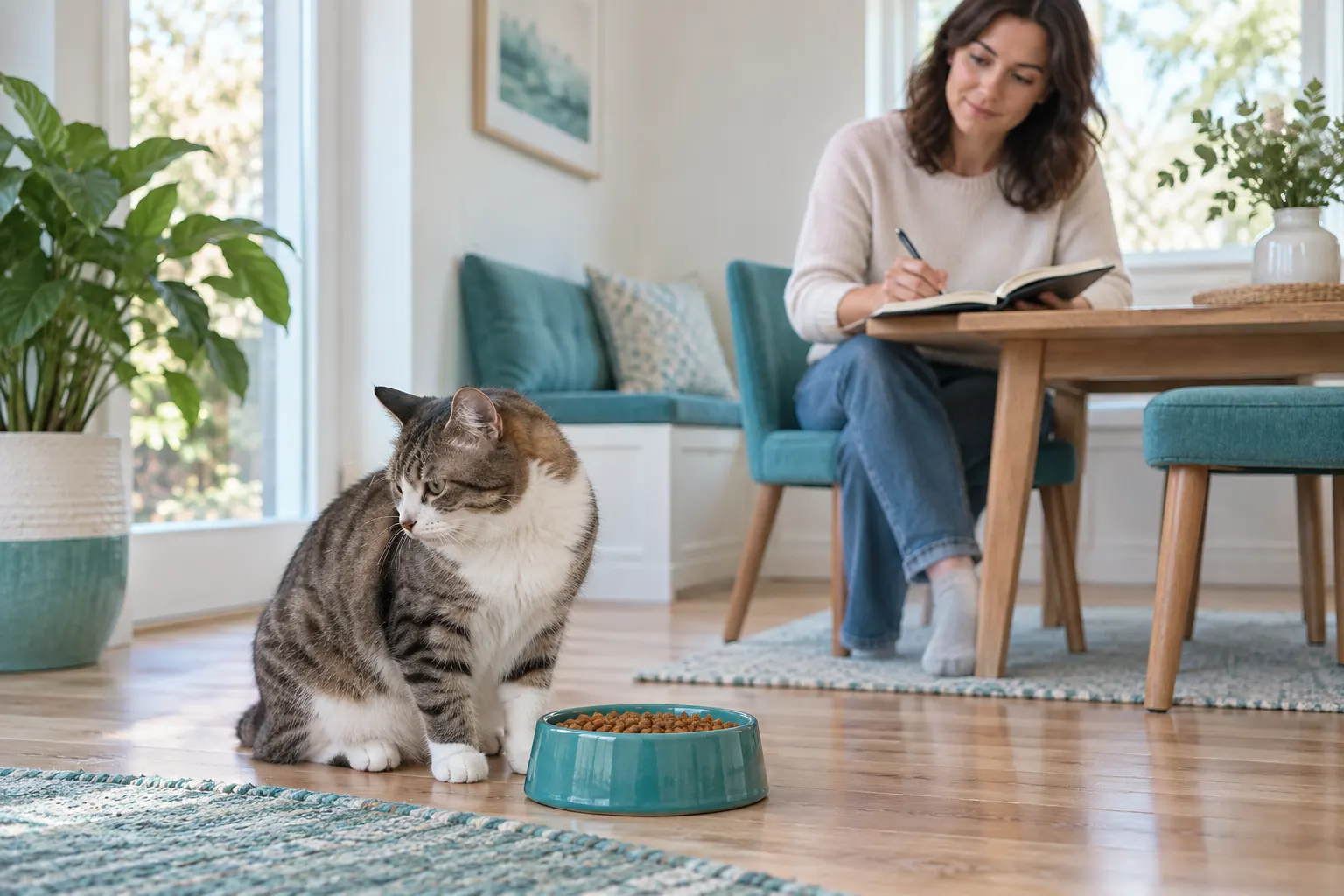
Quick answer
When your cat's appetite changes suddenly, record how much food was actually eaten, how your cat behaved around it, and what else changed at the same time. A bowl that looks untouched is only the start of the story.
Make the first entry include:
- The exact food and measured amount offered
- The amount left after a defined meal period
- Whether your cat approached, sniffed, licked, chewed, swallowed, and kept food down
- Water intake, vomiting, stool, urination, energy, hiding, comfort, and breathing
- Any new food, medication, household stress, outdoor access, or possible toxin or foreign-object exposure
- The time you contacted a veterinary clinic and the instructions it gave
Call your veterinarian the same day if your cat completely refuses food, eats much less than normal, or repeats the change at the next meal. Call sooner for a kitten, senior cat, overweight cat, pregnant or nursing cat, a cat with a chronic condition, or a cat whose medication plan depends on eating.
Seek emergency veterinary care now for open-mouth or difficult breathing, collapse, a seizure, very pale or blue gums, repeated vomiting with inability to keep water down, a swollen or painful abdomen, suspected poisoning, a possible swallowed object or string, or repeated straining with little or no urine.
Do not force-feed, syringe-feed, give a human medicine, start an appetite stimulant, or change a prescription dose unless the veterinary team has given instructions for this cat. A feeding log helps the team see the pattern. It cannot identify the cause or confirm that waiting is safe.
Treat a sudden appetite change as a sign, not a diagnosis
A cat may eat less because of nausea, pain, dental or mouth disease, difficulty smelling food, digestive disease, fever, constipation, a medication effect, stress, or many other problems. A cat can also want food but be unable to pick it up, chew, or swallow normally. Watching only whether the bowl is empty combines these different problems into one vague observation.
The 2022 ISFM guidelines on feline inappetence describe subtle nausea signs such as lip licking, drooling, and turning away from food. They also emphasize prompt attention to underlying illness, pain, nausea, digestive slowdown, and stress. Those guidelines focus mainly on hospitalized cats, so they are not an at-home diagnosis tool. Their practical lesson for an owner is that reduced intake deserves an early veterinary conversation, not a series of unsupervised feeding experiments.
Cats also have a specific risk that makes prolonged poor intake unsafe. Feline hepatic lipidosis is a serious liver disorder associated with appetite loss and weight loss, classically in cats that were overweight before they stopped eating. Not every cat who misses food develops it, and an owner cannot diagnose it at home. The risk is a reason to contact a veterinarian before a visible weight change appears, especially when an overweight cat is eating little or nothing.
Do not use a universal number of hours as permission to wait. The significance of one small meal differs between a healthy adult cat and a diabetic cat due for insulin, a kitten, a post-operative cat, or a cat already losing weight. Let the clinic set the next observation time for the individual cat.
First confirm who ate the food
Free-feeding and multi-cat homes can make appetite surprisingly hard to measure. One cat may visit several bowls, another pet may finish the leftovers, or an anxious cat may avoid a feeding station while another animal is nearby.
For the next scheduled meal, if your cat is stable and the veterinary clinic has not told you to come in immediately:
- Measure the food before putting it down.
- Offer it in a quiet, familiar place where no other pet can reach it.
- Keep the litter box, water, hiding place, and normal escape route accessible.
- Observe from a distance rather than standing over the bowl.
- Remove and measure the remainder after a defined period.
- Record treats, food used for medication, prey, table food, and access to another pet's bowl.
Do not create a long isolation test or withhold food to make the result clearer. The goal is one calm, measurable opportunity to eat, not a challenge the cat must pass.
The AAFP consensus statement on feline feeding programs recommends feeding arrangements that account for normal feline behavior, safe locations, and the needs of each cat in a multi-pet household. A poor setup can reduce access, but a suddenly changed appetite should not be dismissed as a behavior problem without veterinary advice.
Record four separate parts of eating
1. Interest
Note whether your cat comes at the usual cue, approaches the bowl, sniffs, and begins eating. Record hiding, unusual quietness, restlessness, lip licking, drooling, repeated swallowing, or turning away after smelling the food.
Do not label the cat "fussy" or "stubborn." Write what happened: "walked to the bowl, sniffed twice, licked lips, and moved under the chair."
2. Access
Check whether another animal blocked the route, occupied the room, or ate the food. Note a moved bowl, noisy appliance, visitor, building work, new litter setup, or other household change. Include outdoor access because a cat may have eaten elsewhere or encountered prey, spoiled food, plants, chemicals, or another hazard.
3. Ability to eat
Watch for food falling from the mouth, one-sided chewing, pawing at the face, jaw chattering, gagging, coughing, a head tilt, difficulty lowering the head, or approaching food eagerly but failing to eat. These details can help the veterinarian distinguish reduced desire to eat from pain or a mechanical problem.
Do not pry the mouth open. Do not pull visible thread, string, ribbon, or fabric. A painful cat may bite, and pulling a linear object can cause internal injury. Call a clinic immediately for instructions.
4. Amount and what happened afterward
Measure what was eaten using the same method each time. For wet food, a kitchen scale is useful when practical. For dry food, weigh it or use one level scoop consistently. Record vomiting, regurgitation, drooling, diarrhea, or a sudden retreat after eating.
If vomiting is part of the change, When Should a Cat See the Vet for Vomiting? explains which details help distinguish an isolated episode from an urgent pattern. A possible toxin or foreign-object exposure remains an immediate-call situation regardless of how many times the cat has vomited.
Build a timeline the clinic can use
Start with the last definitely normal meal. Then make one row for every meaningful event rather than one summary at the end of the day.
| Time | Food and measured amount | Eating behavior | Other observations | Action |
|---|---|---|---|---|
| 7:00 a.m. | Usual wet food, 85 g offered, about 15 g eaten | Approached normally, took several bites, then turned away | Alert, urinated overnight, no vomiting seen | Remainder weighed and removed |
| 10:15 a.m. | No extra food offered | Licked lips near kitchen, did not approach bowl | Hiding more, drank once, no stool today | Called clinic at 10:25 a.m. |
| 12:30 p.m. | Followed clinic's feeding instruction | Sniffed, ate about 5 g | Drooled briefly, responsive | Same-day appointment confirmed |
Use observations, not explanations. "Ate 15 g and hid under the bed" is more useful than "probably has an upset stomach." The veterinarian will combine the timeline with the examination and any tests that are appropriate.
Include:
- The last normal meal and the first changed meal
- The normal daily food amount and today's measured total
- Every treat, supplement, medication carrier, and food from another source
- Vomiting or regurgitation times and whether water stayed down
- Stool and urine output, including straining or unusually small clumps
- Changes in energy, social behavior, grooming, posture, walking, and sleeping location
- Recent weight if it was measured on the same reliable scale
- The clinic's advice, reassessment time, and emergency threshold
Check the whole cat without delaying the call
Appetite becomes more informative when it is recorded beside the rest of the cat's day.
Water and litter box
Note whether water intake appears increased, reduced, or unchanged. Record urine clump number and size if you use clumping litter, plus straining, frequent box visits, crying, or urinating outside the box. Repeated attempts with little or no urine are an emergency, particularly in a male cat.
Record stool frequency, consistency, straining, black appearance, or visible blood. Do not press the abdomen to test for pain or try to express the bladder.
Comfort and behavior
Look for hiding, reduced interaction, unusual clinginess, restlessness, reluctance to jump, a hunched position, squinting, reduced grooming, or sensitivity to touch. These signs do not identify the cause, but they help show whether the change extends beyond food.
Mouth, face, and smell
Without forcing an examination, notice bad breath, drooling, facial swelling, food dropping, pawing at the mouth, nasal discharge, noisy breathing, or reduced response to familiar food smells. A cat that seems hungry but cannot eat still needs veterinary assessment.
Vomiting, breathing, and circulation
Record vomiting, retching, breathing effort, gum color if safely visible, weakness, collapse, and ability to walk. Open-mouth breathing or obvious breathing difficulty in a cat warrants emergency care. Do not delay travel to make a perfect video or complete every field in the log.
Use an urgency level, not a guess at the cause
| Level | Examples | Next action |
|---|---|---|
| Emergency now | Breathing difficulty, collapse, seizure, very pale or blue gums, repeated vomiting with inability to keep water down, severe pain, suspected toxin, possible swallowed object or string, or repeated straining with little or no urine | Call the nearest emergency veterinary clinic and leave as directed |
| Same-day veterinary advice | Complete food refusal, a major reduction, a repeat at the next meal, vomiting or diarrhea, drooling, mouth pain, lethargy, hiding, weight loss, medication concerns, or a higher-risk cat | Call the regular clinic or urgent service and give the measured timeline |
| Brief observation may be reasonable | One slightly smaller meal in an otherwise healthy adult cat who is bright, comfortable, drinking, urinating, and behaving normally, with no exposure concern | Measure the next scheduled meal and call if the change repeats, worsens, or another sign appears |
If you cannot confidently place your cat in the last row, call. A veterinary professional can ask the questions that determine whether the cat needs emergency care, a same-day visit, or a specific home-monitoring period.
Call earlier when there is less room for error
Contact the veterinary team after the first meaningful reduction when your cat is:
- A young kitten, senior cat, pregnant or nursing cat
- Overweight, losing weight, or already underweight
- Diabetic or receiving insulin
- Living with kidney, liver, pancreatic, thyroid, gastrointestinal, heart, urinary, dental, or another chronic condition
- Taking medicine that must be given with food or monitored closely
- Recovering from surgery, anesthesia, hospitalization, or a recent illness
- Eating a prescription diet as part of disease management
- Known to chew string, ribbon, hair ties, plants, medication, or other unsafe items
If a meal was refused around a scheduled medicine, report the product name, strength, prescribed amount, scheduled time, last confirmed dose, and food intake. Do not give, skip, repeat, split, or change the dose based on a general article. FDA medication guidance notes that some medicines must be given with food while others must be given without it, and that a veterinarian should decide what happens after a missed or vomited dose.
Check recent changes without turning the kitchen into a test lab
Look for practical clues:
- A new bag, batch, flavor, texture, recipe, bowl, or feeding location
- Food left out too long, damaged packaging, moisture, insects, or an unusual smell
- Another pet guarding the route or finishing the meal
- Visitors, construction, travel, boarding, a move, or a changed daily schedule
- A recent vaccine, procedure, medication start, dose change, or refill
- Access to rubbish, compost, plants, cleaners, essential oils, human medication, veterinary medication, string, ribbon, thread, or small objects
- Nasal congestion, mouth discomfort, constipation, or difficulty reaching the bowl
Save packaging and clear photographs when safe. Tell the clinic what could be missing and the earliest possible exposure time.
Avoid offering a parade of rich foods, treats, tuna, milk, or table scraps to discover what the cat will accept. Repeated substitutions can upset the digestive system, interfere with a prescription diet, create aversion to several foods, and obscure the original pattern. If the clinic recommends warming food, changing texture, or using a specific recovery diet, follow its exact plan.
Avoid the common home-care mistakes
Unless a veterinarian has instructed you for this episode, do not:
- Force food into the mouth or syringe-feed food or water
- Give a human pain, nausea, stomach, or appetite medicine
- Use another pet's prescription or leftover medication
- Repeat a dose that may have been vomited or partly swallowed
- Start an appetite stimulant without an examination and prescription
- Make an abrupt weight-loss plan or intentionally withhold food
- Pull on visible string or induce vomiting at home
- Wait for obvious weight loss or yellow discoloration before calling
Peer-reviewed feline guidance warns that force-feeding can cause aspiration, food aversion, stress, and damage to the owner-cat bond. A cat who is not eating may need treatment for the underlying problem and a veterinarian-directed nutrition plan. That can include anti-nausea treatment, pain control, appetite support, or assisted nutrition, but the correct choice depends on the cat's condition.
Use a short veterinary call script
Lead with amount, duration, and accompanying changes:
"My cat ate about 15 grams of her usual 85-gram breakfast at 7:00. Dinner last night was normal. She approached the bowl but turned away, licked her lips, and has been hiding more. She has kept water down and urinated overnight. She is eight years old, overweight, and takes no medication."
Then add:
- Food name, normal amount, measured amount eaten, and treats
- Interest, chewing, swallowing, drooling, vomiting, stool, and urine details
- Energy, posture, breathing, pain, and weight changes
- Medical conditions, current medicines, and recent procedures
- Possible toxin, plant, food, rubbish, or object exposure
- Your location and travel time to the clinic
Ask: "Should we come now, book a same-day appointment, or monitor until a specific time? What may I offer, and what change means we should go to emergency?"
Write the instructions down. How to Prepare for Your Pet's Vet Visit can help turn the feeding record, medication labels, photographs, and questions into a concise appointment handoff without delaying urgent care.
Make the next observation easy to complete
If the clinic recommends home monitoring, create only the tasks that lead to the next decision:
- Measure the next scheduled food offering.
- Record approach, eating ability, and amount consumed.
- Check water, urine, stool, vomiting, energy, and comfort.
- Follow the clinic's medication instruction exactly.
- Call back at the specified time or sooner if a warning sign appears.
Pet Care Reminder can hold each feeding check, the clinic callback, a medication clarification, and the recheck appointment. Put measured facts in the note and mark an item complete only after it happened. A reminder should support the veterinary plan, never extend a waiting period after an emergency sign appears.
For a stable daily baseline, How to Build a Morning Care Routine for Cats That Actually Sticks shows how to keep food, water, litter, and medication checks consistent without making the routine overwhelming.
What to bring to the appointment
Bring or send:
- The feeding and symptom timeline
- Food packaging or clear photographs of the full label and lot details
- Current medication and supplement containers
- Photos of vomit, stool, urine clumps, damaged objects, or possible exposures when relevant
- A short video of eating, walking, breathing, or another sign only if it was safe to record
- Recent weight records and relevant veterinary discharge notes
The veterinarian may examine the mouth, hydration, weight, body and muscle condition, abdomen, temperature, pain, and other systems. Testing and treatment depend on that history and examination. Appetite alone cannot tell an owner which disease, if any, is present.
The simple rule
Track access, interest, ability, and amount.
Confirm whose food was eaten. Measure what was offered and what remained. Record whether your cat wanted the food, could eat it normally, and kept it down. Add water, litter box, behavior, comfort, medication, and exposure details. Then let the veterinary clinic set the next deadline.
One slightly smaller meal in an otherwise normal adult cat may justify a brief, measured observation. Complete refusal, a major reduction, a repeat change, another symptom, or a higher-risk cat deserves same-day advice. Breathing trouble, collapse, seizure, abnormal gum color, inability to keep water down, suspected poisoning, a swallowed object, or inability to urinate requires emergency help.
The purpose of the log is not to diagnose the cat. It is to shorten the distance between "something seems off" and a clear veterinary decision.
Sources
- 2021 AAHA Nutrition and Weight Management Guidelines for Dogs and Cats. Formal peer-reviewed guidelines on nutritional histories, animal, diet, feeding-management, and environmental risk factors, individualized assessment, and changes in food intake.
- 2022 ISFM Consensus Guidelines on Management of the Inappetent Hospitalised Cat. Peer-reviewed feline guidelines on causes and subtle signs of inappetence, early intervention, monitoring intake, nausea, pain, stress, food aversion, and why force-feeding is not appropriate.
- Hepatic lipidosis: Clinical review drawn from collective effort. Peer-reviewed review of feline hepatic lipidosis, its association with appetite loss and weight loss, the higher-risk classic presentation in overweight cats, concurrent disease, and the need for early nutritional intervention.
- Feline Feeding Programs: Addressing Behavioral Needs to Improve Feline Health and Wellbeing. Formal AAFP consensus statement on safe feeding locations, small solitary meals, stress, and feeding access in multi-pet homes.
- Medications for Your Pet ... Questions for Your Vet. Official FDA guidance on whether medicines are given with food, correct timing and dosing, side effects, and what to do after a missed or vomited dose.
- Prevalence, Risk Factors, Pathophysiology, Potential Biomarkers and Management of Feline Idiopathic Cystitis: An Update Review. Peer-reviewed review describing urethral obstruction as a feline emergency, its higher frequency in male cats, and the need for urgent clinical treatment.