
Quick answer
A dog should see a veterinarian promptly when diarrhea is repeated, very watery, bloody, black and tar-like, or accompanied by another change such as vomiting, reduced appetite, lethargy, pain, weakness, or possible dehydration.
Go to an emergency veterinary clinic now if your dog has diarrhea and is:
- Collapsing, difficult to wake, disoriented, or severely weak
- Struggling to breathe or showing very pale, blue, or grey gums
- Unable to stand normally or showing severe abdominal pain or swelling
- Repeatedly vomiting or unable to keep water down
- Passing a large amount of blood, or passing black, tar-like stool while weak or pale
- Suspected of swallowing a toxin, human medicine, rubbish, bone, toy, fabric, or another foreign object
Call your regular veterinarian the same day for blood in the stool, repeated liquid stools, worsening frequency, signs of dehydration, a medication concern, or diarrhea in a puppy, senior dog, pregnant dog, or dog with a medical condition.
One soft stool may be suitable for close monitoring when an otherwise healthy adult dog is bright, comfortable, drinking normally, not vomiting, and has no concerning exposure. Call if it happens again, another sign appears, or you are unsure whether the dog is low risk.
Do not rely on a universal 12-hour or 24-hour rule. The dog's overall condition, fluid loss, age, health history, and possible exposures matter more than the clock alone.
Look at the dog before you study the stool
Diarrhea describes a change in stool, not a diagnosis. It can follow a diet change or dietary indiscretion, but it can also occur with parasites, infection, medication effects, toxin exposure, a swallowed object, pancreatitis, organ disease, stress, and other problems.
The WSAVA and ENOVAT acute-diarrhea guidance classifies dogs by systemic signs such as mental status and circulatory stability, not by the appearance of the stool alone. Blood matters and deserves a veterinary call, but blood by itself does not tell you whether the case is mild, moderate, or severe.
Use the whole dog to choose the next step:
| Level | What you may see | What to do |
|---|---|---|
| Emergency now | Collapse, breathing trouble, abnormal gum color, severe weakness, marked pain or swelling, repeated vomiting, inability to keep water down, major blood loss, toxin exposure, or possible swallowed object | Call the nearest emergency veterinary clinic and leave as directed |
| Same-day veterinary advice | Repeated or worsening diarrhea, any visible blood, black or tar-like stool, reduced appetite, lethargy, possible dehydration, medication concerns, or a higher-risk dog | Call your regular vet or urgent clinic now and describe the full pattern |
| Close monitoring may be reasonable | One soft stool in an otherwise healthy adult dog who is bright, comfortable, drinking normally, and showing no other change or exposure risk | Record it, watch closely, and call if it repeats or anything else changes |
If the clinic is closed, use its recorded instructions or website to find the designated emergency service. Calling ahead can help the team prepare, but do not delay travel when the clinic tells you to come immediately.
Treat systemic illness as the urgent part
Frequent trips outside can make the stool look like the whole problem. Pause long enough to check whether your dog is changing beyond bowel movements.
Seek emergency help for:
- Collapse, inability to rise, severe weakness, or reduced responsiveness
- Difficult breathing or very pale, blue, or grey gums
- A swollen, tense, or obviously painful abdomen
- Repeated vomiting, repeated dry heaving, or inability to keep water down
- A seizure, marked disorientation, or a rapidly worsening condition
- Suspected poisoning, overdose, or swallowed foreign material
- Large-volume bleeding or black, tar-like stool with weakness, pale gums, or collapse
Do not repeatedly press the abdomen, force the dog to walk, or pry open the mouth. Observe what happens during normal movement and handling. A painful or frightened dog may bite even if they are usually gentle.
If diarrhea began after a possible toxin or object exposure, the exposure sets the urgency. Do not wait to see whether the stool improves. What to Do If Your Dog Eats Something Toxic explains what details and packaging to collect while you call.
Call the same day when diarrhea is not isolated
Call your veterinary clinic promptly when:
- Diarrhea repeats, becomes more frequent, or turns fully liquid
- You see fresh red blood, clots, or black, tar-like stool
- Vomiting, dry heaving, nausea, or refusal of food appears
- Your dog becomes quiet, restless, clingy, withdrawn, weak, or less responsive
- Drinking or urination changes noticeably
- Gums seem dry or tacky, eyes look sunken, or your dog appears weak
- The abdomen looks swollen or your dog appears painful
- Straining continues with little stool produced
- Diarrhea starts after a new medicine, dose change, missed dose, or possible overdose
- Other pets or people in the home also develop gastrointestinal illness
- The problem improves and then returns, or a veterinary plan is not working as expected
Fresh red blood can come from the lower bowel, while black, sticky, tar-like stool can indicate digested blood from higher in the digestive tract. Owners cannot safely determine the source or amount of bleeding by appearance alone. Photograph it in good light, then call.
Do not assume that a small dog's frequent tiny stools are low risk, or that a large puddle means the cause is severe. Frequency, volume, and appearance are useful facts, but mental status, hydration, pain, vomiting, and medical history decide how quickly the dog needs an examination.
Call earlier for puppies and medically vulnerable dogs
Some dogs have less room for fluid loss, low blood sugar, infection, or a medication disruption.
Ask for veterinary advice after the first meaningful episode if your dog is:
- A young puppy, especially one who is very small or not fully vaccinated
- A senior dog or a dog who is frail or losing weight
- Pregnant or nursing
- Diabetic or receiving insulin
- Living with kidney, liver, pancreatic, adrenal, heart, immune, or gastrointestinal disease
- Receiving chemotherapy, immune-suppressing treatment, or a medicine that requires close monitoring
- Recovering from surgery, anesthesia, hospitalization, or a recent illness
- Known to eat toys, socks, bones, rubbish, or other objects
- Recently adopted, boarded, transported, or exposed to many unfamiliar dogs
A puppy with diarrhea and reduced energy, poor appetite, vomiting, or incomplete vaccinations needs prompt veterinary assessment. Keep the puppy away from shared dog areas while you call the clinic and follow its arrival instructions.
Individual instructions always override a general guide. If your dog's care plan says to call after one abnormal stool, do that.
Make a useful stool record
The clinic needs a timeline, not a diagnosis. Record each episode with the same simple fields:
- Date and time
- Approximate amount
- Consistency, from soft but formed to watery
- Color, including fresh red blood or a black, tar-like appearance
- Mucus, straining, urgency, or accidents
- Vomiting, appetite, drinking, urination, energy, and comfort
- Food, treats, chews, rubbish, travel, stress, and medication changes
- The action taken and the clinic's next threshold
A photo taken in good light can be more reliable than trying to remember the color later. Include an ordinary object for scale only if it can be placed nearby without touching the stool. Do not handle stool with bare hands.
Use plain descriptions such as "three watery stools between 6:30 and 8:00" or "soft stool with two streaks of bright red blood." Avoid labels such as "stomach bug," "food poisoning," or "colitis" unless a veterinarian has made that assessment.
Check hydration without trying to diagnose it at home
Diarrhea causes ongoing fluid loss. Vomiting, reduced drinking, fever, very frequent liquid stool, and a small body size can increase concern.
Changes an owner may notice include:
- Dry or tacky gums
- Less urination than usual
- Sunken-looking eyes
- Weakness, unusual sleepiness, or reduced response
- Refusal to drink or inability to keep water down
- Fast breathing or a rapid decline in energy
These signs are reasons to call, not a home dehydration test. Skin-tent checks and gum checks can be misleading because age, body condition, mouth disease, panting, and other factors affect what you see.
The AAHA fluid-therapy guidelines emphasize that dehydration, reduced circulating volume, ongoing losses, and the route of fluid support must be assessed individually. A dog with significant dehydration or poor circulation may need veterinary fluid therapy and monitoring. Do not try to replace a calculated fluid deficit by forcing large amounts of water at home.
If your dog is alert and not vomiting, keep fresh water available unless the veterinary team gives a different instruction. If drinking triggers vomiting or the dog cannot keep water down, call urgently.
Review the previous 72 hours for useful clues
Before calling, check for changes without spending so long investigating that care is delayed:
- A new food, treat, chew, topper, supplement, or food bag
- Rich table scraps, rubbish, compost, spoiled food, bones, or fatty food
- Toys, socks, string, fabric, corn cobs, packaging, or other missing objects
- Human medicine, veterinary medicine, cleaning products, garden products, cannabis, nicotine, or pest products
- A new prescription, dose change, missed dose, or medicine given to the wrong dog
- Travel, boarding, daycare, dog-park visits, grooming, or contact with unfamiliar dogs
- Pond, stream, puddle, standing-water, wildlife, or livestock exposure
- A recent vaccine, procedure, illness, or stressful event
- Delayed parasite prevention or an overdue fecal check
- Another pet or person with vomiting or diarrhea
Save packaging, labels, lot details, and photographs when safe. Tell the clinic what may be missing and the earliest possible exposure time.
If vomiting is also occurring, use the emergency thresholds in When Should a Dog See the Vet for Vomiting?. Diarrhea plus repeated vomiting raises concern for faster fluid loss and a broader illness than one soft stool alone.
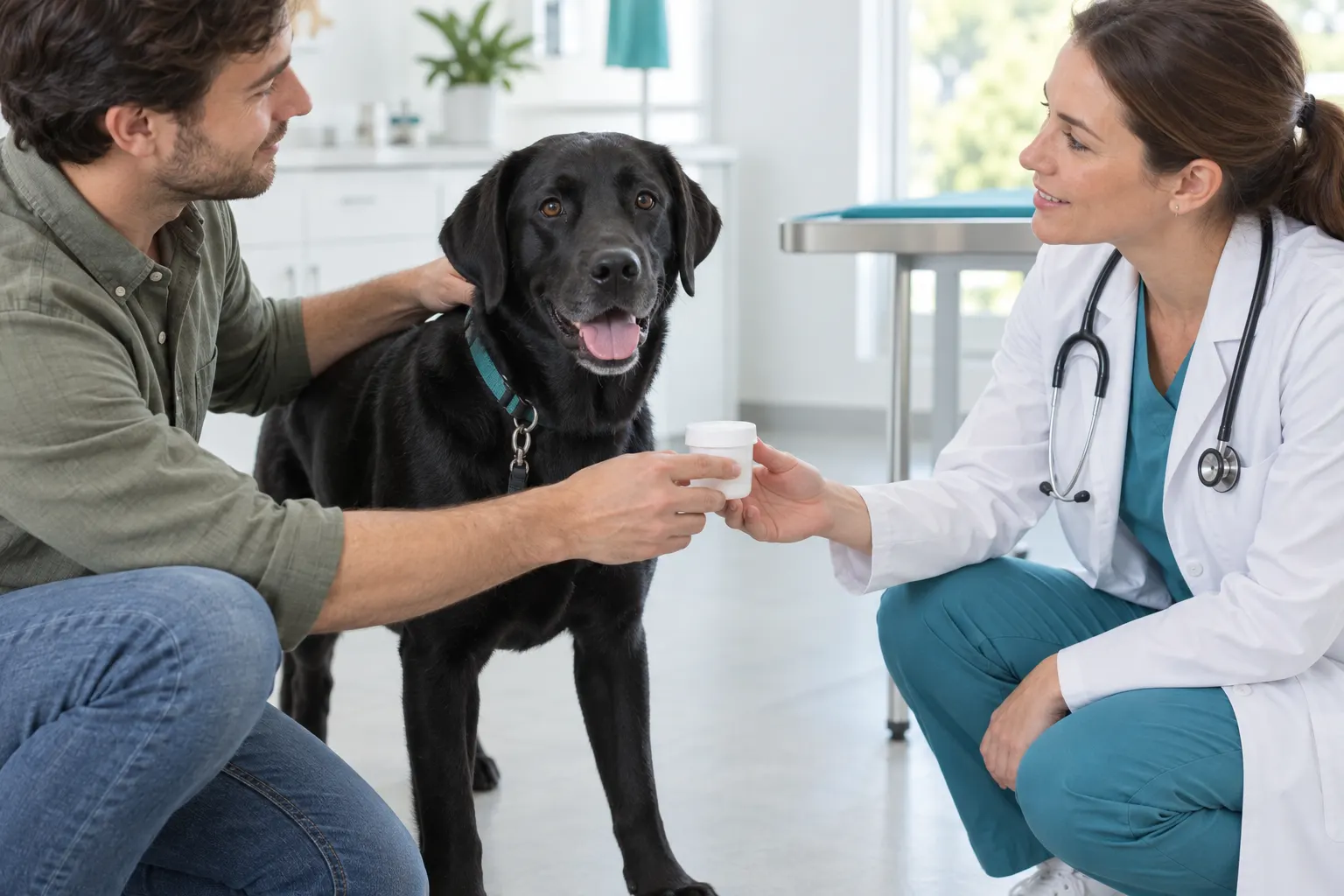
Ask whether the clinic wants a stool sample
A fresh sample can help the veterinary team choose appropriate parasite or other testing, but not every case needs the same test.
Call the clinic for its collection and storage instructions. If it asks for a sample:
- Use a clean, dry, leak-proof container or the container the clinic provides.
- Avoid mixing the sample with soil, litter, disinfectant, or other animals' stool.
- Label the outside with the dog's name and collection date and time.
- Keep it away from food and children.
- Follow the clinic's instructions about refrigeration and delivery time.
Do not delay urgent care to collect a perfect sample. A photograph and the timeline are still useful if no sample is available.
The Companion Animal Parasite Council notes that fecal flotation, antigen testing, and PCR have different strengths. The veterinary team selects tests from the dog's signs, age, preventive history, travel, and exposure. Seeing no worms does not rule out parasites, and seeing an unusual object in stool does not identify the cause by itself.
Avoid home treatments that can make the situation worse
Unless your veterinary team gives case-specific directions, do not:
- Give a human anti-diarrheal, pain reliever, stomach medicine, or supplement
- Use another pet's prescription or leftover antibiotics
- Repeat, stop, or change a prescribed dose on your own
- Give several probiotics, binders, or diet products at once
- Force food or syringe water
- Fast a puppy, toy-breed dog, diabetic dog, pregnant or nursing dog, or medically fragile dog
- Offer fatty food, rich treats, bones, or a series of new foods to test the appetite
- Induce vomiting after a suspected exposure unless a veterinary professional specifically directs it
Antibiotics are not an automatic diarrhea treatment. The WSAVA and ENOVAT guidance states that mild and moderate acute diarrhea generally does not need antimicrobials. The veterinarian decides whether a dog has severe systemic illness or another diagnosis that changes that decision.
If your dog takes an anti-inflammatory medicine, check the client information sheet and call the prescribing clinic when diarrhea, vomiting, appetite loss, or reduced activity appears. The FDA lists these as important adverse effects associated with veterinary nonsteroidal anti-inflammatory drugs and warns that dehydration can increase kidney risk. Do not substitute a human pain reliever.
Ask the clinic for a specific food and water plan. A dog with one mild episode may receive different advice from a puppy, a vomiting dog, a dog with pancreatitis risk, or a dog on a prescription diet.
Keep cleanup safe for the household
Dog stool can carry germs that affect animals and people even before a cause is known.
- Wear disposable gloves or use a barrier when cleaning stool.
- Pick it up promptly and place it in a closed waste bag.
- Clean and disinfect soiled hard surfaces with a product appropriate for that surface, following the label.
- Wash hands with soap and running water after handling the dog, waste, bowls, bedding, or cleanup supplies.
- Keep children and people with weakened immune systems away from the cleanup area.
- Do not allow the dog to use shared dog parks, daycare, boarding, or communal water bowls until the veterinary team says it is appropriate.
The CDC advises prompt cleanup, proper disposal, and handwashing because dog waste can carry germs that spread to people or other animals. Tell your veterinarian if anyone else in the household has gastrointestinal symptoms.
Use a concise veterinary call script
Lead with the dog's condition, frequency, and accompanying signs:
"My six-year-old dog has had four watery stools since 6:30 this morning. The last one had a small streak of bright red blood. He has not vomited, is drinking, urinated normally, and is alert, but he skipped breakfast. He takes carprofen and received his last dose last night."
Then add:
- The last normal stool and first abnormal stool
- Number, consistency, color, blood, mucus, and straining
- Vomiting, appetite, water, urine, energy, pain, and gum changes
- Age, weight, medical conditions, prescriptions, and supplements
- Possible food, rubbish, toxin, object, travel, or animal exposure
- Parasite-prevention and vaccination status
- Whether a sample or clear photograph is available
Ask: "Should we come now, book a same-day visit, or monitor with specific instructions?"
Write down the answer, including food and water directions, medication instructions, the reassessment time, and the exact change that means go to emergency. How to Prepare for Your Pet's Vet Visit can help you turn the log and labels into a concise handoff without delaying urgent care.
What the veterinary visit may involve
The veterinarian may assess:
- Mental status, temperature, heart rate, breathing, gums, and circulation
- Hydration, body weight, and ongoing fluid loss
- Abdominal comfort, swelling, and intestinal sounds
- Current medicines and possible adverse effects
- Diet, rubbish, toxin, foreign-object, travel, and infectious exposures
- Parasite prevention and vaccination status
Testing depends on the dog and the pattern. It may include fecal testing, blood or urine tests, a parvovirus test, or abdominal imaging. A bright adult dog with brief uncomplicated diarrhea does not automatically need the same workup as a dehydrated puppy, a dog with repeated vomiting, or a dog with abdominal pain.
Bring the timeline, medication and supplement containers, food or product labels, photographs, and a stool sample if requested. Do not delay transport to gather every item.
Track the plan, not just the bowel movements
Once the clinic gives a plan, record:
- Food and water instructions
- Each medicine or supplement, exact amount, and scheduled time
- What was actually given and kept down
- Stool frequency and consistency
- Vomiting, appetite, drinking, urination, energy, and comfort
- The recheck time and emergency threshold
Pet Care Reminder can hold the confirmed medication schedule, next stool check, clinic callback, and recheck appointment. Put observations in the notes and mark a task complete only after the action occurs. A reminder should support the veterinary plan, never postpone a call after an emergency sign appears.
If several people care for the dog, assign one person to each medication or observation and use one shared record. This prevents an alert, a guess, and an actual dose from being treated as the same thing.
The practical rule
Judge the whole dog, not only the mess.
One soft stool in a bright, comfortable, otherwise healthy adult dog may be suitable for close monitoring. Repeated watery diarrhea, visible blood, black stool, vomiting, appetite loss, lethargy, pain, dehydration concerns, or a high-risk health history deserves prompt veterinary advice.
Collapse, breathing difficulty, abnormal gum color, severe weakness, marked abdominal pain or swelling, inability to keep water down, major bleeding, poisoning, or a possible swallowed object requires emergency help.
Record the timeline, protect the household during cleanup, and follow a case-specific veterinary plan. The log cannot diagnose the cause, but it can make the next decision faster and clearer.
Sources
- Five Steps of Canine Acute Diarrhea Treatment. Formal WSAVA and ENOVAT guidance on classifying acute diarrhea by systemic signs, choosing fluid support, and avoiding unnecessary antimicrobials in mild and moderate cases.
- 2024 AAHA Fluid Therapy Guidelines for Dogs and Cats. Formal veterinary guidelines on assessing hydration and circulation, accounting for ongoing losses, selecting the route of fluid support, and monitoring response.
- Get the Facts about Pain Relievers for Pets. Official FDA safety guidance on gastrointestinal and kidney risks associated with nonsteroidal anti-inflammatory drugs, including added concern during dehydration.
- General Guidelines for Dogs and Cats. Companion Animal Parasite Council guidance on fecal-test options, testing frequency, parasite prevention, and prompt disposal of dog feces.
- Dogs. Current government guidance on germs in dog waste, prompt cleanup, proper disposal, disinfection, and handwashing.