
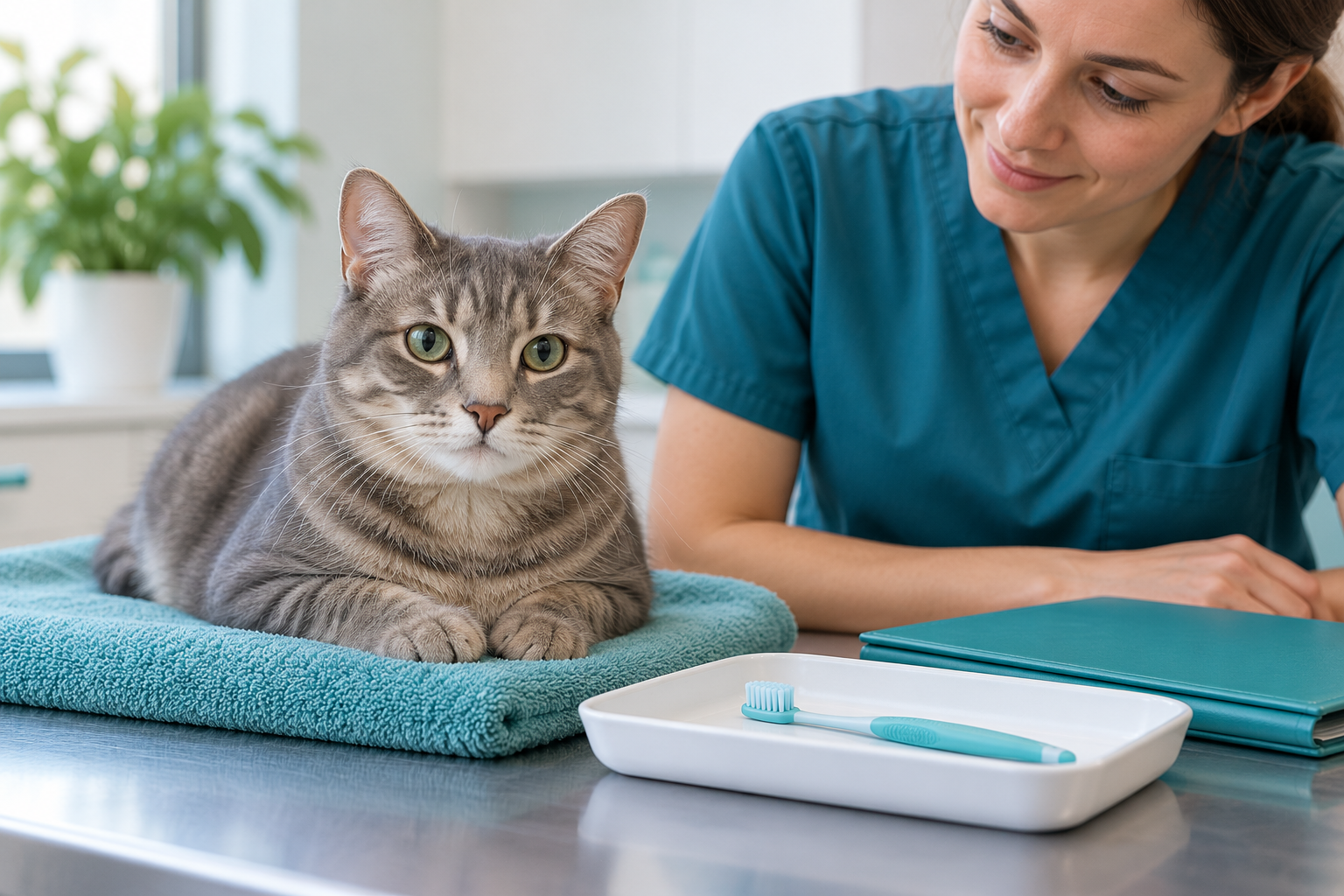
Call about changes, even if your cat still eats
Persistent bad breath, red or bleeding gums, drooling, dropped food, or altered chewing are reasons to contact your veterinarian. These can be signs a cat needs teeth cleaning or other dental treatment. A normal appetite does not rule out oral disease, according to the 2025 FelineVMA guideline.
Ask for a dental assessment rather than deciding that cleaning alone will fix the problem. If your cat is eating less, appears painful, or has facial swelling, call today and describe the change so the clinic can advise how urgently to attend. This guide helps organize that conversation; it cannot diagnose your cat.
Difficulty breathing, severe uncontrolled bleeding, or major mouth or jaw trauma requires immediate veterinary care. Contact an emergency clinic and follow its transport instructions. Do not delay care to gather records or take pictures.
Why a missing tooth deserves a question
Feline tooth resorption progressively damages tooth tissue and can be painful. Early changes may affect roots that cannot be assessed by looking at the visible tooth. Dental X-rays help identify and characterize them.
A tooth that seems absent is not proof that a problem has resolved. Possibilities include a previous extraction, tooth loss, or advanced resorption. Bring any earlier dental record so the clinic can establish what happened.
You do not need to count teeth, assign tooth numbers, or open your cat's mouth to fill a gap in the history. “I don't know whether that tooth was removed” is a useful starting point.
Separate what you saw from what the clinic confirmed
Before calling, write down one concrete observation and when you first noticed it. For example: “Food fell from her mouth at breakfast twice this week.” Avoid converting that into a diagnosis such as “her tooth is infected.”
Use the following worksheet alongside the clinic's records. Leave an entry unknown if nobody witnessed it or the document is missing.
| Item to resolve | What you currently know | Question or next action |
|---|---|---|
| Current change | What happened, when, and whether you saw it yourself | How soon should the clinic examine my cat? |
| A tooth seems missing | Previous extraction documented, suspected, or unknown | Can the team check the earlier chart against its findings? |
| Earlier dental procedure | Date, clinic, and documents available | Request the procedure report and available dental images |
| Current recommendation | Copy the clinic's wording and recommendation date | Which findings are confirmed, and which need further assessment? |
| Unfinished decision | Name the question and who is answering it | Record the answer before treating the booking as settled |
If your cat has changed clinics, ask the previous practice to transfer the dental chart and images directly. A receipt reading “dental cleaning” may not tell the new team which teeth were treated. Keep the receipt, but label it accurately rather than treating it as the full clinical record.
What to clarify when a cleaning is recommended
AAHA recommends full-mouth dental X-rays and assessment under anesthesia to establish the complete treatment plan. Visible tartar is only part of that assessment. Awake scraping cannot replace comprehensive dental care, and brushing inflamed gums can hurt.
Ask the team to explain the proposed visit in language you can repeat to another caregiver:
- What is already known from the examination?
- Will the procedure include full-mouth dental X-rays, and how will findings change the plan?
- If tooth resorption is identified, what treatment options fit those particular teeth?
- How will my cat's health and medicines affect the anesthesia plan?
- How will you reach me for additional-treatment consent, and what happens if I miss the call?
- What written estimate, arrival instructions, and recovery plan should I expect?
AAHA emphasizes agreeing on authorization before additional treatment. Save the clinic's answer with the estimate, including your callback number. If cost, transportation, or giving medicines at home is difficult, raise that while planning so the team can discuss workable options.
An example: an incomplete record is not an all-clear
This is a fictional organizational example, not a patient case or a treatment recommendation.
Nori's new caregiver notices food dropping. The adoption paperwork says “dental last spring,” and the caregiver recalls seeing a gap during a yawn. There is no tooth chart in the packet.
The caregiver calls with three separate facts: the eating change, the brief observation, and the incomplete paperwork. They ask the previous clinic for records while arranging the assessment recommended by the current clinic. They do not wait for the records before making the call.
The worksheet then has two open tasks: attend the confirmed appointment and obtain the earlier report. Once the report arrives, the veterinary team can compare documented treatment with its examination. The caregiver avoids assuming that either “dental done” or “tooth gone” answers the current question.
Leave with a plan for the next oral review
After diagnosed tooth resorption, the FelineVMA guideline recommends radiographic follow-up because additional lesions can develop. Ask your veterinarian to specify your cat's review plan.
Keep a short checkout note:
- What was found and what was treated, using the clinic's wording.
- Which report and images are available, and where they are stored.
- What care instructions apply now, including when to contact the clinic again.
- Which next appointment is advised, and whether it includes a dental or radiographic review.
- Who will make the booking and which questions still need answers.
Pet Care Reminder's vet visit reminders can help you remember to book and attend, with notes and records saved for the next visit. Enter the clinic's actual instruction; a reminder dismissed on your phone does not mean the appointment happened.
Once your veterinarian approves home care, the guide to cat tooth-brushing frequency covers the routine. If cooperation is the obstacle, use the separate guide to helping a cat accept tooth brushing. Keep those training notes separate from unresolved dental questions so a missed brushing session does not hide a needed appointment.
Sources
- 2025 FelineVMA feline oral health and dental care guidelines. Feline clinical guideline, November 2025, covering oral signs, tooth resorption, missing teeth, and radiographic follow-up.
- 2019 AAHA Dental Care Guidelines for Dogs and Cats. Clinical guideline covering dental assessment, radiographs, home-care limitations, and treatment consent.
- RECOVER Guidelines: First Aid for Dogs and Cats. Clinical Guidelines. Consensus guideline, August 2026, supporting emergency veterinary care for breathing difficulty, severe bleeding, and trauma.
