
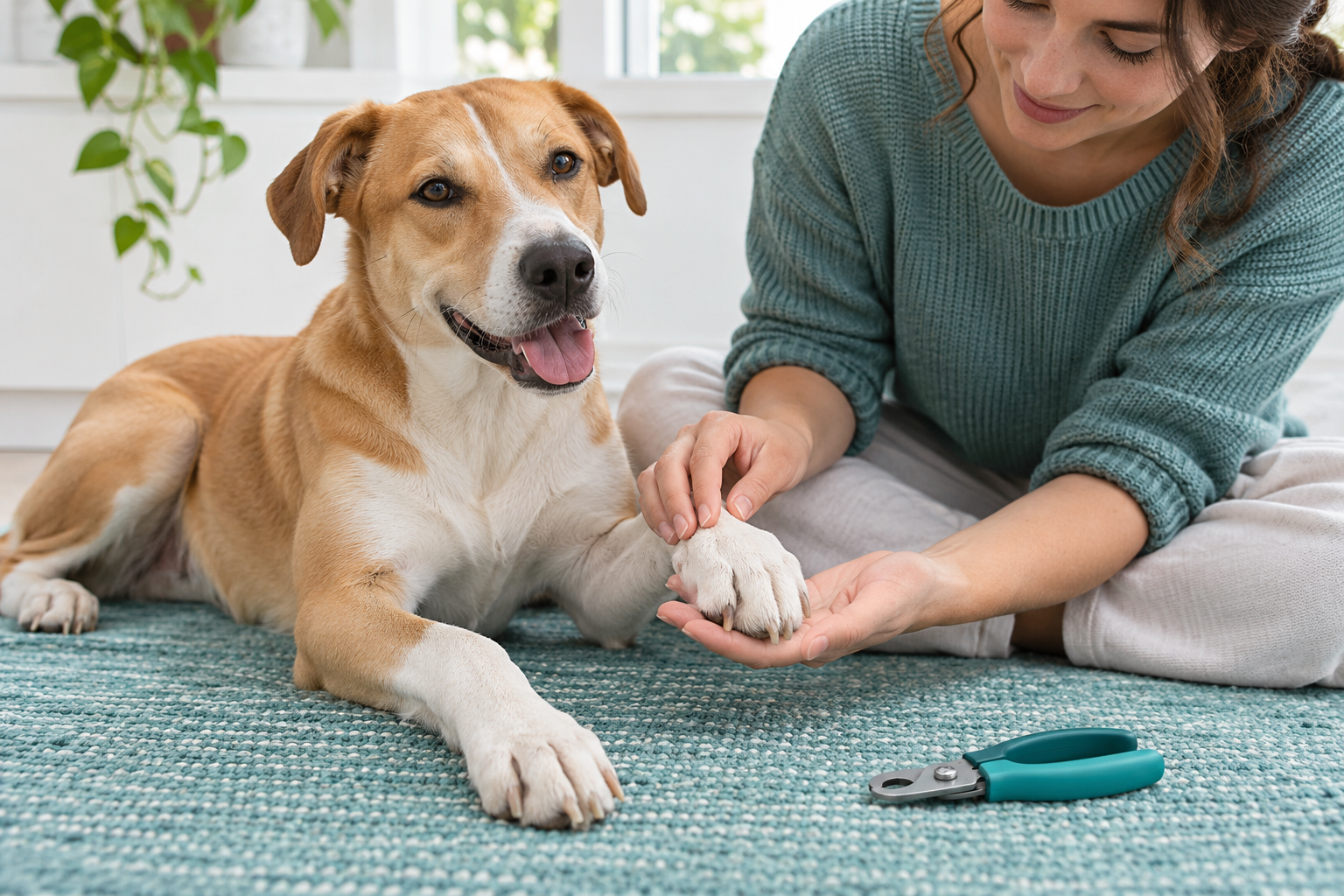
Set the interval for your dog, then check between trims
Trim your dog's nails when an individual assessment shows they need shortening, rather than automatically cutting them on a fixed calendar date. Ask your veterinarian or an experienced groomer to assess the nails and suggest when to return. Between appointments, a weekly reminder to look at each paw is a practical starting routine, not a requirement to trim every week.
Nails grow continuously, but growth and natural wear do not produce the same maintenance needs in every dog. A 2025 UK veterinary-record study emphasizes individualized guidance and notes that there is no useful standardized definition of an optimal nail length. Its records also exclude trims performed at home or by groomers, so the number of clinic visits cannot tell you how often to trim your dog.
The useful schedule has two entries: check the nails and carry out the agreed nail care. If you already have a veterinary plan, follow its timing. If a nail is injured or your dog is uncomfortable, contact the clinic instead of waiting for either reminder.
Get a baseline before setting a repeating appointment
At the next nail assessment, ask the person providing care to show you what they are checking on your dog. Bring a short list of questions:
- Which nails need attention now, including any dewclaws?
- What should I look for before the next visit?
- When should the next check or trim happen?
- Is home trimming appropriate, and can you demonstrate the technique and stopping point?
- What should I do if my dog will not allow a paw to be handled?
- If only some nails are done today, what is the plan for the rest?
Write down the answers and who gave them. “Return on the date the groomer recommended” is more useful than copying another dog's monthly appointment.
If your dog is comfortable, take a photo after the assessment to keep with the note. Use a similar view when recording a later change. A photograph is a communication aid, not a cutting guide or a substitute for examining a painful paw.
Check every paw without turning the check into a struggle
Choose a quiet moment when your dog is willing to be approached. Look at each paw and include the dewclaws, rather than assuming all nails need the same attention. The UK study highlights dewclaw problems as a reason to give them explicit attention in routine care.
Record three things:
- Coverage: Which paws and nails could you actually see?
- Change: What looks different from the last assessment?
- Comfort: Did your dog move normally and accept the usual handling?
Write “not checked” when you could not see a nail. That is different from “checked, no change noticed.” Do not pull the leg into position or keep holding a paw when your dog tries to leave.
The American Veterinary Society of Animal Behavior supports reward-based training and allowing dogs to opt out. Ask for a gradual handling plan if checks are difficult. Stop if your dog freezes, growls, snaps, or struggles; sudden resistance also warrants a veterinary discussion about possible discomfort. A short practice session does not count as a completed trim.
Use the observation to choose the next action
Keep the calendar responsive to what you find:
| What happened | Next action | What to put in the record |
|---|---|---|
| You completed the check and noticed no change | Keep the agreed plan | Paws checked and next review date |
| You are unsure about length or a nail looks different | Ask the clinic or groomer for an assessment | Specific paw, question, and appointment or reply awaited |
| Only some nails were trimmed | Confirm how and when the remaining nails will be addressed | Exactly what was done and what remains |
| Your dog would not allow the check | Stop and arrange handling advice; contact the vet for new discomfort | What you could check and when resistance began |
| A nail is injured or your dog is limping | Contact the veterinarian promptly | Location, onset, and advice received |
Do not mark the entire nail-care task complete because a grooming appointment occurred. Ask whether the nails were assessed, which were shortened, and whether anything needs follow-up. A bath, haircut, or appointment receipt does not answer those questions.
Keep a paw-by-paw nail-care record
Use one note for the dog, with a new dated entry for each check or trim. The following is an organizational template, not a nail-length measurement or a diagnostic score.
Dog nail check and trim record
- Dog, date, and caregiver:
- Last professional assessment and advice:
- Today's action: check only / handling practice / trim / professional visit
- Front left paw: checked, work completed, or not checked
- Front right paw: checked, work completed, or not checked
- Rear left paw: checked, work completed, or not checked
- Rear right paw: checked, work completed, or not checked
- Dewclaws: locations checked and any unfinished care
- Change or discomfort noticed:
- Question sent to clinic or groomer:
- Advice received and person giving it:
- Next check, booking, or care date:
- Person responsible for the next action:
Illustrative example: During Poppy's appointment, the groomer finishes the front nails but stops when she becomes uncomfortable with rear-paw handling. Her owner records “front nails completed; rear paws unfinished,” contacts the veterinary team about the discomfort, and records the follow-up plan. A single “nails done” checkmark would have hidden the unfinished care. This is a fictional handoff example, not a recommended trimming sequence.
Pet Care Reminder can hold a recurring care routine and notes. Keep a check reminder separate from a booked trim, and record the actual outcome. For several caregivers, the shared family pet care calendar guide explains how to assign the next action without relying on a family chat.
Know when nail care needs the veterinary team
Contact your veterinarian promptly for a broken or bleeding nail, a nail growing into the pad, a new limp, or toes being pushed out of their usual position. Do not try to solve these findings by taking off a larger piece of nail at home.
USDA's Animal Welfare Inspection Guide identifies embedded nails, serious nail breaks, and nail-related changes in gait or foot position as veterinary-care concerns. That document guides inspections of regulated facilities; it does not establish a trimming interval for every US household dog.
For severe or ongoing bleeding, seek urgent veterinary help. If safe, apply direct pressure with a clean cloth while arranging care, following the RECOVER first-aid guidance. Do not risk a bite to inspect or handle an injured paw, and do not delay care to finish the record.
For seasonal cleaning and exposure checks, use the separate winter paw-care routine. Keep the nail-care plan attached to the individual dog: the next observation, any unfinished work, and a clear person responsible for following up.
Sources
- Epidemiology and clinical management of nail clipping in dogs under UK primary veterinary care. Peer-reviewed 2025 study of UK veterinary records from 2019, supporting individualized nail-care guidance and attention to dewclaws. Clinic-only records do not establish a home-trimming interval.
- Animal Welfare Inspection Guide. USDA APHIS technical guidance, revised June 2025. Appendix C identifies nail-related foot changes, embedded nails, and serious nail injuries in its veterinary-care inspection examples.
- Position Statement on Humane Dog Training. AVSAB's 2021 formal statement supports reward-based training, opportunities to opt out, and veterinary assessment of medical contributors to behavior problems.
- RECOVER Guidelines: First Aid for Dogs and Cats. Clinical Guidelines. Formal 2026 first-aid guideline supporting prompt veterinary care for injuries and direct pressure, when safe, for severe external bleeding while arranging care.
